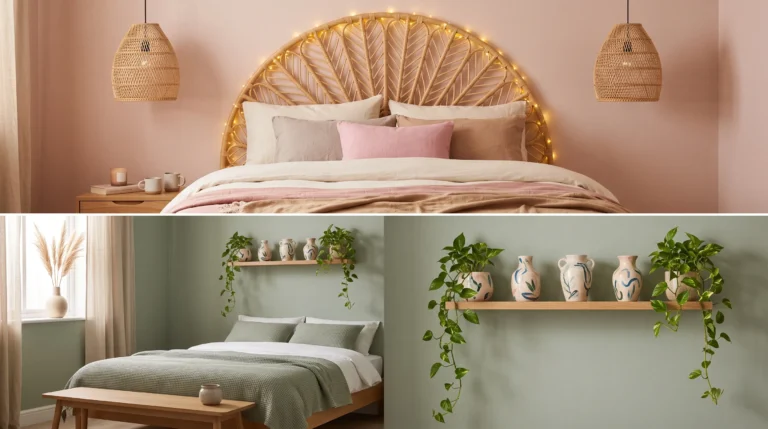
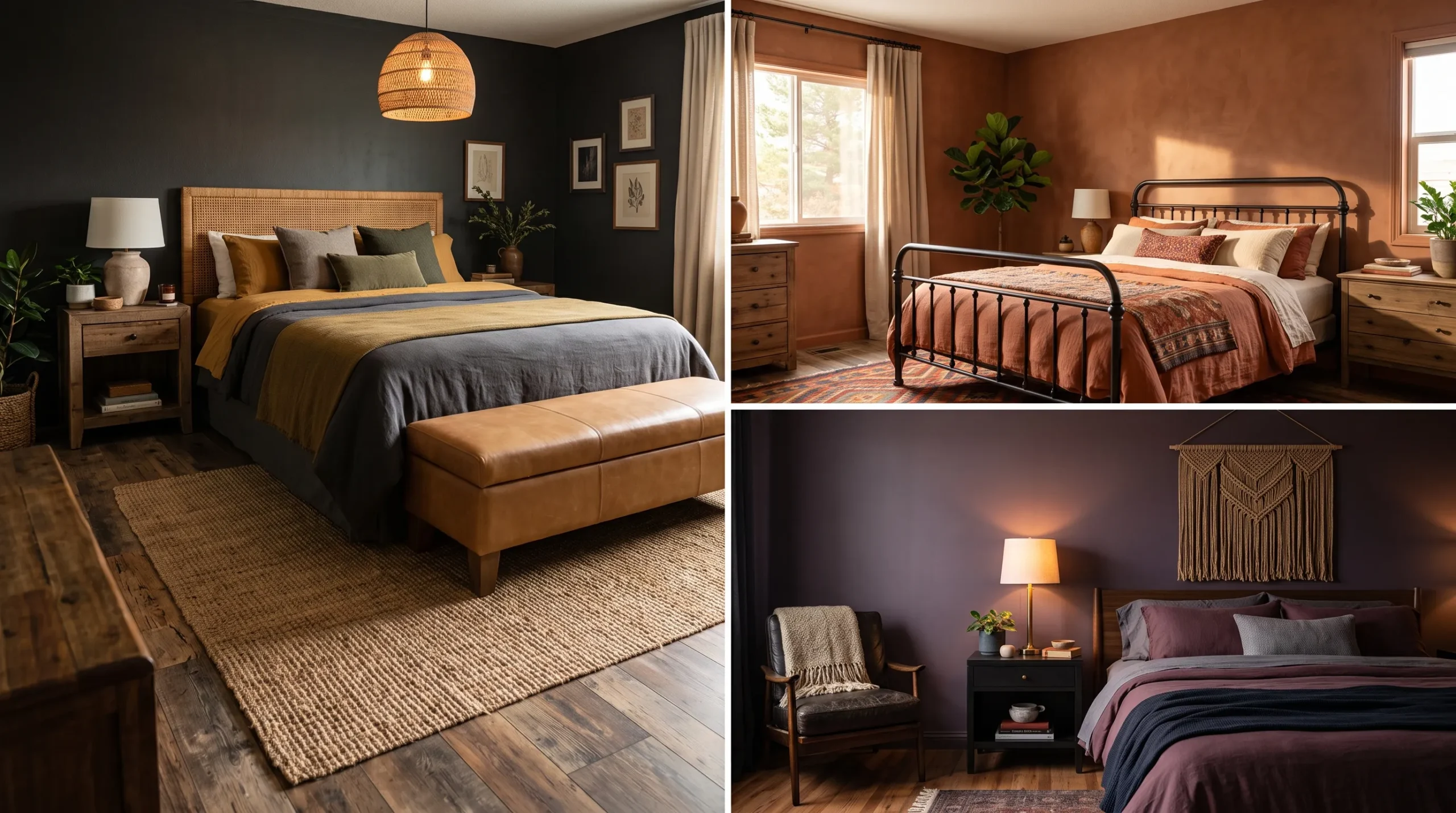
15 Masculine Boho Bedroom Ideas: Bold & Grounded Style
Most boho bedrooms whisper. This one’s meant to speak up. If you’ve searched for masculine boho bedroom ideas and found nothing but pastel throws and delicate macramé, you’re not alone, and you’re not wrong to want something different. This style takes boho’s relaxed, layered spirit and grounds it in deeper color, rougher texture, and furniture that actually holds its shape in a room.
In my experience helping homeowners rethink their bedrooms, the biggest hesitation with boho design usually comes from men, or couples, who love the warmth of the look but not the softness that typically comes with it. I’ve noticed that once people see boho built around leather, iron, and charred wood instead of lace and pastels, that hesitation disappears fast. It stops feeling like someone else’s aesthetic and starts feeling like their own.
What follows are fifteen full bedroom concepts, each with its own color story, lighting plan, and material mix, built specifically for anyone who wants boho’s warmth without losing an ounce of structure.
1. Charcoal & Rattan Retreat — A Moody Masculine Boho Bedroom
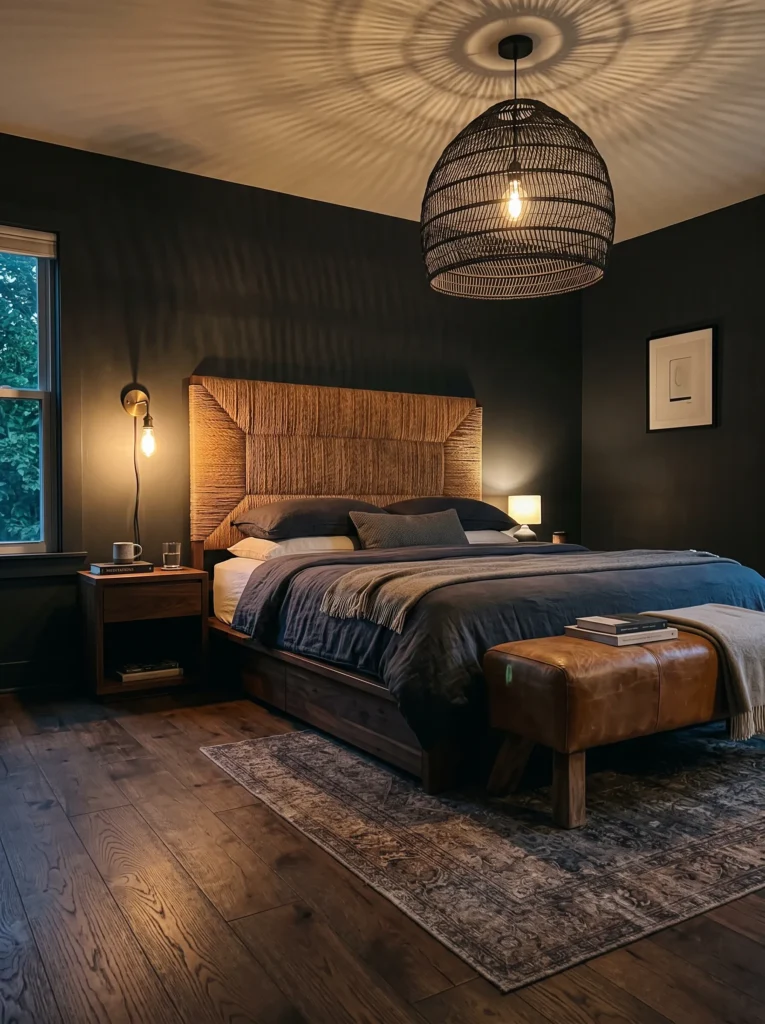
- Charcoal walls, camel leather, natural rattan, brushed brass accents
- A single oversized rattan pendant with a warm 2700K bulb, plus a brass reading sconce mounted directly above the headboard for night use
- Low platform bed in dark walnut, camel leather bench at the foot, woven rattan headboard panel
- Wide-plank dark oak floors, left bare except for one flatweave wool rug
- A large woven rattan pendant light hung low over the bed, casting dappled shadow patterns across the charcoal wall at night
Why this works: Charcoal absorbs light and creates real depth, so the rattan texture reads as sculptural rather than decorative against it.
Dark walls get a bad reputation for making rooms feel small, but charcoal actually does the opposite here. Against that deep backdrop, the natural rattan headboard and camel leather bench stand out in sharp relief instead of blending into a busy pattern mix. The room reads calm, not cluttered, because the palette stays limited to essentially four tones. I’ve noticed that clients hesitant about dark walls in a bedroom usually come around once they see how much richer the wood and leather look once the wall stops competing with them for attention.
At night, the rattan pendant does something most flat-panel fixtures can’t — it throws soft, broken light across the ceiling and walls, adding movement to a room that otherwise stays quite still and structured. That single detail keeps this masculine bohemian bedroom from feeling austere. During the day, natural light bounces gently off the brass sconce and leather bench, warming the charcoal instead of letting it feel cold or flat, which is the real risk with any deep-toned wall color.
You’ll Also Love: 15 Feminine Boho Bedroom Ideas for a Soft, Romantic Retreat
2. Desert Camp Bedroom
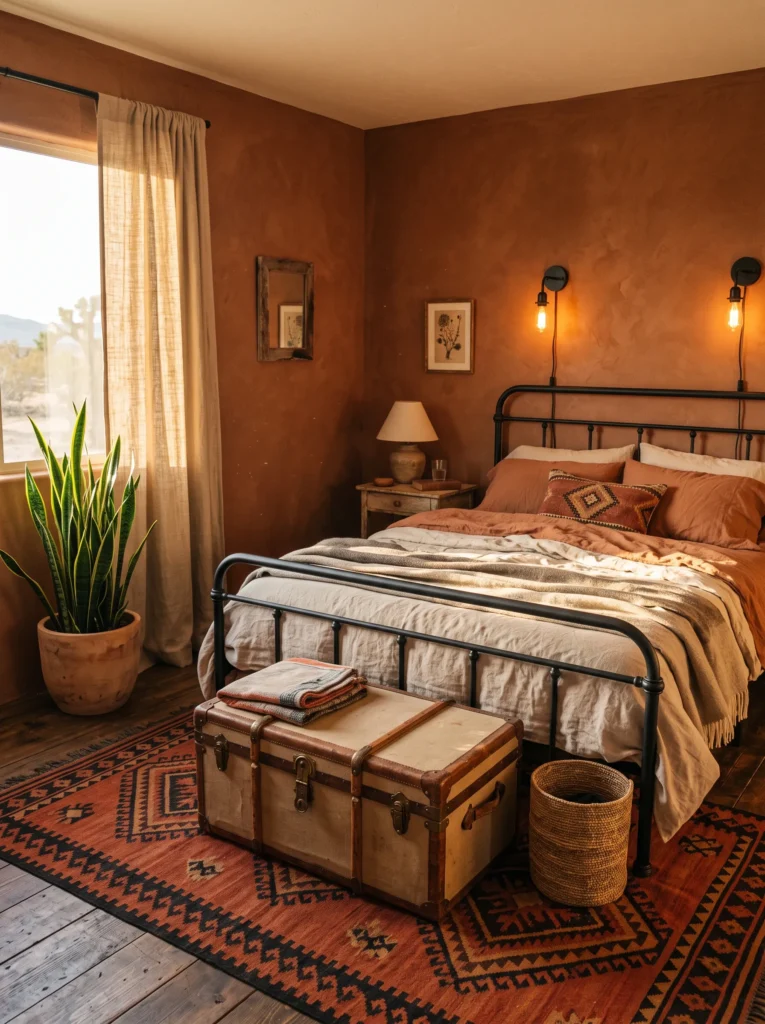
- Rust clay, sand beige, aged terracotta, black iron accents
- Wall-mounted black iron sconces with exposed bulb filaments, warm amber tone, dimmable for a campfire-like glow at night
- Low-slung iron bed frame, canvas and leather storage trunk, a woven wool throw folded at the foot
- A large vintage kilim rug in rust and black geometric pattern anchoring the floor space
- A tall snake plant in a raw clay pot beside the window, chosen for its upright, sculptural form
Why this works: Warm terracotta tones and iron fixtures evoke an outdoor desert camp feel, giving the room a rugged, lived-in quality rather than a polished, styled one.
Some bedrooms feel designed, and others feel discovered, like they’ve existed for years. This one leans hard into the second category. Rust clay walls and aged terracotta textiles create a warm, sun-baked palette, while black iron fixtures and bed frame add just enough structure to keep the room from feeling too soft or dusty. The kilim rug is doing most of the heavy lifting visually, its geometric pattern breaking up what would otherwise be a fairly monochromatic warm palette across walls, bedding, and furniture.
My husband’s crew has installed a fair number of exposed-bulb iron sconces over the years, and the wiring behind that industrial look is more involved than people expect — it’s worth having an electrician confirm your wall can support surface-mounted fixtures before committing. The upright snake plant beside the window adds a single vertical, structural green note without softening the room’s overall ruggedness, which is exactly the balance a masculine boho retreat needs.
3. Industrial Boho Loft
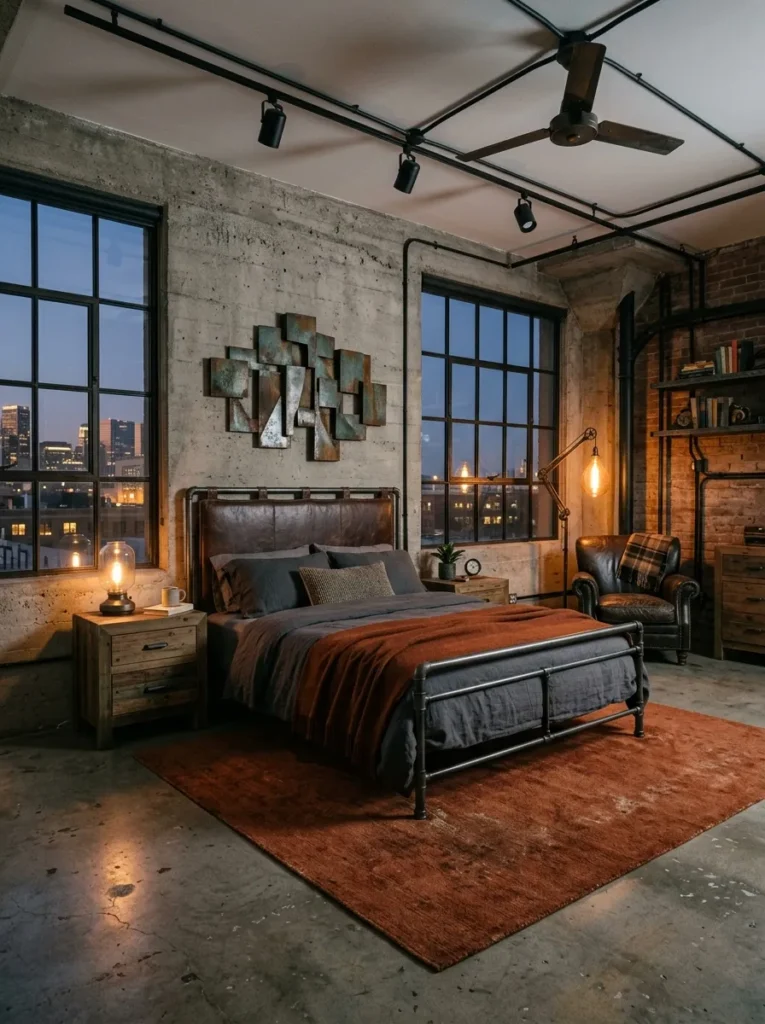
- Deep espresso, raw concrete gray, burnt orange, matte black steel
- Track-mounted matte black spotlights on the ceiling, plus a single Edison bulb floor lamp beside the bed for softer night light
- Steel-frame bed with a leather headboard, reclaimed wood nightstands, a worn leather armchair in the corner
- Polished concrete floor with a single burnt-orange wool rug at the bed’s edge
- A large aged-metal wall sculpture above the bed, adding texture without introducing a new color
Why this works: Raw industrial materials like concrete and steel give the room structural weight, while burnt orange and leather keep it from feeling cold or sterile.
Concrete floors and steel bed frames sound more like a warehouse than a bedroom, but the burnt-orange rug and leather headboard change the whole equation. This is a masculine bohemian bedroom built on contrast — hard materials softened by warm color and worn texture, rather than one uniform mood throughout. The aged-metal wall sculpture above the bed adds visual interest without competing with the room’s already-limited palette, which keeps the space feeling curated instead of overloaded.
In my experience, polished concrete floors need at least one substantial rug to keep a bedroom feeling warm underfoot, especially in colder climates. The worn leather armchair in the corner earns its place too, giving the room a spot that feels lived-in rather than purely showroom-styled. Track spotlights overhead keep daytime light functional and clean, while the single Edison floor lamp switches the whole mood to something warmer and more relaxed once evening comes.
4. Espresso & Olive Study
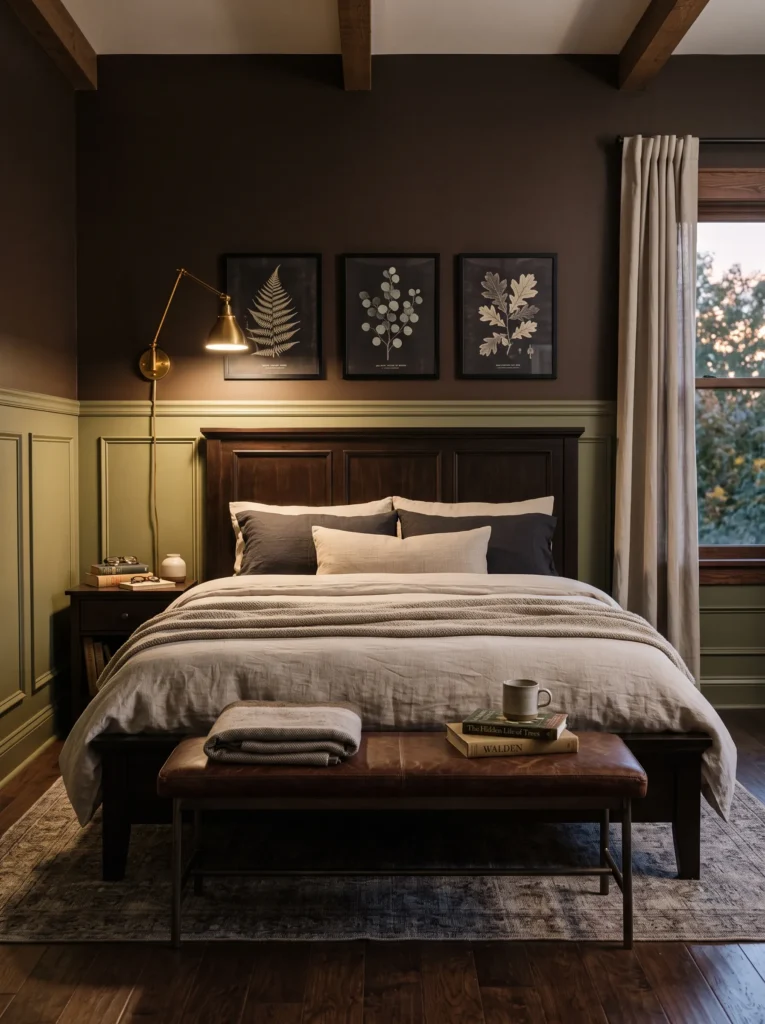
- Deep espresso brown, olive green, aged brass, natural linen
- A brass articulating wall lamp beside the bed, warm 2700K bulb, plus recessed ceiling lights on a dimmer for daytime brightness
- Solid espresso wood bed frame with tall paneled headboard, linen bedding, a low leather bench at the foot
- Olive green painted wainscoting on the lower half of the wall, espresso trim above
- A row of framed vintage botanical prints in dark, muted tones rather than bright florals
Why this works: Olive and espresso share the same muted, earthy undertone, so the two-tone wall treatment reads as one cohesive statement rather than a clash of separate colors.
Two-tone walls can easily look busy if the colors fight each other, but olive and espresso share enough undertone that this combination stays calm instead. The paneled wainscoting adds architectural structure low on the wall, while the darker espresso above keeps the ceiling feeling grounded rather than towering. This is a masculine boho retreat built on restraint — no bold pattern clash, just layered tone and texture doing the work. The vintage botanical prints reinforce that same muted mood instead of introducing bright, competing color.
I’ve tried this wainscoting-plus-paint combination in a few client bedrooms, and it consistently reads as more intentional than a single flat wall color would. The brass articulating lamp beside the bed is a small but important detail — it lets you angle warm light exactly where you’re reading without lighting the whole room, which suits a study-like bedroom that’s meant to feel focused and calm rather than bright and open.
5. Blackened Wood Cabin
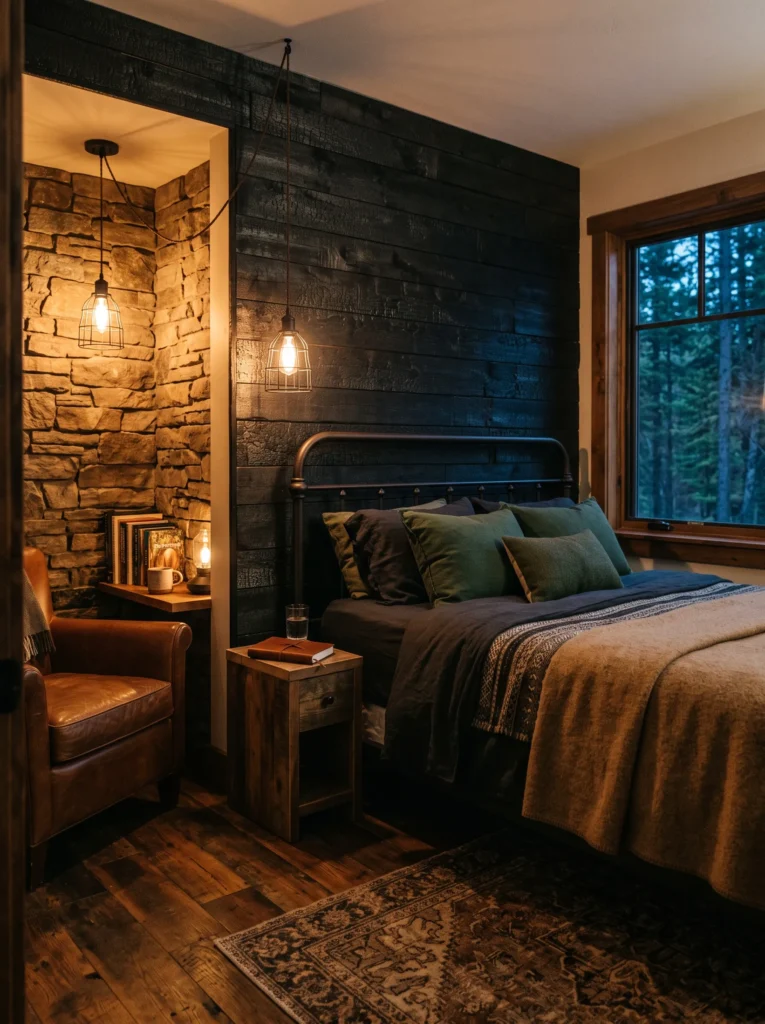
- Blackened cedar, warm camel, iron gray, deep forest green
- A single exposed-bulb pendant with a blackened iron cage, warm dim glow at night, sheer curtain filtering soft daylight
- Blackened cedar plank walls behind the bed, iron bed frame, camel wool blanket layered over dark linen sheets
- A stacked-stone accent nook beside the bed holding a small reading lamp and a stack of hardcover books
Why this works: Charring the cedar planks (a technique called shou sugi ban) darkens and weatherproofs the wood, giving the wall texture and depth that flat black paint can’t replicate.
Blackened cedar isn’t just painted dark — it’s actually charred using a traditional technique that darkens the wood grain while preserving its texture, so the wall has real visual depth rather than a flat matte finish. My husband’s crew has used this method on a few exterior projects, and the same charring process works beautifully indoors as an accent wall, provided it’s properly sealed. Paired with an iron bed frame and camel wool blanket, the room feels like a modern take on a cabin retreat, rugged but genuinely warm rather than austere.
The stacked-stone reading nook beside the bed is what makes this room memorable. It’s a small architectural gesture, but it gives the bedroom a sense of permanence, like the space was built around the bed rather than simply furnished. Forest green accent pillows tie back to the iron gray tones elsewhere, keeping the palette cohesive without needing more than four core colors throughout the room.
6. Woven Wool & Iron Loft
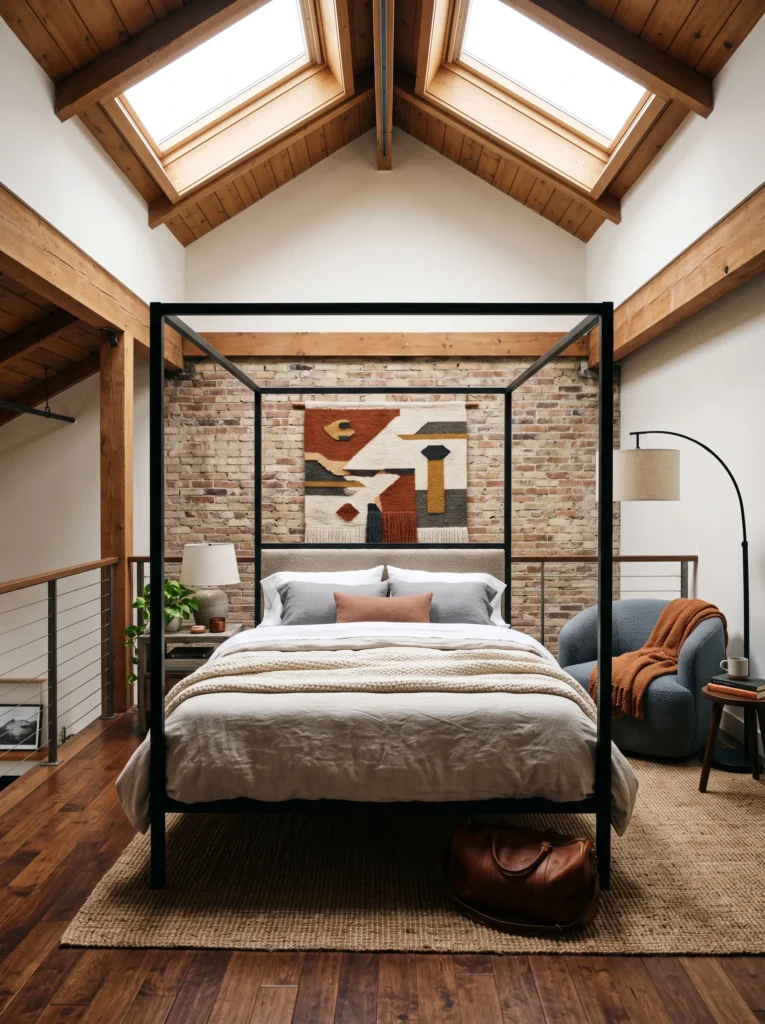
- Slate gray, rust red, natural wool cream, matte black iron
- A matte black arc floor lamp beside the bed, warm bulb, plus a small skylight allowing soft natural daylight during the day
- Iron four-poster bed frame (without canopy fabric), woven wool textiles layered on the bed, a slate-gray bouclé accent chair
- A large hand-woven wool wall hanging in rust and cream geometric pattern, hung directly behind the bed in place of a headboard
Why this works: An open iron four-poster frame adds structural height and visual weight without canopy fabric softening its lines, keeping the room’s silhouette masculine even with soft woven textiles layered throughout.
Four-poster beds usually read as feminine or overly traditional, especially draped in flowing fabric, but stripped down to just the iron frame, the effect changes completely. The exposed structure adds real height and presence to the room without any softness at the top. Rust and cream wool textiles layered on the bed and hung as a wall piece behind it introduce warmth and pattern, while the slate-gray bouclé chair adds a slightly plush texture that still stays within the room’s cooler, more structured tones.
In my experience, an open iron frame like this works best in rooms with slightly higher ceilings, since the vertical posts need enough visual breathing room above them to look intentional rather than cramped. The small skylight brings in soft, even daylight that highlights the wool wall hanging’s texture beautifully during the day, while the arc floor lamp takes over at night, casting warm light downward without needing a bedside table at all.
7. Sun-Baked Adobe Boho
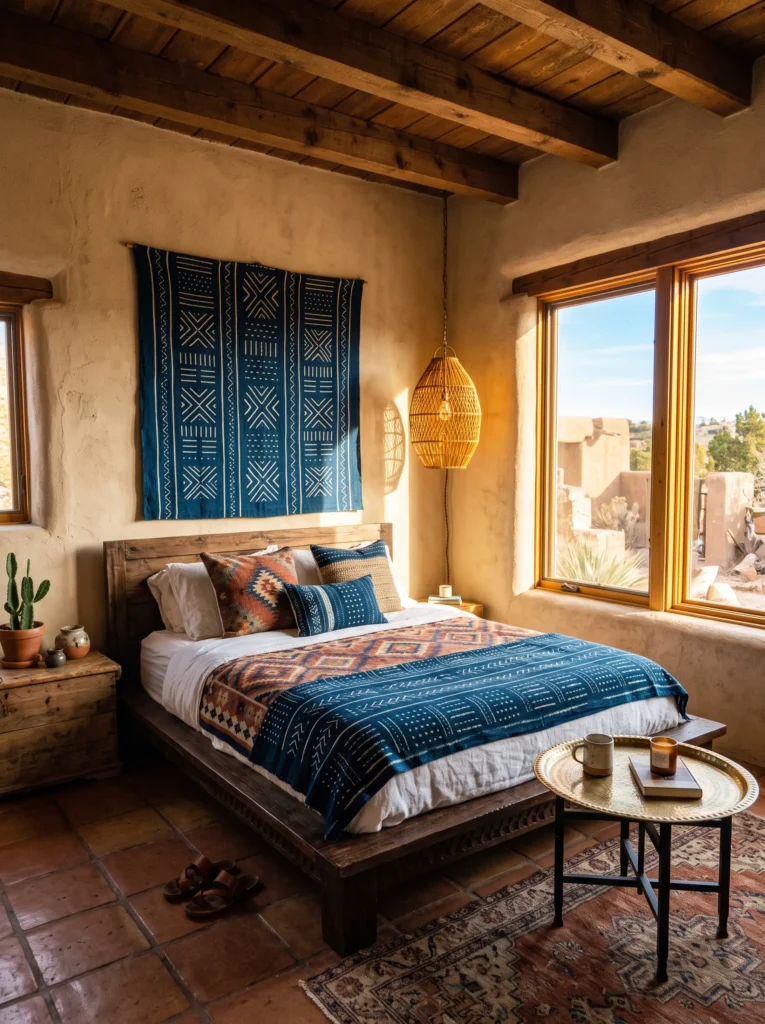
- Terracotta clay, warm sand, deep indigo, unlacquered brass
- A woven pendant lantern with an amber glass insert, warm flickering-style bulb, plus large uncovered windows for strong daytime sun
- Low platform bed with a carved wood headboard, layered kilim and indigo mudcloth textiles, a brass tray table beside the bed
- Rough-textured plaster in warm sand tone, left slightly uneven for a hand-finished look
- A large vintage indigo mudcloth textile hung as wall art above the headboard, its bold pattern balancing the room’s earthy palette
Why this works: Bold pattern in a single restrained color (indigo) keeps the room feeling authentically boho without tipping into visual clutter, since everything else in the space stays solid and textural.
Boho design often gets pattern-heavy fast, but this room proves one strong textile can carry the whole look. The indigo mudcloth hanging above the bed is the only patterned element in the entire space, and that restraint is what makes it feel intentional rather than overwhelming. Rough plaster walls in warm sand tone add tactile depth without competing for attention, and the carved wood headboard grounds the bed with real weight. This is boho built on texture and craft rather than trinkets or an accumulation of small decorative objects.
I’ve noticed that uneven, hand-finished plaster photographs beautifully in direct sunlight, which makes large uncovered windows a genuine design asset here rather than just a practical choice. The amber woven pendant carries that same warm, sun-baked feeling into the evening, when natural light fades and the room needs its own glow. Brass details throughout — the tray table, a few small dishes — tie back to the metal accents without introducing a fifth competing color.
8. Moody Macramé Den
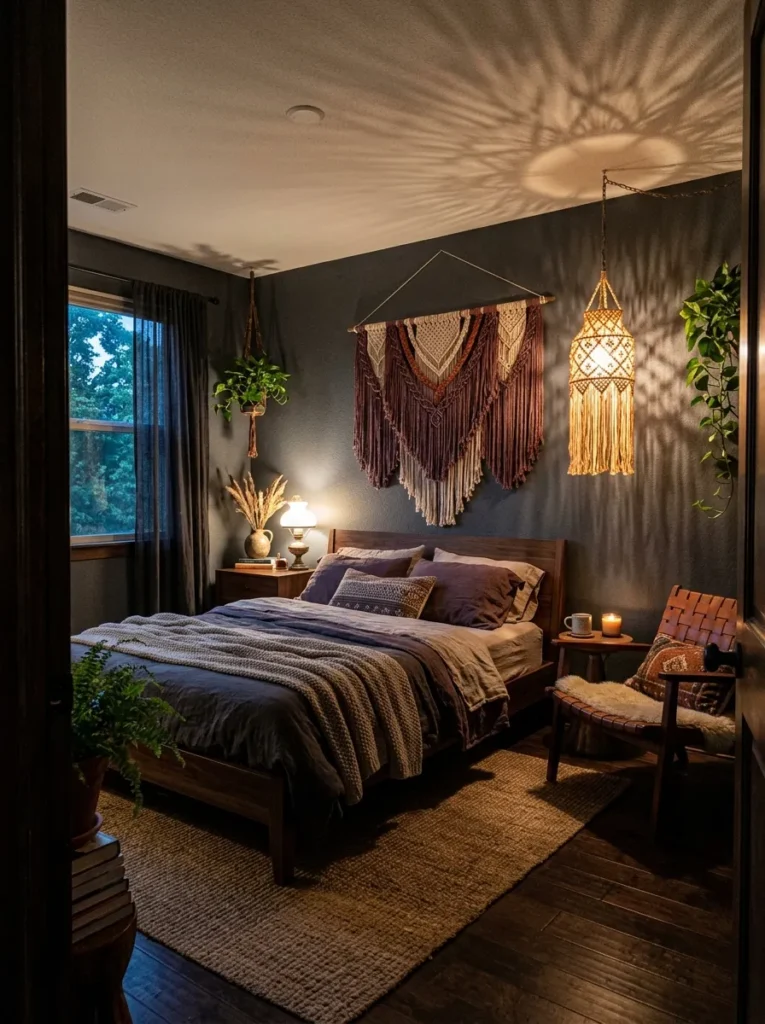
- Deep plum, charcoal, aged copper, natural jute
- A large macramé-wrapped pendant light with a warm bulb, plus a small brass clip lamp mounted to the headboard for reading
- Low dark-wood bed frame, jute area rug, a woven leather-and-wood accent chair in the corner
- An oversized macramé wall hanging in natural jute rope, dyed at the fringe edges in deep plum to tie into the wall color
Why this works: Dyeing only the fringe of the macramé keeps a traditionally delicate boho element from reading as too soft, anchoring it instead to the room’s deeper, moodier palette.
Macramé is one of boho’s most recognizable signatures, but it usually shows up in bright white or cream, which can push a room toward a much softer feel than intended. Here, dip-dyeing just the fringe in deep plum keeps the piece’s natural jute texture while tying it firmly into a moodier, more grounded palette. Charcoal walls behind it make the plum-tipped fringe stand out clearly, and the jute rug underfoot repeats that same raw, natural material without adding a new color to track.
The woven leather-and-wood accent chair in the corner is doing quiet but important work, reinforcing that this is a masculine bohemian bedroom rather than a purely soft, textile-driven one. Aged copper accents — the clip lamp, a small dish on the nightstand — warm up the charcoal without brightening the room significantly. At night, the macramé-wrapped pendant filters light through its woven pattern, throwing soft rope-shaped shadows across the ceiling.
9. Global Textile Layer
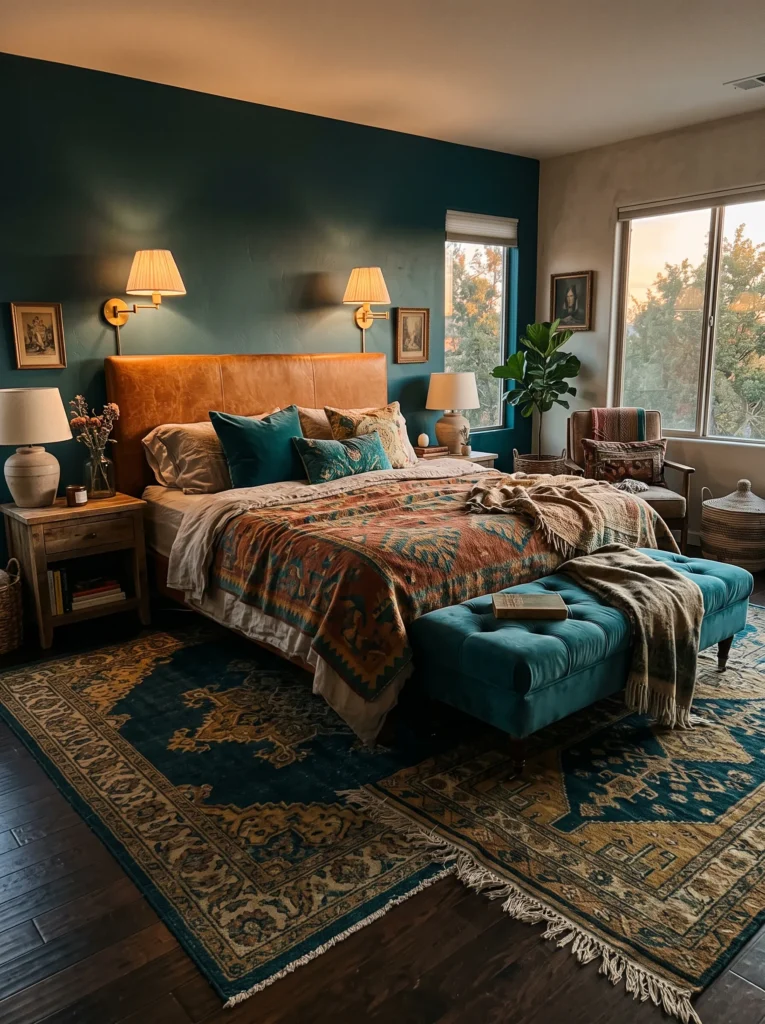
- Cognac leather, deep teal, aged gold, natural linen
- A pair of brass sconces flanking the bed with fabric shades, warm amber tone, dimmable for a layered evening glow
- Cognac leather headboard, teal velvet bench at the foot, mixed vintage textiles layered across the bed in teal and gold tones
- A collection of small vintage rugs layered on top of one another at the foot of the bed instead of a single large rug
Why this works: Layering several smaller textiles rather than one large rug creates visual richness typical of boho design, while the leather headboard and structured bench keep the overall silhouette masculine.
Boho design has a strong tradition of collected, layered textiles, and this room leans into that fully instead of simplifying it down to one rug or one throw. Several smaller vintage rugs, layered slightly askew at the foot of the bed, create genuine depth and a sense of things gathered over time rather than bought as a matching set. The cognac leather headboard keeps that layered softness from tipping the room into something too delicate, giving it a firm, structured anchor point.
In my experience, this layered-rug approach works best when the individual pieces share at least one connecting tone — here, that’s the teal and gold running through several of them. Brass sconces with fabric shades cast a softer, more diffused light than bare bulbs would, which suits a room built around textile richness rather than raw industrial materials. The teal velvet bench adds one more layer of texture without overwhelming an already busy but carefully coordinated palette.
10. Weathered Teak Sanctuary
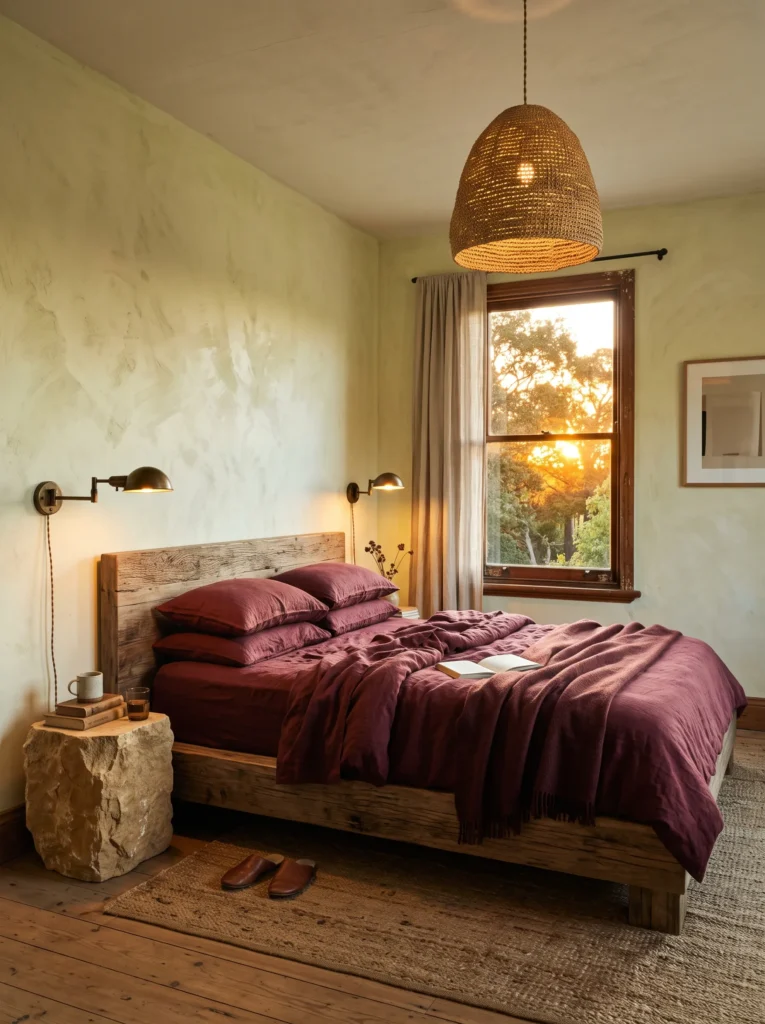
- Weathered teak gray-brown, burgundy red, raw stone, antique bronze
- A pair of bronze wall-mounted swing-arm lamps, warm 2700K bulbs, plus a wide west-facing window for deep golden evening light
- Weathered teak platform bed with visible wood grain, burgundy linen bedding, a raw stone side table
- Unpainted lime-washed plaster in a pale stone tone, left slightly rough
- A large woven raffia light fixture hung off-center above the stone side table rather than centered over the bed
Why this works: Off-centering the main light fixture breaks the room’s symmetry deliberately, giving it a collected, unstaged feeling that’s core to boho’s relaxed sensibility.
Perfect symmetry can make a bedroom feel more like a hotel than a home, so this room breaks that rule on purpose. The raffia pendant hangs above the stone side table instead of the bed itself, pulling the eye slightly off-center and giving the space a looser, more lived-in rhythm. Weathered teak brings genuine age and grain variation to the bed frame, something new furniture simply can’t fake, and burgundy linen bedding adds a deep, saturated color note against the otherwise pale, textural walls.
My husband’s crew has worked with reclaimed teak on a few builds, and the wood’s natural oil content means it holds up remarkably well indoors without much additional treatment, which makes it a genuinely practical choice, not just a visual one. The lime-washed plaster walls catch that late western light beautifully, turning warm and almost pink-toned at golden hour, which is worth considering if your bedroom windows face that direction.
11. Navy & Rust Nomad
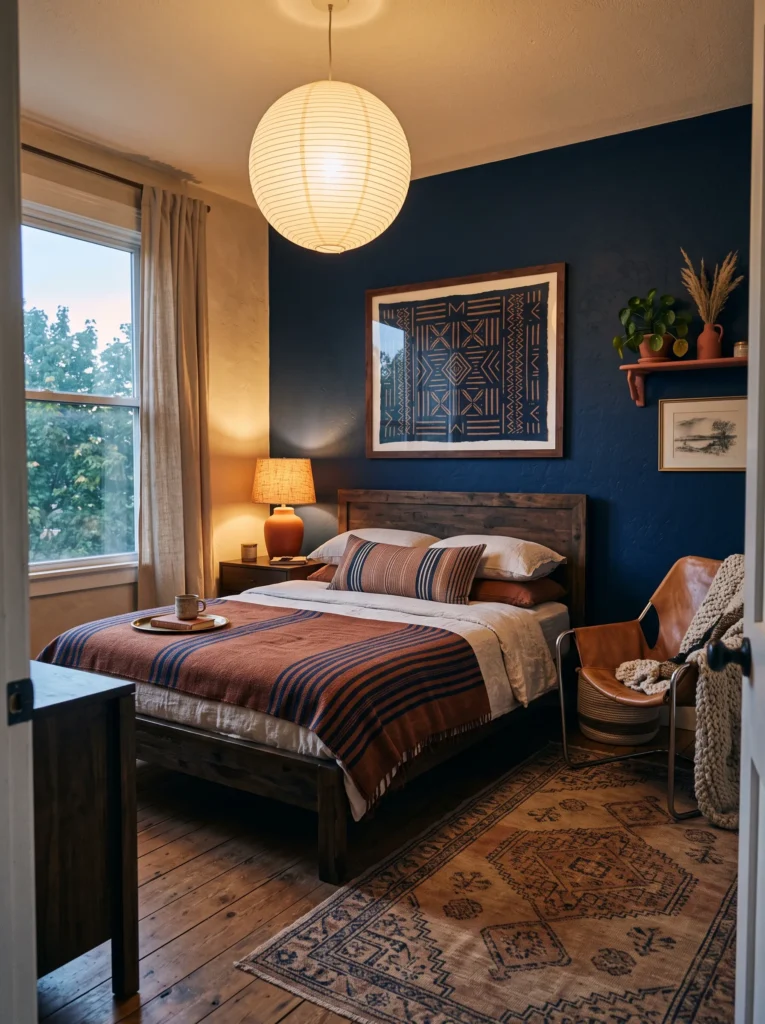
- Deep navy, burnt rust, aged leather tan, raw cotton white
- A single oversized paper lantern pendant with a warm bulb, plus a rust-toned ceramic table lamp on the nightstand for softer evening light
- Tan leather sling chair in the corner, dark wood bed frame, rust and navy striped textiles layered over raw cotton sheets
- A large vintage wall map or textile print in navy and rust tones, framed simply in dark wood, hung above the bed
Why this works: Navy is an unusual anchor color for boho design, typically dominated by earth tones, so pairing it with rust keeps the room feeling boho-warm while giving it a cooler, more grounded undertone than most bohemian bedrooms.
Navy doesn’t show up often in boho design, which is exactly why it stands out here. Paired with burnt rust instead of the usual all-earth-tone palette, the room gets a cooler undertone that still feels warm overall, thanks to the leather sling chair and raw cotton bedding balancing things out. The striped textiles layered over the bed do the pattern work that boho design relies on, without needing bright color or busy florals to carry it. This is a nomadic, well-traveled feeling built through color contrast rather than accumulated objects.
I’ve noticed that navy walls or large navy textiles need a genuinely warm light source nearby, or the whole room can tip cold fast. That’s why the rust ceramic lamp matters here — it’s a small detail, but it keeps the navy from reading as sterile in the evening. The tan leather sling chair adds a relaxed, low-slung seating option that echoes the room’s overall grounded, unfussy posture.
12. Ochre & Graphite Study Loft — A Bold Masculine Boho Statement
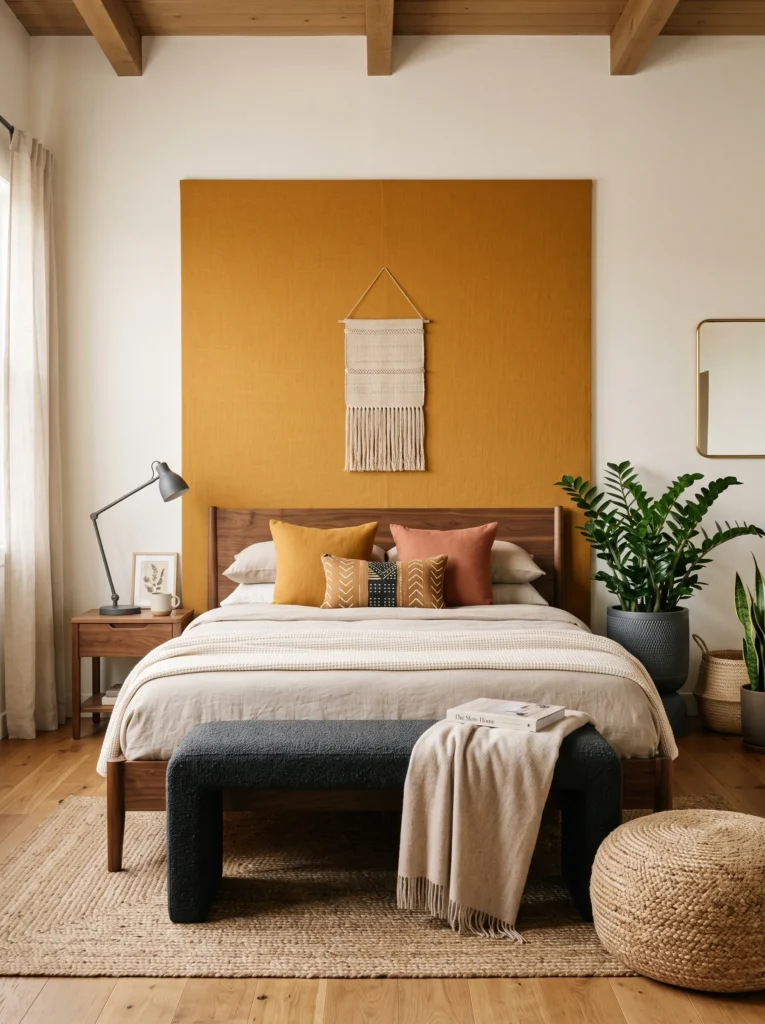
- Ochre yellow, graphite gray, walnut brown, unbleached raw cotton
- A graphite-finish articulating desk-style lamp beside the bed, cool-to-warm adjustable bulb, plus a north-facing window for consistent even daylight
- Low walnut bed frame, graphite bouclé bench at the foot, a woven jute pouf beside a small reading corner
- A single large ochre textile panel hung as a headboard backdrop, its solid saturated color acting as the room’s boldest gesture
- A large ZZ plant in a graphite ceramic pot near the window, chosen for its glossy, structural leaves that hold up in lower light
Why this works: Using one saturated color as a flat textile backdrop, rather than a printed pattern, gives the room a bold graphic moment without relying on the busy layered patterns typical of most boho bedrooms.
Most boho bedrooms build interest through pattern layering, but this one gets its boldest moment from a single flat panel of solid ochre fabric hung behind the bed. No print, no pattern — just one saturated color doing all the visual work against an otherwise muted graphite-and-walnut room. That restraint is what makes it feel more like a considered design statement than a typical boho mash-up. The graphite bouclé bench and jute pouf add texture without introducing any new color, keeping the palette tight at four tones total.
In my experience, north-facing windows give the most even, consistent light throughout the day, which makes them ideal for a room like this where the ochre panel needs steady light to read as rich rather than dull. The ZZ plant’s glossy, upright leaves tolerate that lower, indirect light well, unlike many other structural plants, making it a genuinely practical choice for a north-facing bedroom corner rather than just a styling prop.
13. Copper & Basalt Retreat
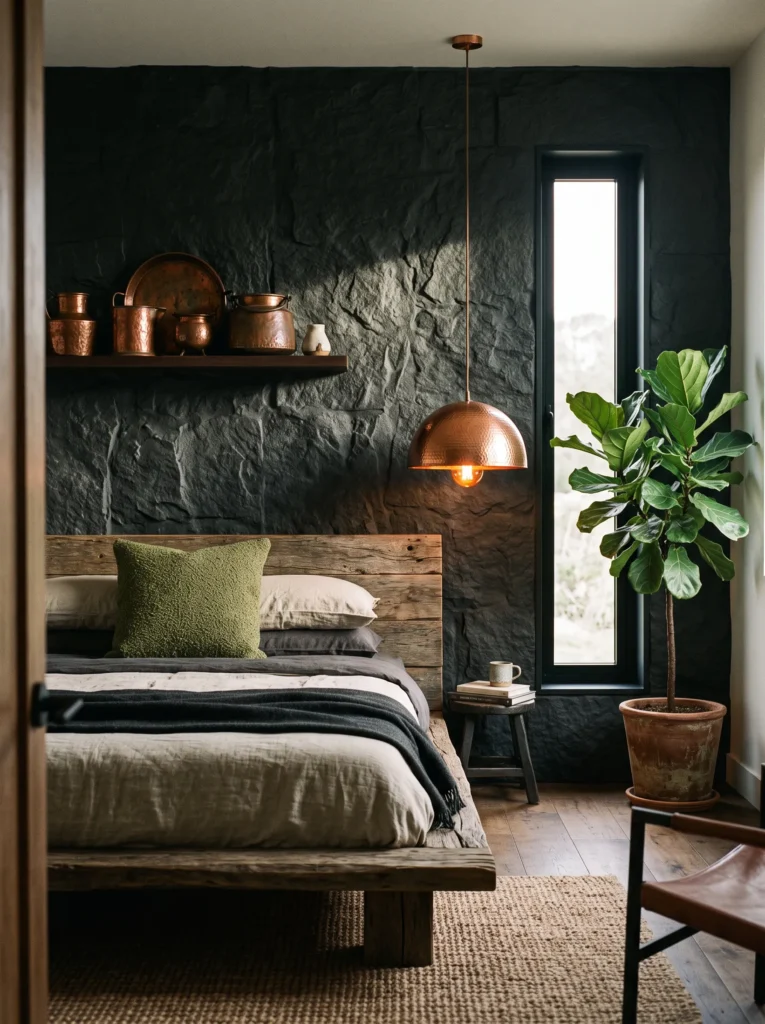
- Basalt black-gray, warm copper, driftwood beige, muted moss
- A copper-finish dome pendant hung low over the nightstand, warm amber bulb, plus a slim vertical window bringing in a narrow shaft of natural light
- Driftwood-toned bed frame with a low profile, basalt stone-textured accent wall behind it, moss green bouclé throw pillow
- A cluster of raw copper vessels and dishes grouped on a floating driftwood shelf, catching and scattering the pendant’s warm light
- A large fiddle leaf fig in a basalt-toned pot, positioned to catch the light from the vertical window
Why this works: Grouping several small copper objects together, rather than using one large metal accent, creates a shimmering texture that plays against the flat, matte basalt wall behind it.
Metal accents usually show up as a single lamp or a few drawer pulls, but this room uses copper more generously, clustering several vessels and dishes together on one shelf. That grouping catches light unevenly across each piece, creating a soft shimmer against the flat, matte basalt wall behind the bed. Driftwood tones throughout keep the room feeling coastal-adjacent without leaning fully into a beach palette, and the moss green pillow adds one quiet, organic note against all that stone and metal.
I’ve tried this kind of narrow vertical window treatment in a client’s basalt-walled bedroom, and the effect is striking — a single shaft of daylight moves slowly across the textured wall throughout the day, almost like a sundial. The fiddle leaf fig positioned nearby benefits from that same directional light, and its broad structural leaves hold their own visually against the room’s heavier stone and metal materials without disappearing into the background.
14. Saddle Leather & Denim Blue
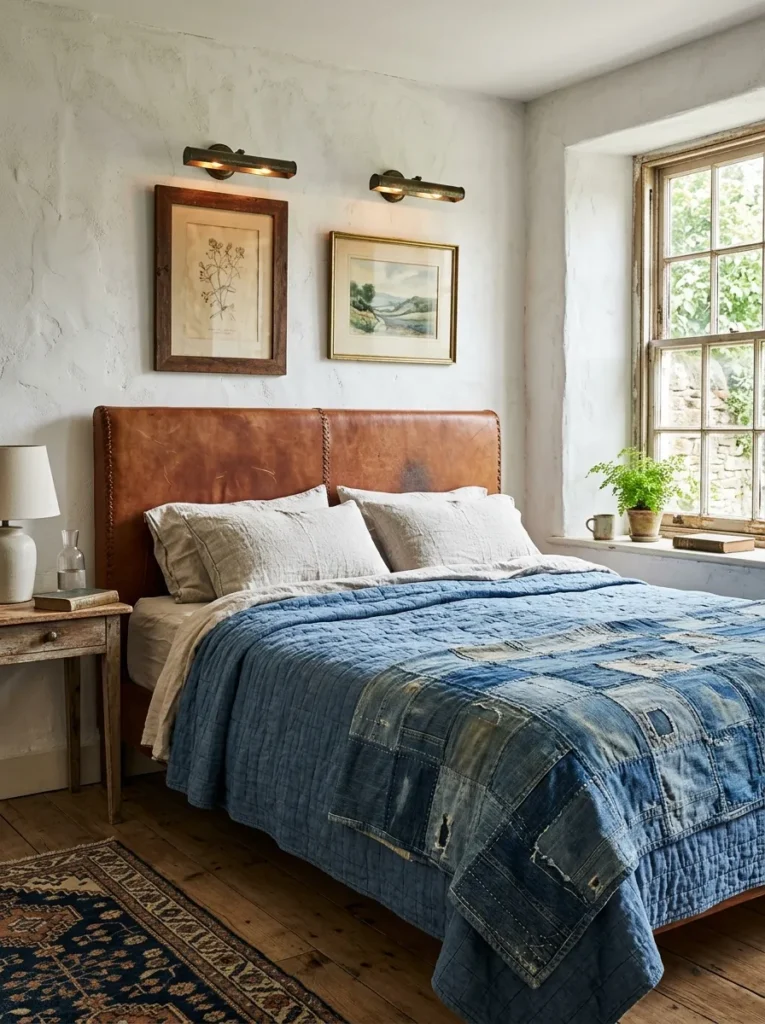
- Saddle tan leather, denim blue, chalky white plaster, dark bronze
- A pair of bronze picture lights mounted above framed art, warm narrow beam, plus a large uncovered east-facing window for bright morning light
- Saddle leather headboard with visible stitching, denim-blue quilted bedspread, chalky white plaster walls left texturally uneven
- A vintage denim quilt, hand-stitched from reclaimed fabric, layered at the foot of the bed as both texture and conversation piece
Why this works: Denim is an unconventional boho textile choice, but its worn, faded quality pairs naturally with saddle leather’s own patina, giving the room an authentically worn-in character rather than a manufactured one.
Denim rarely appears in bedroom design outside of casual, collegiate spaces, but a hand-stitched vintage denim quilt brings genuine texture and history into this room instead. Its faded, slightly uneven fabric pairs naturally with the saddle leather headboard’s own patina — both materials age visibly and beautifully, which is part of what makes this pairing feel authentic rather than trend-driven. Chalky white plaster walls stay deliberately uneven, giving the room a handmade backdrop that doesn’t compete with the leather and denim’s own texture.
My husband always points out that leather headboards need proper wall anchoring since the material adds real weight once padding and stitching are factored in — it’s not something to mount on standard drywall anchors alone. Bright east-facing morning light suits this room particularly well, since the saddle tones and denim blue both look their richest in direct sun rather than warm evening lamp light, making this a bedroom best experienced at the start of the day.
15. Onyx & Amber Nightscape
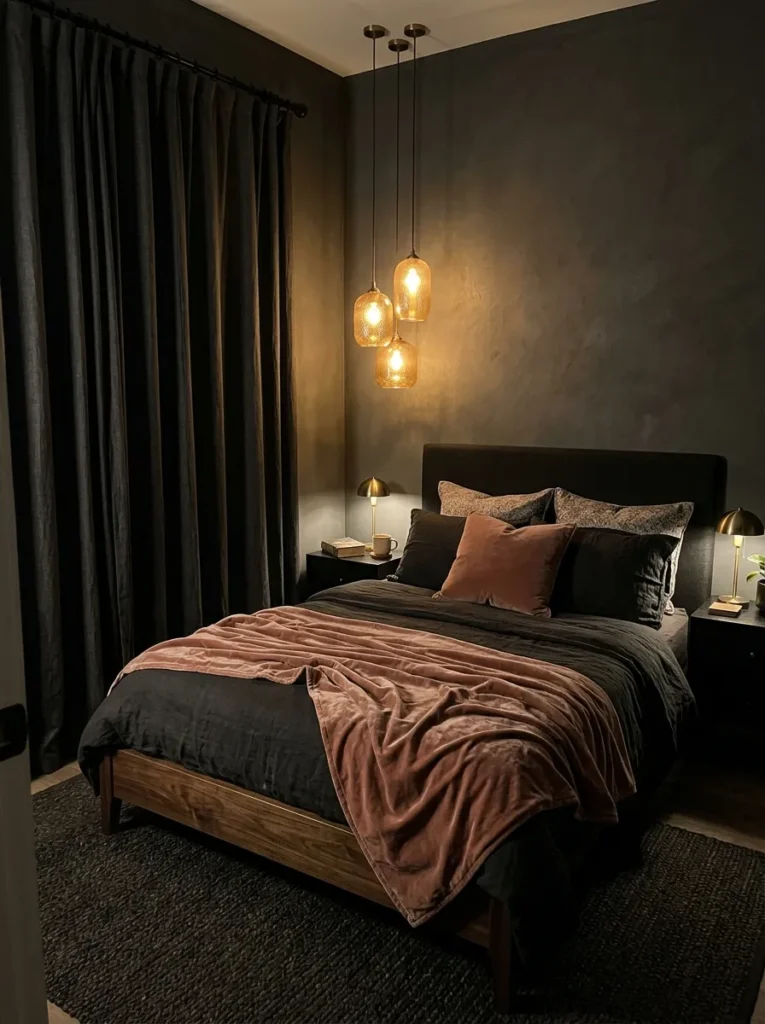
- Deep onyx black, amber glass gold, smoked walnut, dusty clay pink
- Amber glass pendant lights in a cluster of three, warm low-glow bulbs, minimal natural light with heavy linen blackout curtains for a dim, cocooned feel
- Smoked walnut bed frame with a low, wide silhouette, onyx-black nightstands, a dusty clay pink velvet throw folded at the foot
- The clustered amber glass pendants themselves, hung at varying heights above the bed like a small constellation
Why this works: Intentionally minimizing natural light and relying on warm amber glass fixtures creates a cocooned, evening-first mood, which suits a bedroom meant primarily for rest rather than daytime use.
Not every bedroom needs to be styled for daylight, and this one embraces that directly. Heavy linen blackout curtains keep the room dim by design, letting three clustered amber glass pendants do the visual and functional work instead. Hung at slightly different heights above the bed, they create a warm, glowing cluster that feels intimate rather than dramatic. Onyx-black nightstands and a smoked walnut bed frame keep the furniture grounded and dark, while a single dusty clay pink throw softens the palette just enough to keep it from feeling too severe.
In my experience, rooms built around warm glass lighting like this tend to become people’s favorite spot in the house precisely because they feel separate from the rest of the home’s daytime rhythm. This is a masculine boho bedroom idea suited to anyone who treats their bedroom purely as a retreat — a space for sleep and quiet, not multitasking, work, or bright morning routines.
Styling Principles for Masculine Boho
Boho design usually relies on softness — light fabrics, curved lines, delicate layering. A masculine take on it keeps that same relaxed, collected spirit but swaps softness for weight. Choose materials that show age well: leather, raw wood, aged metal, and hand-plastered walls all develop character over time instead of wearing out. Keep palettes to three or four deep, muted tones rather than bright or pastel combinations, and let one bold textile or fixture carry the room’s personality instead of layering many small decorative pieces. Structure matters too — a low platform bed, a solid wood frame, or an iron silhouette gives the room a grounded base that boho’s looser textures and patterns can build on without ever feeling delicate or fussy.
Conclusion:
A bedroom should feel like it belongs to the person sleeping in it, and that’s exactly what these masculine boho bedroom ideas are built for. Deeper color, rugged materials, and structured furniture can carry all the warmth and personality of traditional boho design without ever feeling delicate or borrowed. I’ve seen how much a room shifts once someone finally finds a version of a style that actually fits them, and that shift is worth chasing.
Save this post for when you’re ready to start, try even one idea in your own space, and pass it along to anyone still searching for a boho look that feels like theirs.
FAQs About Masculine Boho Bedroom Design
How do I make a boho bedroom feel more masculine? Lean on deeper, more muted colors instead of pastels, choose structured furniture over delicate or curved pieces, and favor materials like leather, iron, and raw wood over light fabrics and rattan alone.
What colors work best for a masculine boho bedroom? Charcoal, espresso, rust, olive, ochre, and navy all work well as anchor tones, especially paired with warm metals like brass, bronze, or copper.
Can I get this look on a budget? Yes. A single bold textile, like a vintage rug or dyed macramé piece, paired with warm lighting and one or two structural furniture pieces can carry the whole look without a full room overhaul.
How do I avoid my boho bedroom looking too feminine? Limit delicate details like beaded fixtures, pastel florals, or excessive trailing plants. Choose one or two boho elements per room rather than combining several soft, decorative touches at once.
What materials hold up best in a real, lived-in bedroom? Leather, solid wood, iron, and wool all wear well over time. My husband’s construction background has taught me that natural materials with some inherent durability — rather than trend-driven decorative finishes — tend to outlast a redesign.
What plants suit a masculine boho bedroom? Structural plants with upright or glossy leaves, like snake plants, ZZ plants, or fiddle leaf figs, fit the aesthetic better than delicate trailing varieties like string of pearls or maidenhair fern.