Indoor Plants That Match Your Decor Style
Ever bought a gorgeous plant online, brought it home, and realized it just… doesn’t fit? You’re not alone. Picking indoor plants that match your decor style is trickier than it looks, because the plant that looks stunning in someone else’s boho loft can feel completely out of place in your minimalist living room or cozy farmhouse kitchen.
In my experience working with plants and styling spaces, most people choose based on trends alone, then wonder why the vibe feels off. This guide walks through real pairings, backed by both design logic and actual plant science, so you can choose greenery that looks intentional and thrives in your specific light, room, and lifestyle. By the end, you’ll have a clear, save-worthy list of ideas for every style, from Scandinavian calm to Japandi minimalism, plus the exact styling tricks that make each one work in real homes, not just photos.
Scandinavian Style: Norfolk Pine (Araucaria heterophylla)
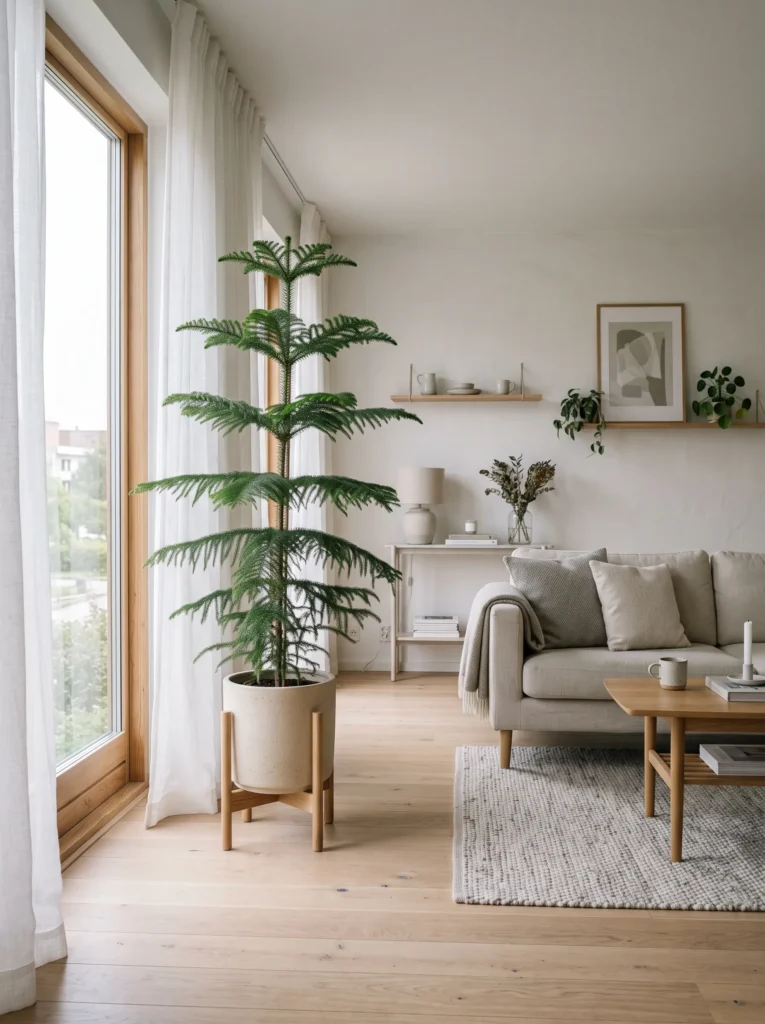
- Even, tiered branching mirrors the geometric calm found in Scandinavian rooms
- Native to subtropical Norfolk Island, so it wants bright light and steady humidity, not sparse window light alone
- Slow, upright growth means it holds its shape for years without heavy pruning
- Pairs with pale birch or light oak stands for a cohesive light-wood palette
- I’ve noticed dropped needles are almost always a humidity issue, not a light issue
Scandinavian rooms lean on quiet geometry, and Norfolk Island pine delivers that without trying. Its branches grow in even, symmetrical tiers, almost like a living blueprint, which is why it reads as calm rather than busy inside a pared-back space. In its native habitat on a small subtropical island, this plant grows in humid, bright coastal air, not the low, gray light many Scandinavian-style homes actually get in winter. That mismatch is the biggest reason it struggles indoors: needle drop usually means low humidity or too little light, not overwatering, which is the mistake most people assume first.
In my experience, Norfolk pine does best a few feet back from a south or west-facing window, where it gets bright but filtered light rather than harsh midday sun. A light misting a few times a week, or a pebble tray underneath, makes a real difference in humid-starved apartments with forced-air heat. For styling, set it in a pale, unglazed ceramic pot on a light oak plant stand so the wood tone continues the room’s palette instead of competing with it. One tall Norfolk pine in a quiet corner does more for a Scandinavian look than three smaller plants scattered around.
Farmhouse Style: Rosemary Topiary (Salvia rosmarinus, syn. Rosmarinus officinalis)
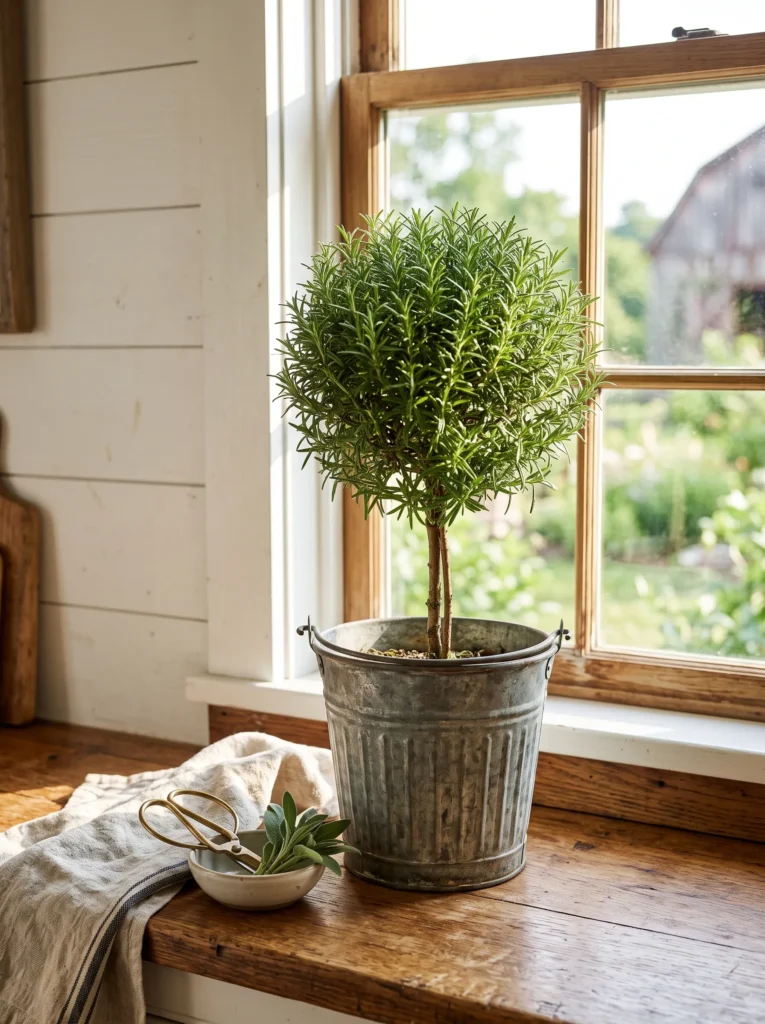
- Trained into a tidy ball or spiral shape, rosemary looks intentional, not wild, on a farmhouse counter
- Native to dry Mediterranean hillsides, so it wants full sun and fast-draining soil — the opposite of a cozy, damp kitchen windowsill
- Doubles as an actual kitchen herb, which fits the practical, lived-in farmhouse spirit
- A galvanized tin pot picks up on farmhouse metal accents already common in that style
- I’ve killed more rosemary from overwatering than any other plant — it wants to be nearly forgotten
Farmhouse style is built on things that look useful, and rosemary trained into a topiary shape earns its place on both fronts. It’s an actual cooking herb, but shaped into a neat ball or spiral, it also reads as tidy, intentional decor rather than a stray kitchen plant. The catch is that rosemary comes from dry, sun-baked Mediterranean hillsides, so indoor air and average window light are rarely enough on their own. It needs at least six hours of direct sun and soil that drains almost immediately, or it develops root rot and powdery mildew within weeks of looking perfectly healthy.
In my own kitchen, rosemary only really thrived once I moved it to the sunniest windowsill I had and stopped watering on any kind of schedule. Water only when the top two inches of soil are completely dry, and skip the saucer that lets water sit underneath. For styling, plant it in a galvanized tin bucket or pail, the kind farmhouse kitchens already use for tools and produce, and set two or three at different heights along a windowsill instead of just one. That small repetition creates the collected, working-farmhouse look photos of these spaces are known for.
Japandi Style: Kokedama Moss Ball (Hypnum spp. moss with fern or foliage plant)
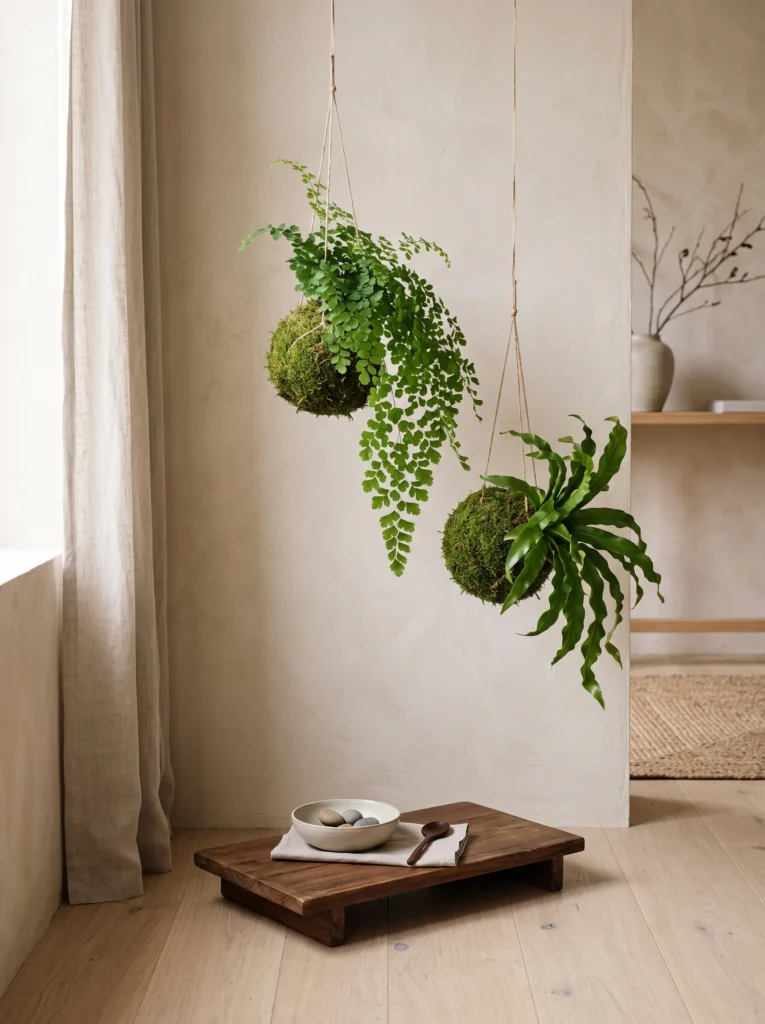
- The exposed moss-and-root ball itself becomes the decor — no pot needed at all
- Moss thrives in high humidity and indirect light, which fits the calm, softly lit rooms Japandi design favors
- The imperfect, handmade shape lines up with the wabi-sabi idea that beauty doesn’t need to be flawless
- Suspending it above a low wood tray keeps floors and surfaces visually clear, a core Japandi principle
- I’ve found soaking it in a bowl once a week works far better than misting alone
Japandi design blends Japanese restraint with Scandinavian warmth, and a kokedama moss ball fits that idea more literally than almost any plant option. Instead of a pot, the roots are wrapped in a ball of soil and moss, tied off with natural twine, so the plant itself becomes the entire object. Moss has no deep roots to draw groundwater, which is why it depends on humidity and surface moisture instead, and dries out faster than potted soil ever does. That single detail is what most people get wrong when they first try one, expecting it to behave like a regular houseplant.
In my experience, kokedama needs a full soak in a bowl of water once a week rather than a light misting, which barely reaches the roots at the center. Let it sit until it stops bubbling, then drain it well before returning it to its spot. For styling, hang two or three at slightly different lengths above a low wooden tray or stone bowl, so negative space stays visible below and around them. That restraint, more space than object, is really the whole idea behind **indoor plants that match your decor style** when the style in question is Japandi.
Silver Dragon Alocasia for a Luxury Statement (Alocasia baginda ‘Silver Dragon’)
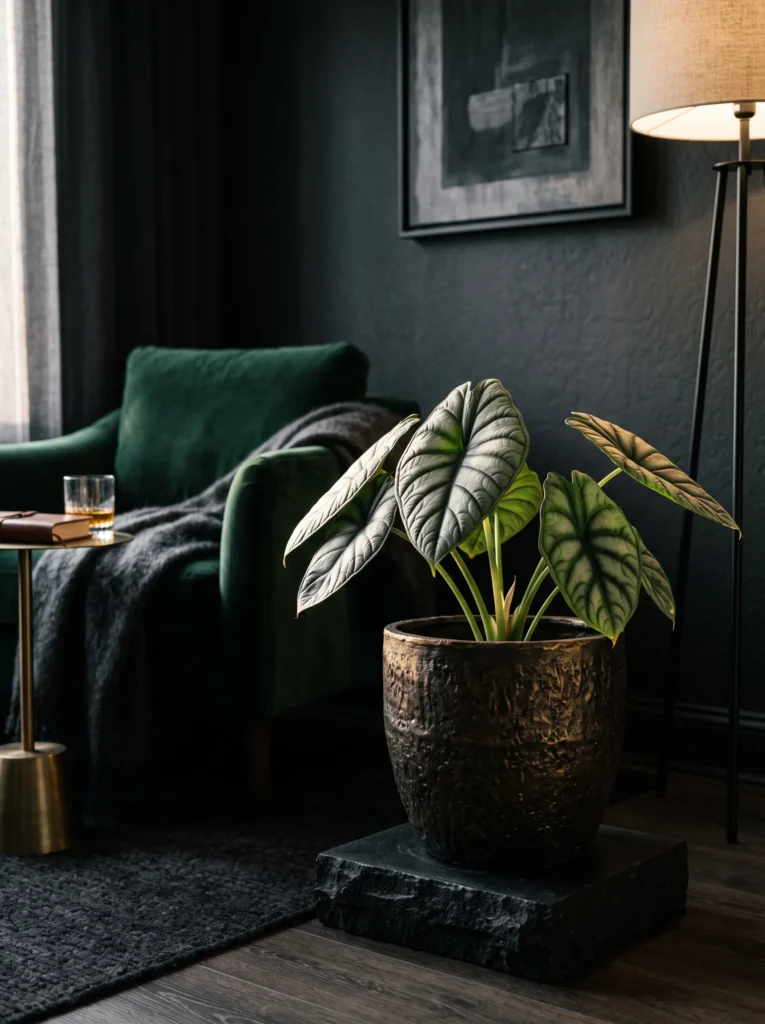
- Metallic, dragon-scale leaf texture reads as luxury rather than typical greenery
- Native to tropical understories, so it wants filtered light, not the harsh direct sun people assume “silver” plants need
- The dark stem and silvery leaf combo works especially well against charcoal or deep green walls
- A single stem in a heavy stone or bronze pot creates instant visual weight
- I’ve noticed curling leaf edges almost always mean the air is too dry, not too dark
Alocasia ‘Silver Dragon’ looks like it belongs in a design magazine, but the reason it photographs so well comes down to real botany. Its leaves reflect light because of a thin air layer beneath the surface cells, which is also why it evolved in shaded, humid rainforest understories rather than open sun. That’s the opposite of what most people assume when they see something this metallic and dramatic. Give it bright, indirect light and steady humidity, and the silvering intensifies. Put it in a dim corner expecting drama for free, and the leaves dull and shrink within a season.
In my experience, Silver Dragon sulks the moment humidity drops below what a typical heated apartment offers in winter. I run a small humidifier nearby rather than misting, since misting alone rarely raises humidity for more than a few minutes. For styling, keep it to a single dramatic stem in a dark, heavy pot, bronze or matte black, rather than crowding it with other plants. It reads best as a solo statement piece near a dark accent wall, where the metallic sheen actually catches and bounces available light instead of disappearing into a busy plant grouping.
Burgundy Rubber Plant for Moody Rooms (Ficus elastica ‘Burgundy’)
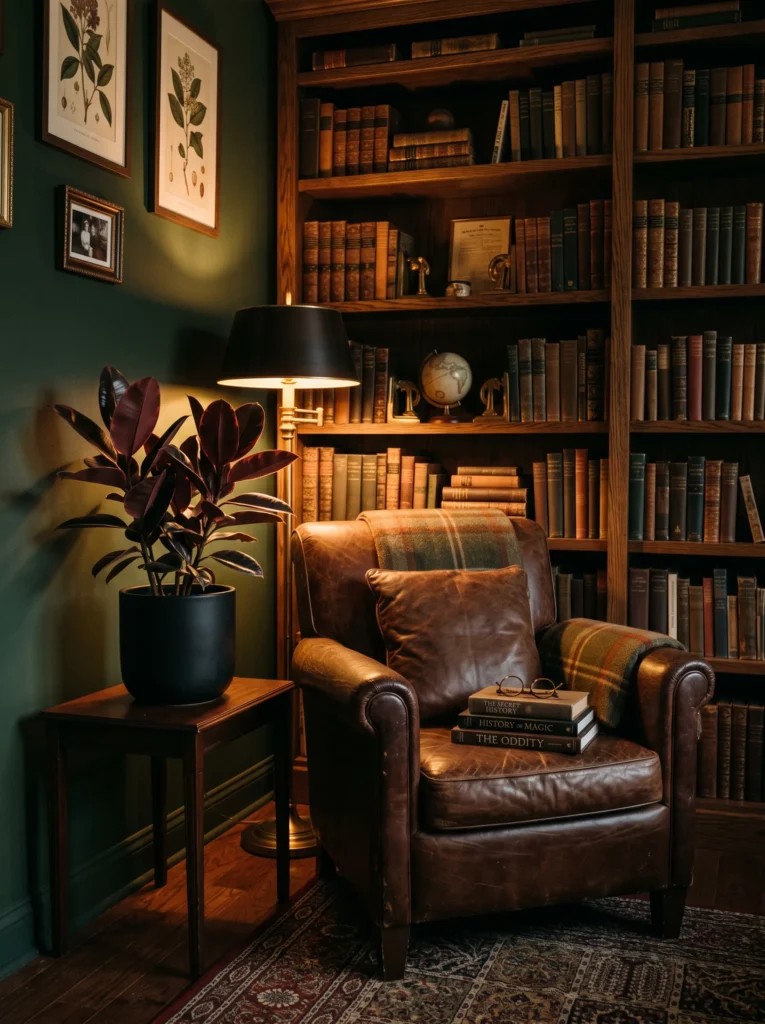
- Deep maroon, almost black-red leaves add color without needing flowers or patterned foliage
- Thick, waxy leaves store water efficiently, making it genuinely tolerant of missed waterings
- Glossy leaf surface catches warm lamp light in a way matte-leaved plants can’t
- Pairs beautifully with deep green, espresso, or charcoal walls for a cocooning, moody feel
- That’s why many designers recommend it for rooms with warm lighting instead of cool daylight
Most rubber plant advice defaults to the standard green variety, but the burgundy cultivar does more for a moody, layered room. Its deep maroon color comes from anthocyanin pigments in the leaf, the same compound responsible for red and purple tones in many plants, and it intensifies with brighter light rather than fading. That waxy, thick leaf structure also means it holds water reserves well, so it tolerates the kind of inconsistent watering that busy households actually produce. In a room built around warm lamp light and deep wall color, this plant’s glossy surface does real visual work that flatter, matte leaves simply can’t manage.
I’ve found burgundy rubber plant handles dry indoor air far better than people expect, as long as it isn’t sitting in a cold draft near a door. Wipe the leaves every few weeks with a damp cloth, both to keep the shine and because dust buildup blocks light absorption more than most people realize. For styling, set it beside a reading chair or bookshelf where warm lamp light hits the glossy leaves directly at night. That single light source turns an ordinary plant into one of the more atmospheric options in this decor-style plant list after dark.
Pinstripe Calathea Display for Boho-Luxe Bedrooms (Goeppertia ornata, syn. Calathea ornata)
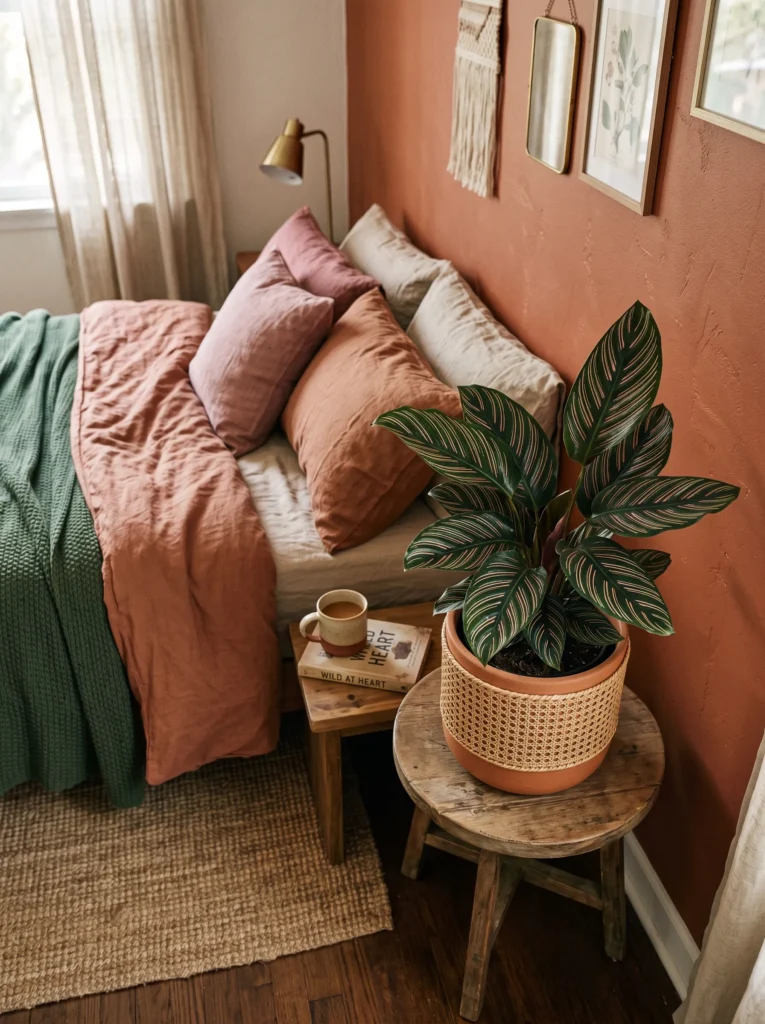
- Hand-painted-looking pink pinstripes make it feel more like art than a typical leafy plant
- Native to Brazilian rainforest floors, so it wants low-to-medium light and consistently moist, never soggy, soil
- Leaves fold upward at night, a movement called nyctinasty, adding subtle motion to a room over the course of a day
- Works especially well grouped near a bed or reading nook rather than a bright, exposed window
- I’ve learned the hard way that tap water often causes brown leaf tips on this one
Pinstripe calathea earns its keep through pattern alone, with fine pink lines running across deep green leaves like something drawn by hand rather than grown. It comes from the shaded floor of Brazilian rainforests, which explains why it actually prefers dimmer corners that most other patterned plants would sulk in. Its leaves also fold upward at night and open again by morning, a response to the light-dark cycle that means the plant subtly changes shape over the course of a day. In a quiet bedroom or reading corner, that slow movement adds a kind of living detail that static decor never can.
I’ve learned the hard way that calathea is sensitive to the minerals and chlorine in regular tap water, which show up as crisped brown tips within weeks. Switching to filtered or rested water made a visible difference within a single growth cycle. For styling, group it slightly away from direct window light, ideally near a bed or a soft reading chair where its folding leaves are actually noticed at different times of day. Set it in a woven ceramic pot to echo the pattern in the leaves themselves, rather than a plain solid-color planter that competes with it.
Sculptural Aloe Corner for Minimalist Spaces (Aloe vera; ornamental hybrids like Aloe striata also work well)
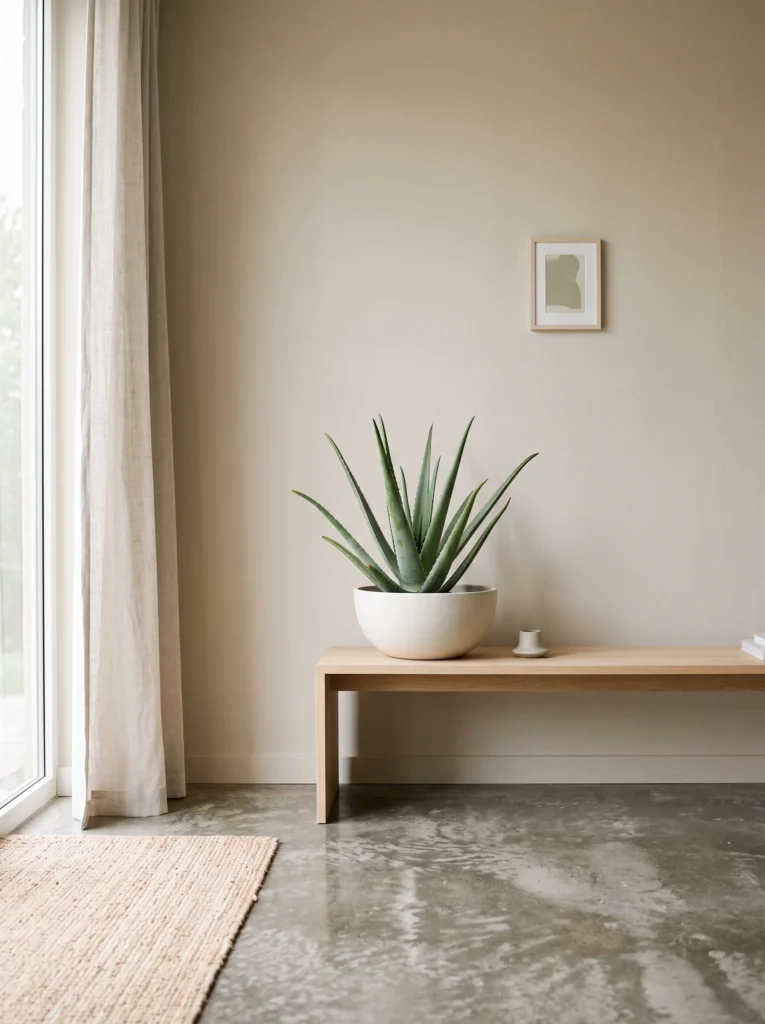
- A single aloe in a wide, matte bowl planter reads like a piece of sculpture, not a houseplant
- Its thick, upright rosette mirrors the clean lines minimalist rooms are built on
- Because it’s a succulent, it survives long stretches between waterings — good for busy weeks
- A stone-colored or bone-white pot keeps the eye on the plant’s shape, not the container
- I’ve noticed aloe holds its form for years without needing constant pruning, unlike leafier plants
Most people reach for snake plant when they think minimalist, but aloe deserves the spot more. Its fleshy, upright leaves grow in a tight rosette that looks intentional from every angle, almost like it was designed rather than grown. Aloe is a CAM plant, meaning it opens its pores at night instead of during the day, which is why it loses so little water and tolerates weeks of neglect. That physiology is exactly what makes it forgiving for minimalist homes, where fewer objects means each one needs to earn its place without demanding constant attention or fussy care routines.
In my own home, I keep one aloe on a low console table where morning light hits it directly for a few hours. That’s the detail people miss: aloe needs bright, direct light to keep its compact shape, and in low light it stretches and flops, losing the sculptural look that makes it work for **indoor plants that match your decor style** in the first place. Place it near a window with unobstructed light, choose a wide shallow pot so roots can spread, and resist the urge to water on a schedule. Water only when the soil is bone dry.
Trailing Fishbone Cactus for Boho Hanging Corners (Epiphyllum anguliger)
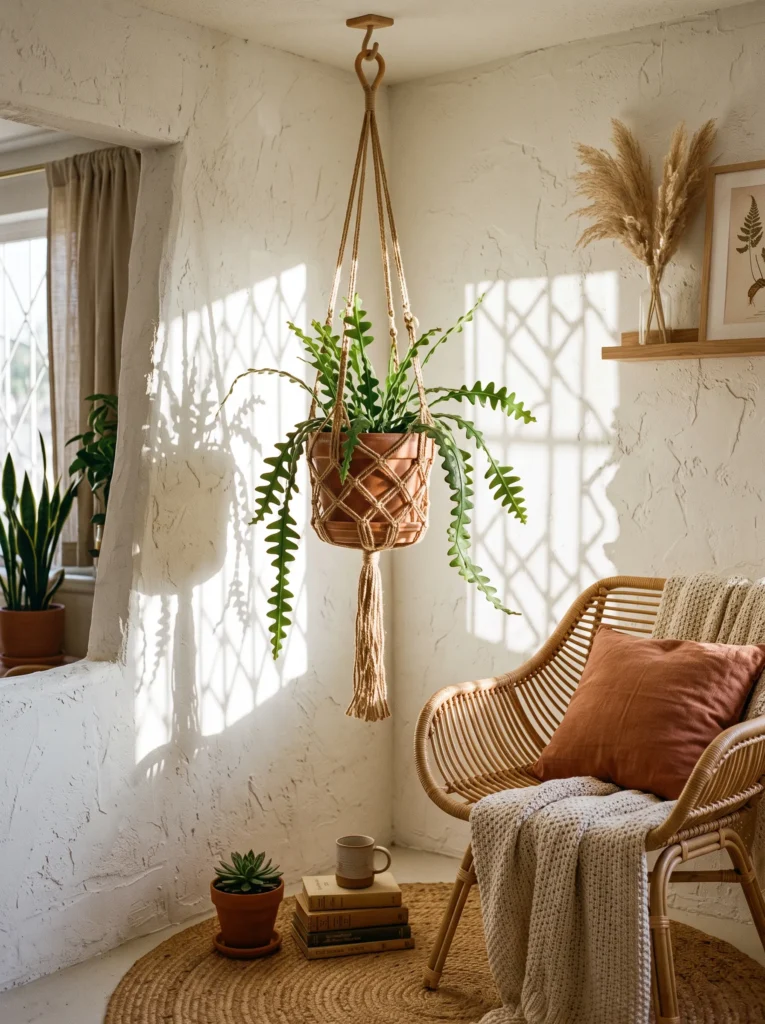
- Zigzag leaves add movement without leaning on the overused macrame-pothos combo
- Epiphytic habit means it thrives in a hanging planter, not a soil-heavy pot
- Blooms with large, fragrant flowers under the right light — a bonus most trailing plants skip
- Pairs beautifully with woven rattan or clay hangers for texture layering
- I’ve tried it against a plain white wall and the shadow pattern alone became the decor
Everyone defaults to pothos when they picture boho hanging plants, but fishbone cactus tells a more interesting story. Its flattened, zigzagging stems cascade downward in a pattern no vine can copy, and because it’s epiphytic — meaning in the wild it grows on tree bark rather than in soil — it actually prefers a loose, chunky mix over dense potting soil. That’s a detail most plant guides skip. Give it a hanging basket with orchid bark blended into the mix, and you’ll see stronger, glossier growth than a plant crammed into regular potting soil ever produces indoors.
I’ve tried fishbone cactus in a west-facing window, and the difference bright, indirect light makes is dramatic compared to a shadier spot. It’s still a cactus at heart, which means it stores water in those flattened pads and can rot fast if the hanger sits in a soggy pot with no drainage. Let it dry out almost completely between waterings, then soak thoroughly. For styling, hang it slightly off-center from a woven chair or rattan mirror so the zigzag shadow falls across a bare wall in the afternoon. That layered shadow does more visual work than another plant could.
Mounted Staghorn Display for Industrial Lofts (Platycerium bifurcatum)
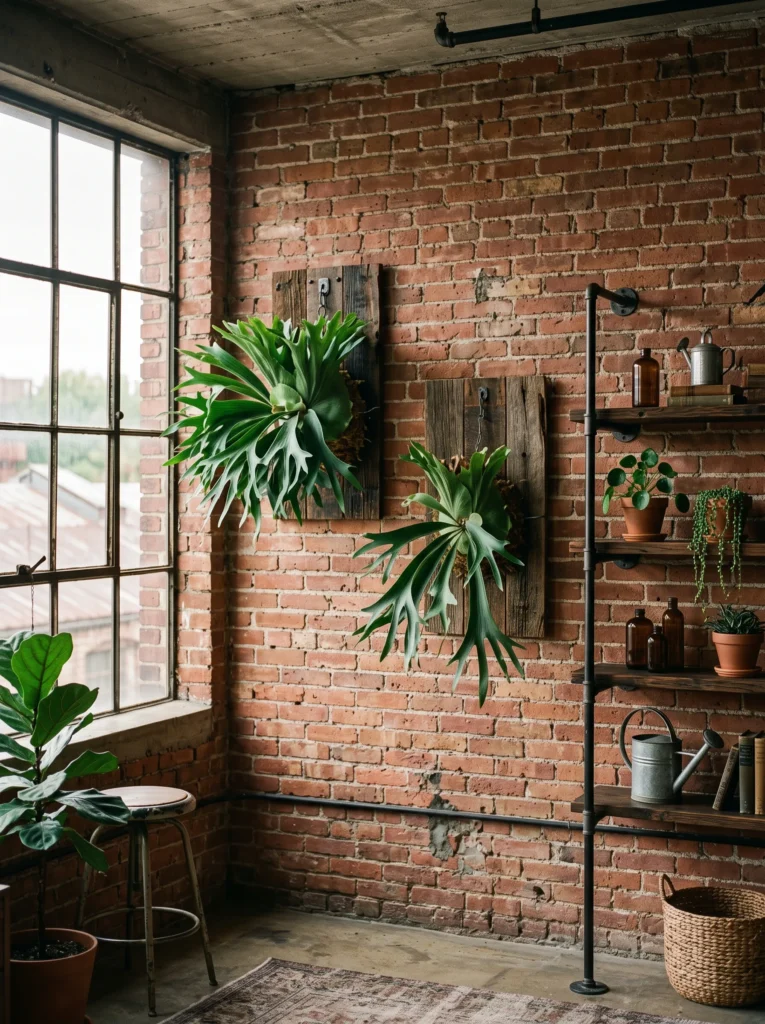
- Turns a bare brick or concrete wall into a living wall piece
- Epiphytic fern grows without soil, mounted on reclaimed wood or metal backing
- Antler-shaped fronds contrast beautifully with hard industrial edges
- Low daily maintenance once mounted — just an occasional soak
- That’s why many designers recommend it for loft spaces with high, bare walls
A fiddle leaf fig gets recommended for every industrial loft, but a mounted staghorn fern actually uses the wall the way industrial spaces are built to be used. In its native rainforest habitat, staghorn fern grows attached to tree trunks, absorbing moisture through its roots and fronds rather than pulling water from soil, which is exactly why it can be mounted bare-root on a board with just a layer of sphagnum moss. That epiphytic growth habit is what makes it possible to hang against raw brick or blackened steel without a pot in sight, something soil-bound plants simply cannot do.
In my experience, the biggest mistake people make with a mounted staghorn is treating it like a potted plant and watering on a fixed schedule. Because there’s no soil to hold moisture, it dries out faster and needs a weekly soak in a sink rather than a quick splash from a watering can. For styling, mount it at eye level or slightly above, ideally near a window that gets filtered light rather than direct sun, which can scorch the fronds. Group two staghorns at slightly different heights instead of one — the layered antler shapes read as intentional, not accidental.
Waxy Anthurium Blooms for Modern Tropical Rooms (Anthurium andraeanum)
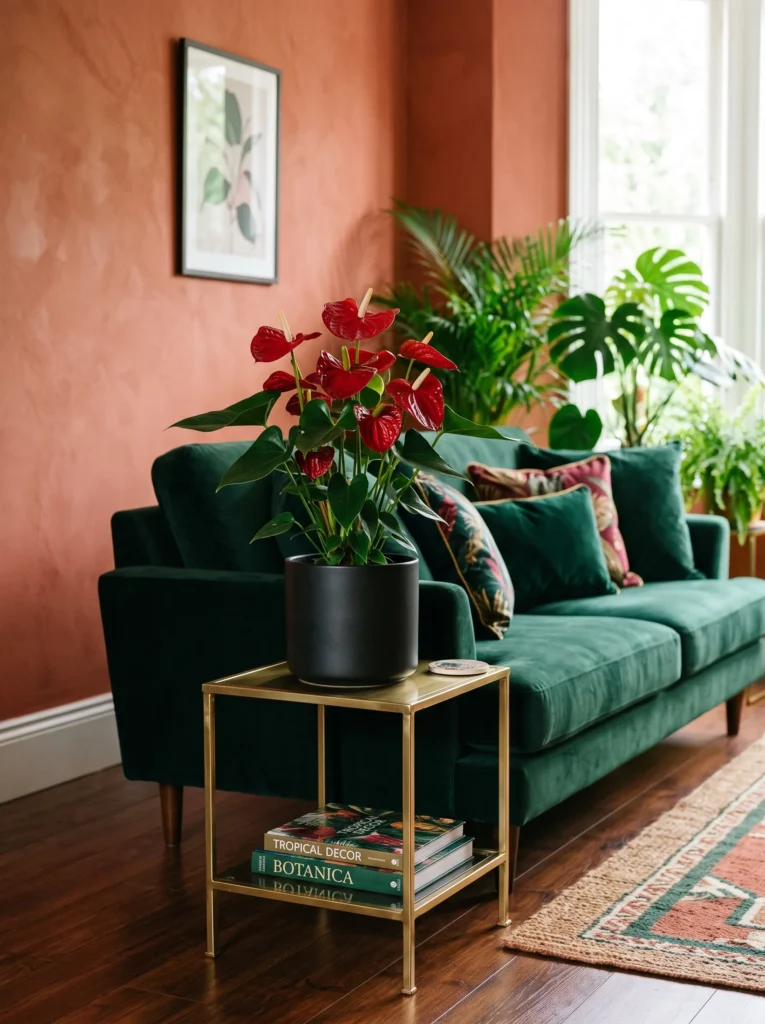
- The waxy, heart-shaped bloom isn’t a petal at all, which is part of what makes it so long-lasting
- Native to tropical rainforest understories, so it wants warm temperatures and humidity, not a dry sunny sill
- Blooms can last six to eight weeks each, far longer than most flowering houseplants
- Deep red or dark pink varieties pair beautifully with black or brass containers for a modern edge
- I’ve noticed fewer, larger blooms almost always beat a plant covered in small, pale ones
Anthurium gets mistaken for a fussy flower, but that waxy red “petal” is technically a modified leaf called a spathe, protecting a small spike of actual flowers at its center. That structure is why the bloom holds its color and shape for weeks rather than wilting in days like a cut flower would. Because it evolved in warm, humid rainforest canopies, it struggles in dry, air-conditioned rooms and rewards a pebble tray or nearby humidifier with noticeably glossier leaves and steadier blooming. In a modern space built around bold, singular color moments, one well-lit anthurium does more than a whole shelf of smaller flowering plants.
In my experience, anthurium blooms best with bright, indirect light rather than the deep shade people assume tropical plants need. Too little light gives you healthy leaves but almost no flowers, which is the most common complaint I hear. For styling, choose a matte black or dark bronze pot to let the glossy red spathe read as the room’s color anchor rather than competing with a bright container. Place it somewhere it’s seen up close, a side table or low shelf, since the texture and shine are half the appeal and get lost from across a room.
Fragrant Jasmine Vine for Cottage-Style Nooks (Jasminum polyanthum)
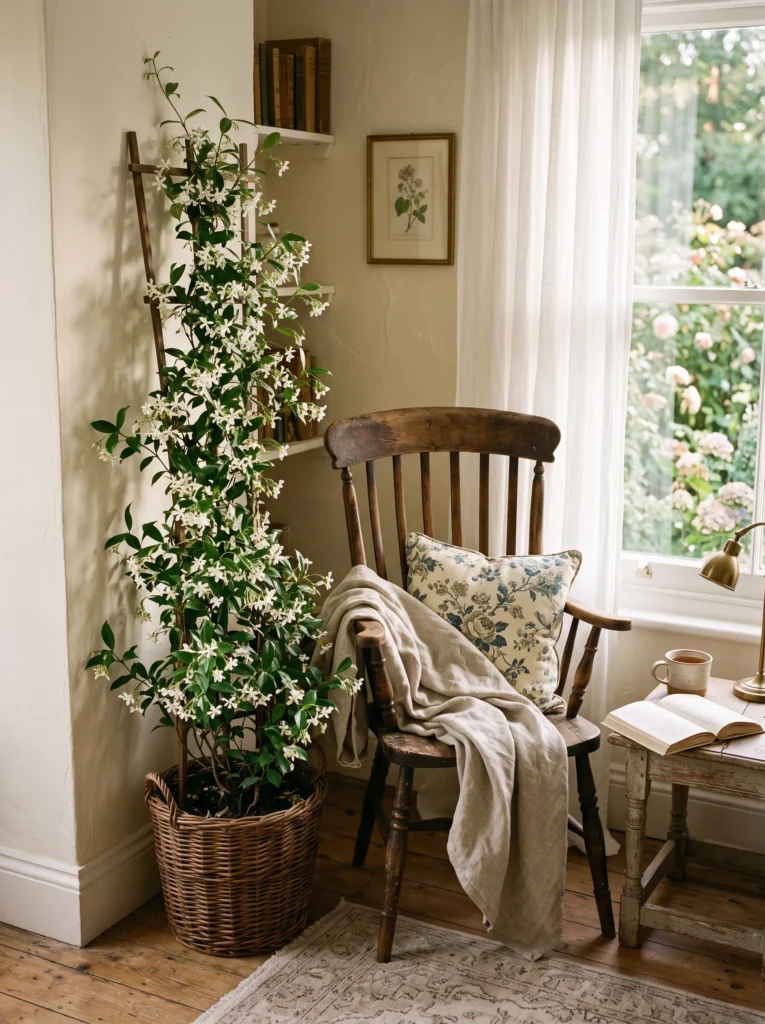
- Small white star-shaped blooms bring scent into a room, not just visual interest
- Needs a genuine cool, dark rest period in winter to trigger the following season’s flowers
- Climbing habit works beautifully trained on a slim trellis or wrapped around a window frame
- Pairs well with vintage wood and woven textures for a soft, romantic cottage feel
- I’ve tried skipping the winter rest period and gotten almost no blooms the next year
Jasmine is one of the only common houseplants that adds fragrance to the “how it feels in a room” side of styling, not just how it looks. Those small white flowers open in clusters and release scent most strongly in the evening, which makes it a genuinely different plant to live with compared to anything valued for foliage alone. The detail most guides skip is that jasmine needs a real dormant period, several weeks of cooler temperatures and shorter light, to set flower buds for the following season. Skip that rest and the vine grows plenty of green but produces disappointingly few blooms.
I’ve tried keeping jasmine in a consistently warm room year-round, and the difference in flowering compared to giving it a cool windowsill in winter was dramatic. Moving it somewhere closer to 55–60°F for six to eight weeks made the following bloom season noticeably fuller. For styling, train the vine on a slim wooden trellis or let it wind loosely around a window frame rather than staking it upright, since the natural climbing habit is part of its charm. Set it in a woven basket planter to echo the soft, lived-in texture that makes cottage-style rooms feel gathered rather than staged.
Compact African Violets for Sunny Windowsills (Streptocarpus ionanthus, syn. Saintpaulia ionantha)
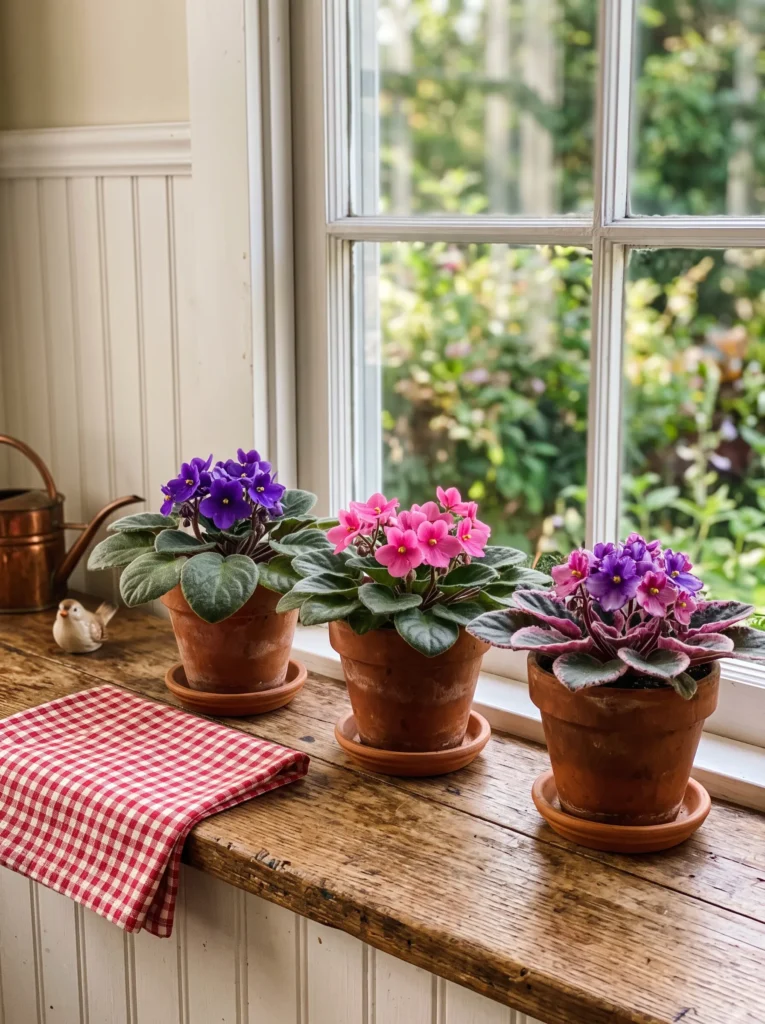
- Compact rosette shape and near-constant blooming make it ideal for small, sunny windowsills
- Fuzzy leaves are sensitive to cold water spots, so bottom-watering keeps foliage looking clean
- Blooms in small flushes almost year-round under the right light, unlike most seasonal flowering plants
- Grouping three or four in mismatched small pots creates a full, collected windowsill look fast
- I’ve found rotating the pot a quarter turn each week keeps growth even instead of lopsided
African violet gets dismissed as an old-fashioned plant, but its near-constant blooming under the right conditions makes it one of the more reliable flowering options for a small, sunny spot. It wants bright, indirect light rather than direct sun, which scorches the soft, fuzzy leaves and leaves visible pale patches within days. That fuzz is also why cold water left sitting on the foliage causes brown spots, a common mistake that gets blamed on disease when it’s really just water temperature. Bottom-watering, setting the pot in a shallow dish of room-temperature water for twenty minutes, avoids the problem entirely.
I’ve found a small cluster of three or four African violets in mismatched terracotta pots looks far more intentional on a windowsill than one large plant alone. Turning each pot a quarter turn weekly keeps growth even, since these plants lean hard toward their light source. For styling, keep the pots small and close together rather than spreading them out, so the blooms read as one gathered moment of color against a plain wall or beadboard backdrop. That density is what turns a humble, old-school flowering plant into a genuinely photogenic corner of a farmhouse kitchen.
Cascading Orchid Display for Spa-Like Bathrooms (Phalaenopsis spp.)
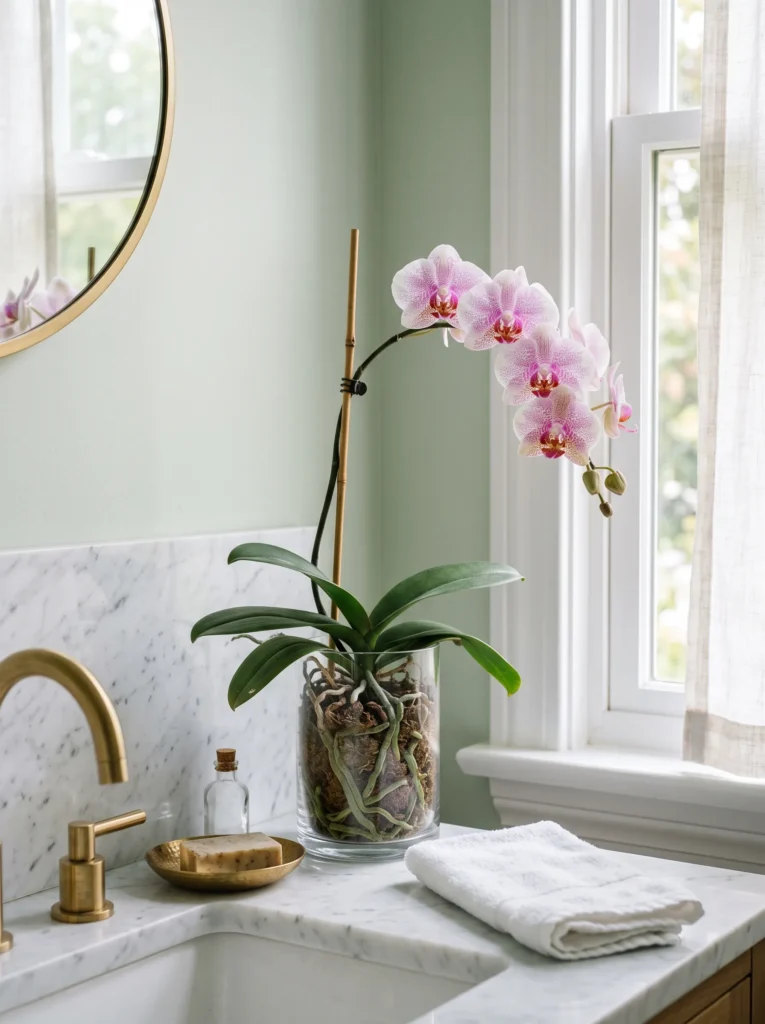
- Exposed roots in a clear glass container turn the plant’s structure into part of the display
- Aerial roots absorb humidity from the air, which is why bathrooms often suit orchids better than dry bedrooms
- A single arching bloom spike creates elegant height without needing a tall pot or stand
- Pairs beautifully with marble, brass, or glass for a refined, spa-like feel
- I’ve noticed shriveled roots almost always mean underwatering, not the overwatering everyone worries about first
Orchids get a reputation for being difficult, but most of that comes from treating them like ordinary potted plants instead of the epiphytes they actually are. In the wild, phalaenopsis orchids grow clinging to tree bark, with roots exposed to open air rather than buried in soil, which is exactly why a clear glass or slatted wooden basket works better than a solid ceramic pot. Those visible roots aren’t a flaw to hide; they’re the plant’s real anatomy, and letting them show is part of what makes a mounted orchid display feel deliberate rather than accidental in a refined bathroom or hallway.
I’ve noticed most orchid problems trace back to watering habits borrowed from regular houseplants. Roots should look plump and silvery-green when moist, and shriveled, papery roots mean it’s been too dry for too long, not the opposite. Soak the roots in room-temperature water for ten minutes weekly, then let them dry completely before the next soak. For styling, place it where the arching bloom spike has room to curve naturally, near a window with filtered light rather than crowded on a shelf. One orchid, given real space, reads as far more elegant than three crammed together.
Painted-Leaf Begonia for Eclectic Shelf Displays (Begonia rex)
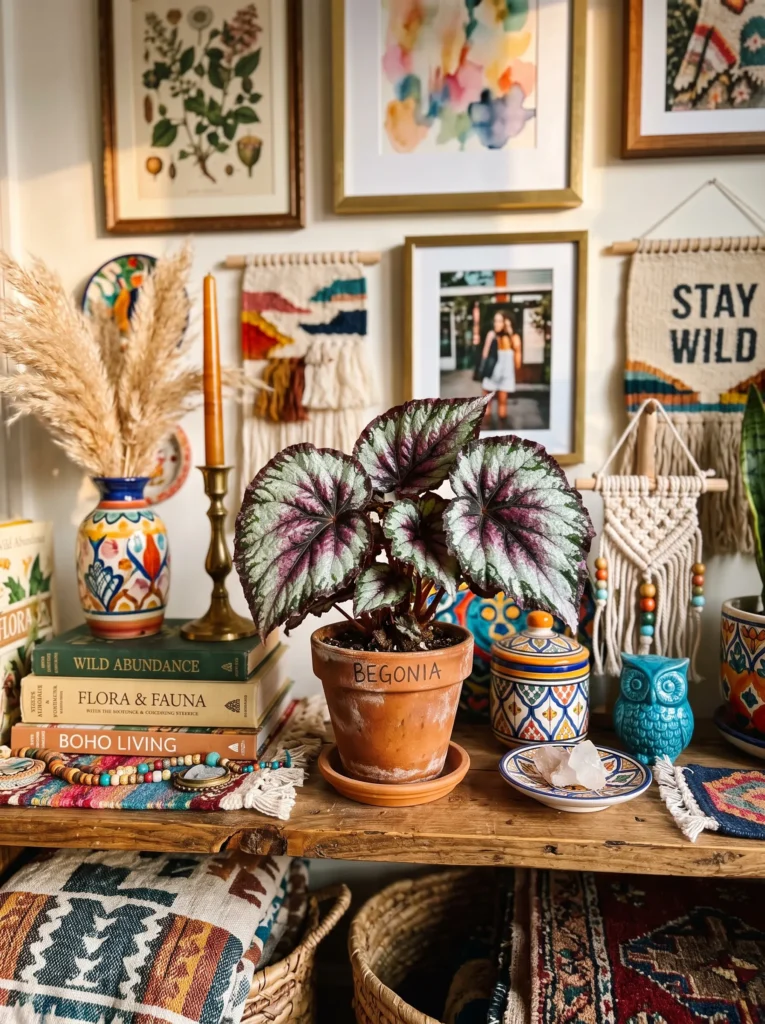
- Swirled metallic-silver and deep-purple leaf patterns look painted rather than grown
- Native to humid forest floors, so it wants medium light and steady moisture, not bright sun or dry air
- No two leaves grow quite the same, giving each plant genuine one-of-a-kind character
- Small size makes it perfect for layering into a shelf or gallery-wall display instead of standing alone
- I’ve tried it near a heater vent once and lost half the leaves within a week
Rex begonia looks almost artificial with its swirled silver, purple, and green leaves, but that pattern comes from a real optical trick: specialized cells near the leaf surface scatter light, creating an iridescent sheen most plants can’t produce. It evolved on shaded, humid forest floors, which is why it resents both bright direct sun and the dry air common near heating vents. Rather than living as a solo statement plant, its compact size and intricate pattern make it a natural fit for a layered shelf display, tucked among books, ceramics, and other small objects where its detail can actually be appreciated up close.
I’ve tried keeping rex begonia in a spot near a heater vent, and the leaf drop was fast and dramatic once the air turned dry. A cooler spot with indirect light and a small humidity tray keeps it far happier. For styling, group it with two or three other small plants and objects of varying heights rather than isolating it, since its pattern reads best in contrast with plainer textures nearby. Rotate it occasionally so growth stays even, and expect each new leaf to unfurl with a slightly different swirl than the last.
Cool-Season Cyclamen for Winter Windowsills (Cyclamen persicum)
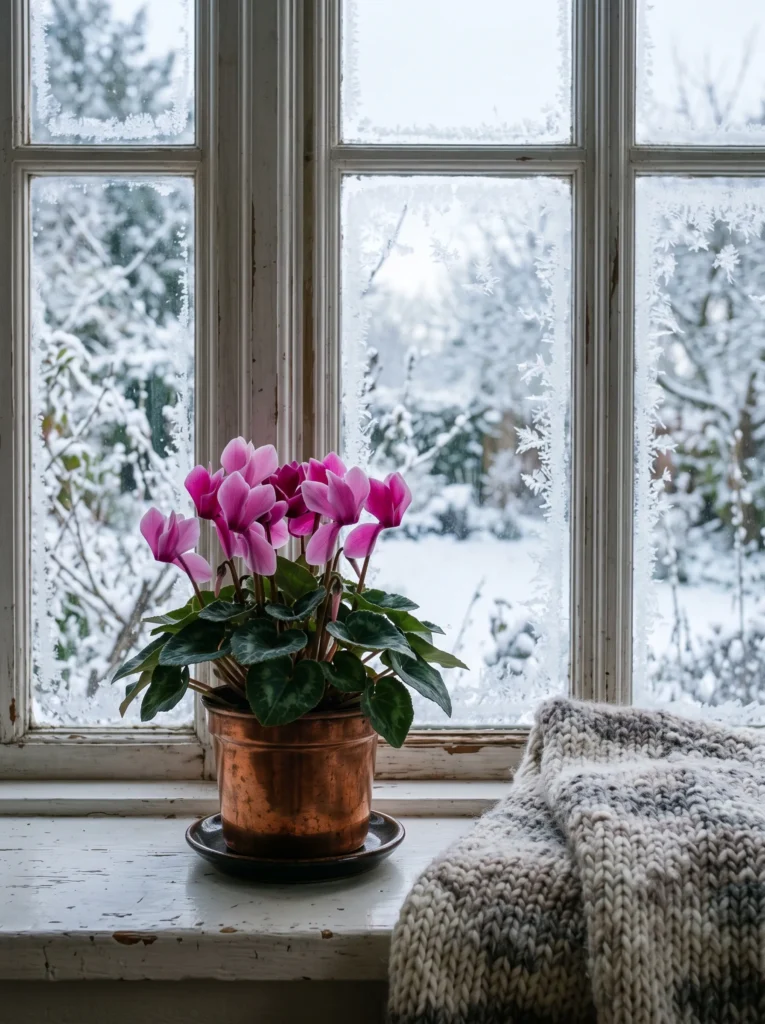
- Upswept, butterfly-shaped blooms add color during the darker months when few plants flower
- Actually prefers cooler rooms, closer to 50–65°F, unlike most flowering houseplants
- Goes dormant and drops leaves in summer, which is normal, not a sign it’s dying
- A cool metal pot, like copper or brushed steel, suits its wintry, crisp character
- I’ve learned the hard way that warm rooms shorten its bloom time dramatically
Cyclamen flips the usual houseplant script by blooming through the coldest, darkest months and resting through summer instead of the other way around. Its upswept petals evolved to catch what little pollinator activity exists in cool Mediterranean winters, which is also why the plant genuinely prefers a cool room, somewhere closer to an unheated hallway than a warm living room, to keep flowering for months rather than weeks. Placed on a cool windowsill in winter, it becomes one of the few flowering plants that actually times its best display to match the season most rooms feel starkest and most in need of color.
I’ve learned the hard way that a warm, centrally heated room cuts cyclamen’s bloom time short, sometimes by half. Keeping it somewhere cooler, even a slightly drafty hallway table, kept flowers going for nearly three months longer than in my living room. Water from the bottom rather than overhead, since water sitting in the crown of the tuber causes rot quickly. For styling, set it in a cool-toned metal pot, copper or brushed steel work well, near a window where winter light is strongest. When it goes dormant and drops its leaves in late spring, resist the urge to throw it out; it’s simply resting.
Bold Bird of Paradise Bloom for Tropical Living Rooms (Strelitzia reginae)
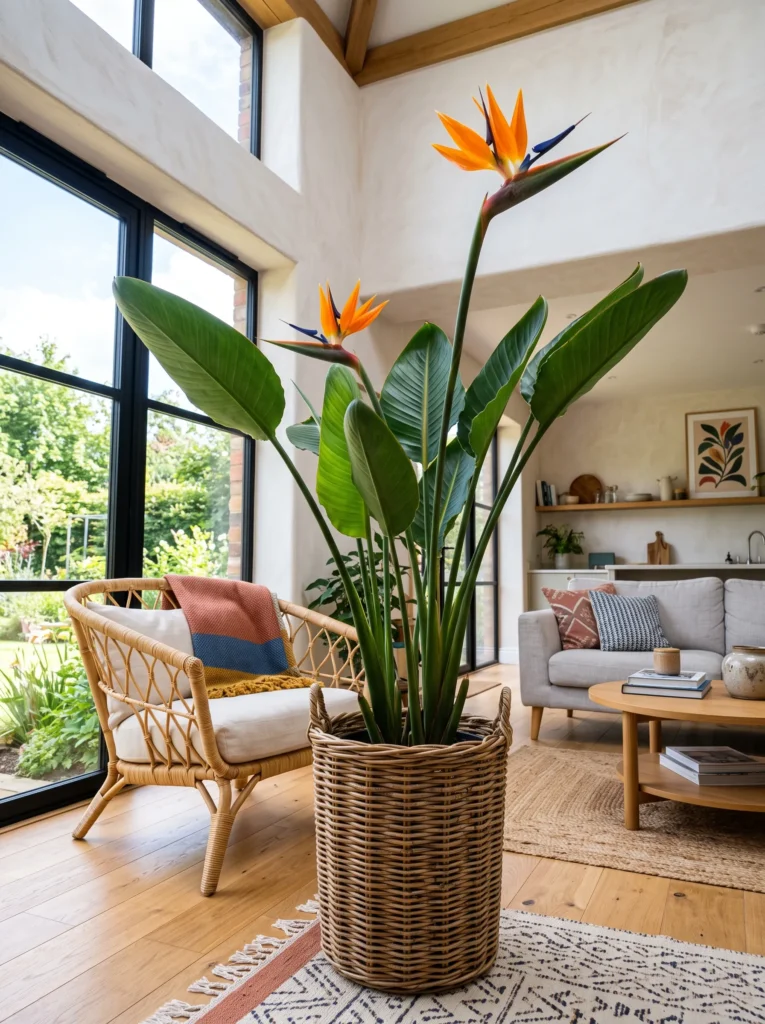
- The crane-shaped bloom is a genuine architectural moment, rare among large tropical houseplants
- Needs several years of maturity and strong direct light before it flowers indoors at all
- Broad paddle leaves alone already work as a statement plant, with blooms as a rare bonus
- Best planted alone in a tall woven or ceramic floor pot rather than mixed with smaller plants
- I’ve noticed split, tattered leaves aren’t damage — it’s a natural response to wind and light exposure
Bird of paradise gets grown almost entirely for its dramatic leaves, and the orange-and-blue crane bloom that gives it its name is genuinely rare on an indoor plant. It typically needs several years of steady growth and very strong, direct light, often a full south-facing window, before it has the energy to flower at all, which is why most indoor specimens never bloom and that’s completely normal. The leaves alone earn the plant its place, though: broad, glossy, and naturally slitting along the veins as they mature, a real adaptation that lets tropical wind pass through without tearing the whole leaf apart.
I’ve noticed people panic the first time their bird of paradise leaves split, assuming pests or damage, when it’s actually just the plant doing exactly what it evolved to do in open, breezy conditions. Give it the brightest spot in the room and rotate it monthly so growth doesn’t lean permanently toward the window. For styling, keep it as a solo floor plant in a tall woven basket or textured ceramic pot, with open space around it rather than other furniture crowding in. Its scale needs room to actually register as the room’s focal point.
Delicate Hoya Blooms for Cozy Reading Corners (Hoya carnosa)
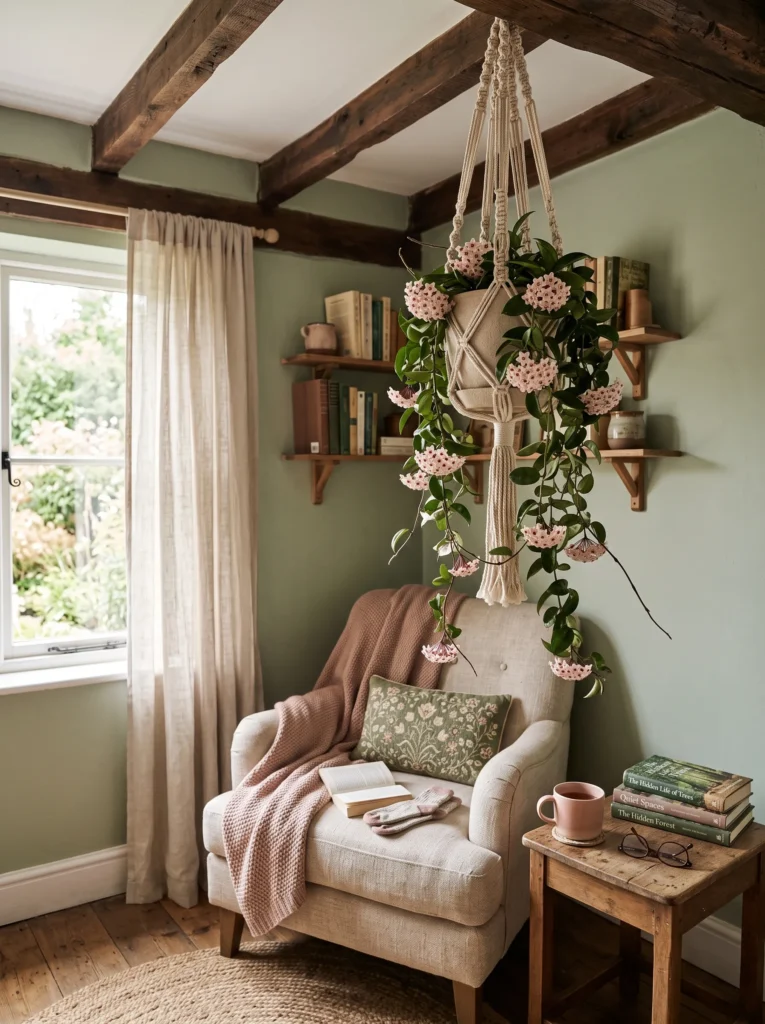
- Clusters of small, waxy, star-shaped flowers smell strongest in the evening
- A succulent-adjacent vine, storing water in thick leaves, so it tolerates missed waterings well
- Blooms return from the same spurs each year, so pruning old flower stalks removes future blooms
- Trailing habit suits a hanging planter near a reading chair, where scent is noticed up close
- I’ve tried moving mine outdoors for summer and the bloom clusters nearly doubled the next season
Hoya rewards patience in a way most flowering houseplants don’t, producing clusters of small, star-shaped, almost porcelain-looking flowers from the same short spurs year after year. That detail matters more than it sounds: trimming off a spent flower stalk, thinking it’s tidying up, actually removes the exact spot next season’s blooms would have grown from. Because hoya stores water in its thick, waxy leaves much like a succulent, it tolerates the kind of inconsistent watering that trips up more delicate flowering plants, making it a genuinely low-effort option for anyone who wants blooms without a demanding care routine.
I’ve tried giving hoya a summer outdoors in bright, filtered shade, and the following bloom cycle was noticeably fuller than in previous years indoors alone. Bright indirect light year-round is the real key to consistent flowering, more than feeding or fussing over it. For styling, let it trail from a hanging planter near a chair or reading nook, somewhere its evening fragrance is actually noticed rather than lost across a large room. Resist trimming spent flower stalks, and expect new blooms to emerge from those same points again the following season.
Layered Amaryllis Bulb for Festive Table Displays (Hippeastrum spp. — the true genus Amaryllis is a separate, less common South African bulb)
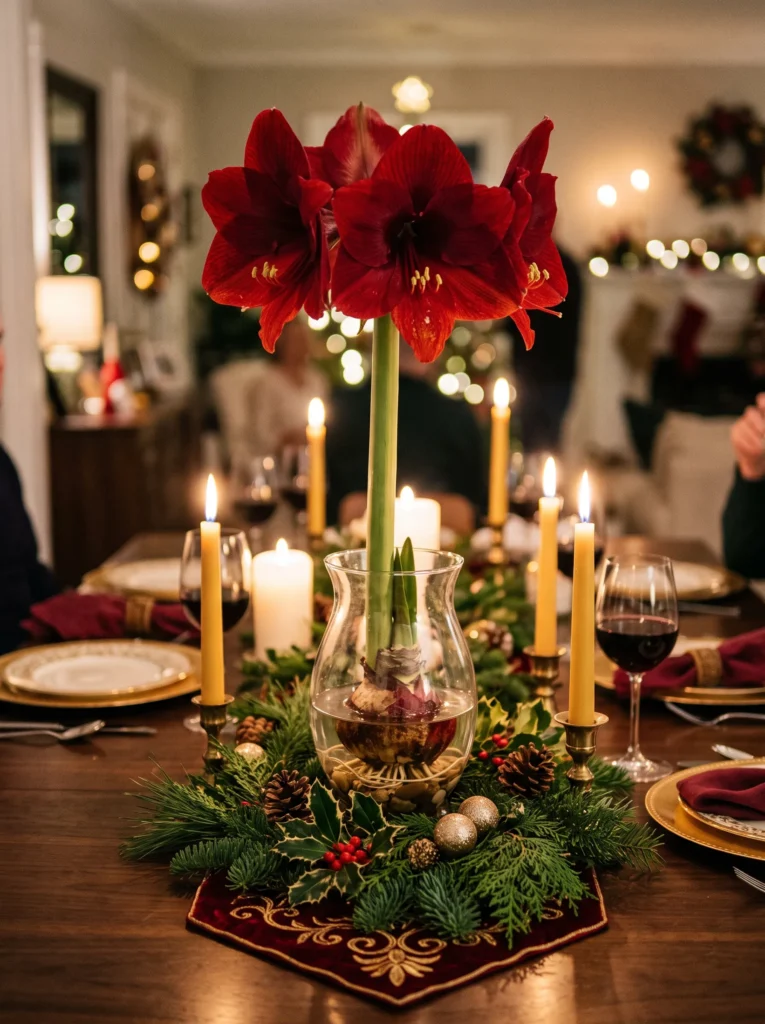
- Large trumpet blooms on a tall bare stem create instant height and drama on a table
- Grown from a bulb that stores its own energy, so it needs almost no feeding to bloom
- A clear glass forcing vase turns the bulb and roots into part of the display, not something to hide
- Reblooms in following years if the bulb is allowed a proper rest period after flowering
- I’ve found the stem needs staking once blooms open, or the top-heavy flowers tip the whole thing over
Amaryllis works almost like a magic trick: a single bulb, given water and light, sends up a bare stem that unfurls into two or three trumpet-shaped blooms the size of a hand. That drama is possible because the bulb stores nearly all the energy it needs internally, similar to how a tulip bulb works, so it needs very little feeding to produce that first spectacular bloom. Growing it in a clear glass forcing vase, water below the bulb rather than soil around it, turns the roots into part of the display instead of something buried and hidden, which suits a minimal or modern table setting particularly well.
I’ve found that once the blooms fully open, the stem becomes noticeably top-heavy and needs a thin stake or the support of a narrow vase neck to stay upright. Set it somewhere bright but out of harsh direct sun, which shortens how long each bloom lasts. After flowering, let the leaves grow and photosynthesize for several months, then give the bulb a dark, cool rest period; that cycle is what makes it possible to rebloom the following year instead of buying a new bulb every season.
Purple Shamrock Oxalis for Monochrome Vignettes (Oxalis triangularis)
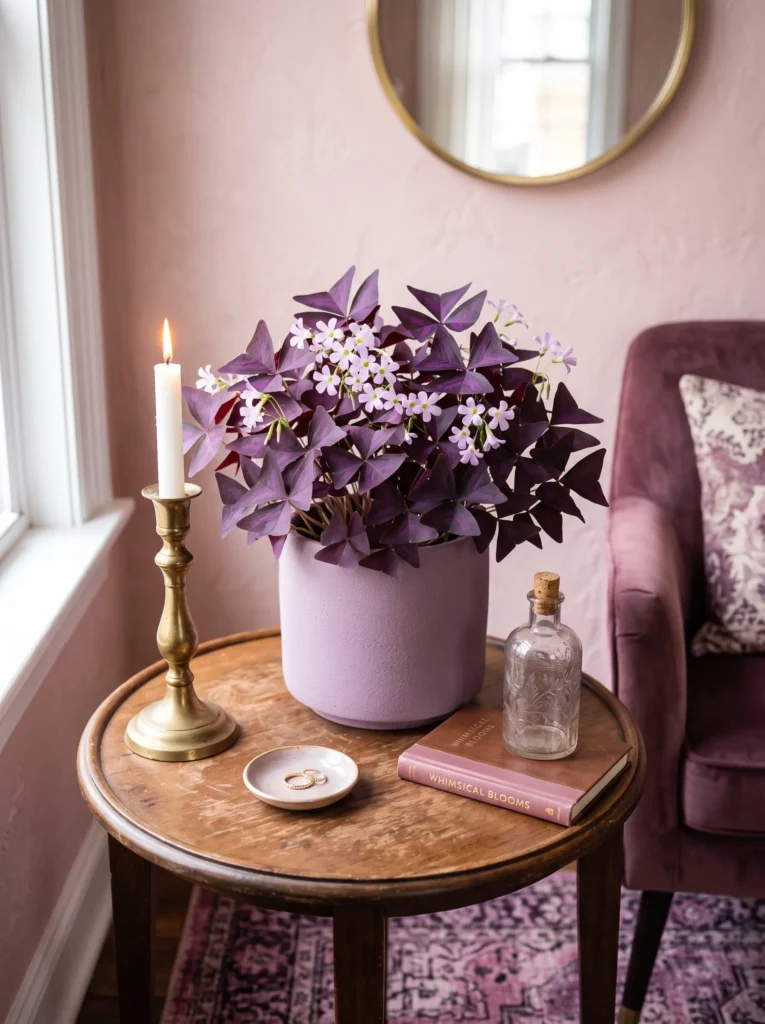
- Deep violet, triangular leaves fold shut at night and reopen with morning light, adding movement most flowering plants lack
- Small, delicate pink or white blooms rise just above the foliage on thin stems
- Grows from small bulb-like corms, so it naturally goes dormant and can be “rested” rather than discarded
- The rich purple color deepens with brighter light, making it a striking monochrome pairing with pink or lilac decor
- I’ve noticed mine looks completely different morning versus night, which people mistake for the plant dying
Purple shamrock earns its place through color most flowering plants can’t match, deep violet leaves shaped like folded triangles, with small blooms that seem almost secondary next to that foliage. The leaves fold closed at night and open again with morning light, a movement called nyctinasty, the same mechanism seen in calathea, which means the plant genuinely looks different depending on the hour someone walks past it. It grows from small underground corms rather than a fibrous root system, and after several months of growth, it naturally dies back and rests, something new owners often mistake for the plant failing rather than a completely normal cycle.
I’ve noticed people panic the first time all the leaves collapse and disappear, assuming they’ve killed it, when really it’s just entering dormancy. Stop watering, tuck the pot somewhere cool and dark for six to eight weeks, and new growth reliably returns. For styling, its saturated purple pairs beautifully with blush pink, lilac, or brass, so a single pot on a side table does more color work than a whole shelf of green foliage plants. Give it bright light to keep that deep violet tone from fading toward green.
Statement Clivia Bloom for Shaded Hallways (Clivia miniata)
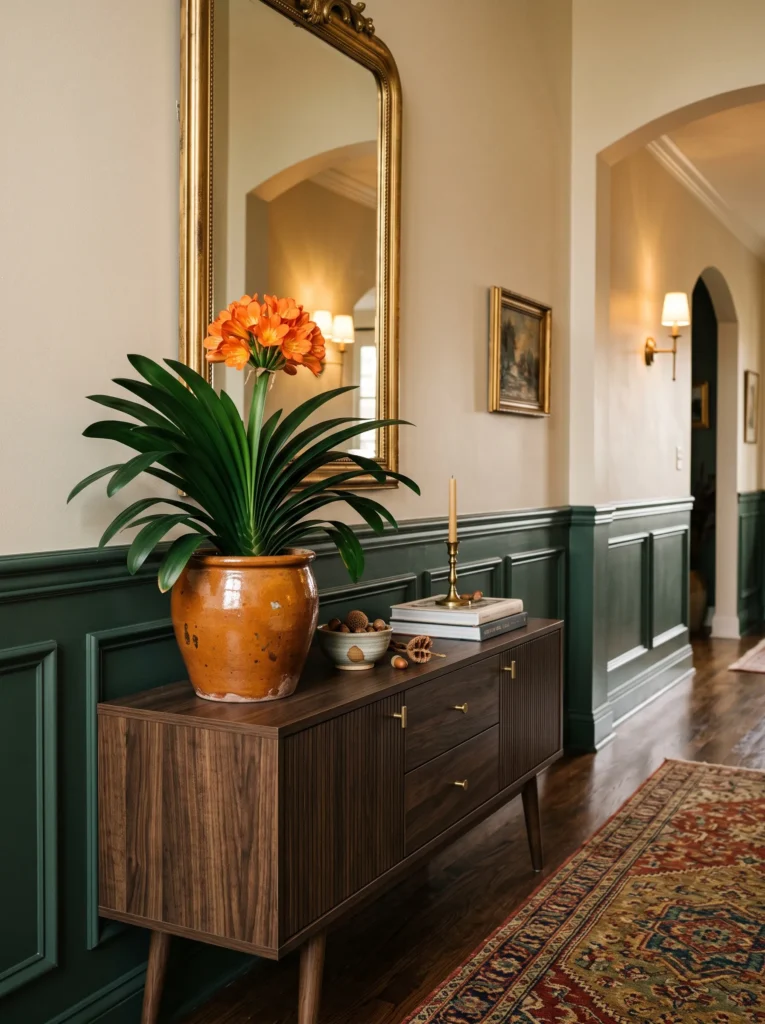
- Clustered orange, yellow, or coral blooms sit atop strap-like leaves that stay attractive year-round, even without flowers
- Tolerates lower light and irregular watering far better than most flowering houseplants, without sacrificing bloom quality
- Needs a genuine cool, dry rest period in winter to trigger the following spring’s bloom cluster
- Broad, arching leaves alone make it a strong structural plant for shaded hallways or stairwells
- I’ve kept the same clivia blooming for over a decade with almost no fuss once I learned the winter rest trick
Clivia solves a real problem most flowering plants create: nearly everything with showy blooms wants strong light, but clivia flowers reliably in the kind of shaded hallway or north-facing room that would starve most other flowering species. Its strap-shaped leaves stay glossy and architectural even during the many months it isn’t blooming, so it never looks like a bare stem waiting for something to happen. The bloom cluster itself, a dense head of trumpet flowers in orange, coral, or yellow, only forms after the plant experiences a deliberate cool, dry rest in winter, closer to 50–55°F with reduced watering for about eight weeks.
I’ve kept the same clivia going for years by moving it to an unheated back room each winter and nearly stopping water for that rest period. Skip that step, and the plant may grow fine but never produce a bloom stalk at all. For styling, its bold, upright leaves and large flower head suit a substantial glazed pot on a console table or stairwell landing, somewhere it has room to arch outward. It rewards patience more than fuss, which makes it a genuinely low-drama flowering option for a shaded corner.
Reblooming Peace Lily for Low-Light Corners (Spathiphyllum wallisii and related hybrids)
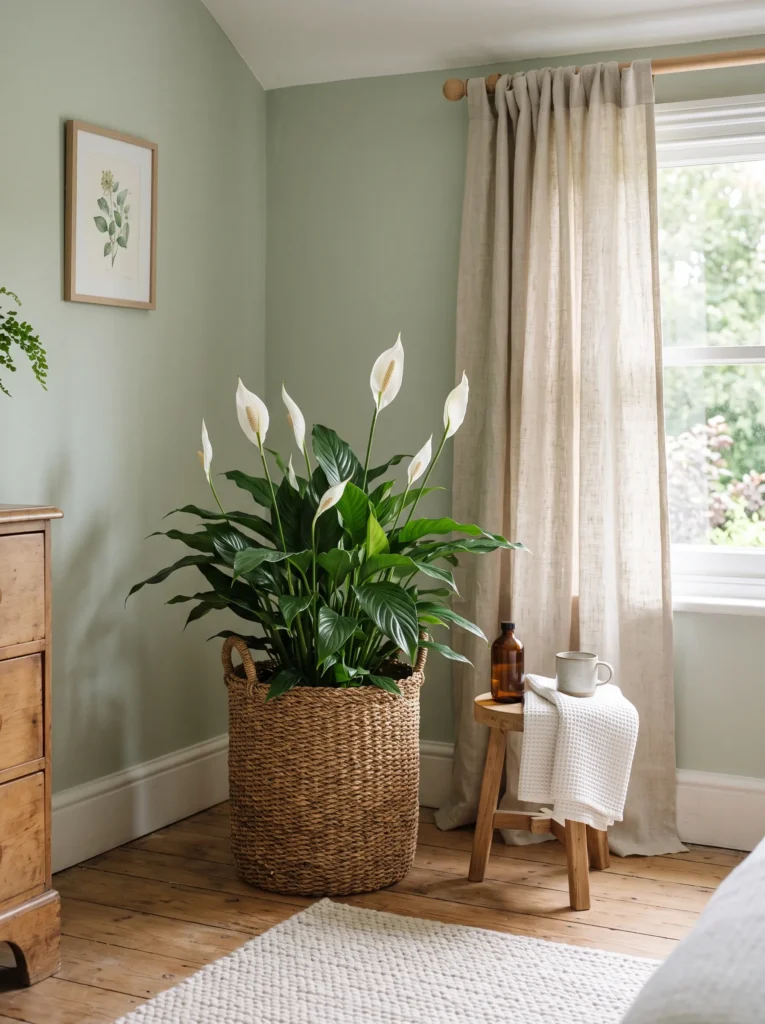
- White, curved spathe blooms rise well above the foliage, unlike most flowering houseplants that bloom low and hidden
- Genuinely thrives in lower, indirect light, unlike almost every other reliably flowering plant on this list
- Dramatic drooping is actually a useful, visible signal that it needs water, unlike plants that hide distress
- Removes common indoor air pollutants as part of normal growth, adding function to its calm appearance
- I’ve found mine reblooms two or three times a year just from consistent, moderate watering, no special feeding required
Peace lily breaks the usual rule that flowering plants need bright light, thriving instead in the kind of soft, indirect light that would leave most blooming species leafy but flowerless. Its white bloom isn’t a true flower but a modified leaf, or spathe, wrapped around a small central spike, the same structure anthurium uses, which is part of why the bloom holds its clean white color for weeks rather than fading quickly. Its most useful trait might be its habit of drooping dramatically the moment it’s thirsty, then fully recovering within hours of watering, giving even inexperienced plant owners an obvious, low-stakes signal rather than the silent decline many houseplants show.
I’ve found that a peace lily kept in consistent, moderate light and watered right as the leaves start to droop will rebloom two or three times a year without any extra feeding or fuss. Avoid deep shade entirely, though; it survives there but rarely flowers. For styling, its arching white blooms and glossy dark leaves suit a calm bedroom or bathroom corner, especially in a tall woven basket that softens its otherwise formal shape. It’s one of the rare flowering plants forgiving enough to reward genuine beginners with real, visible blooms.
Fragrant Gardenia Accent for Romantic Sunrooms (Gardenia jasminoides)
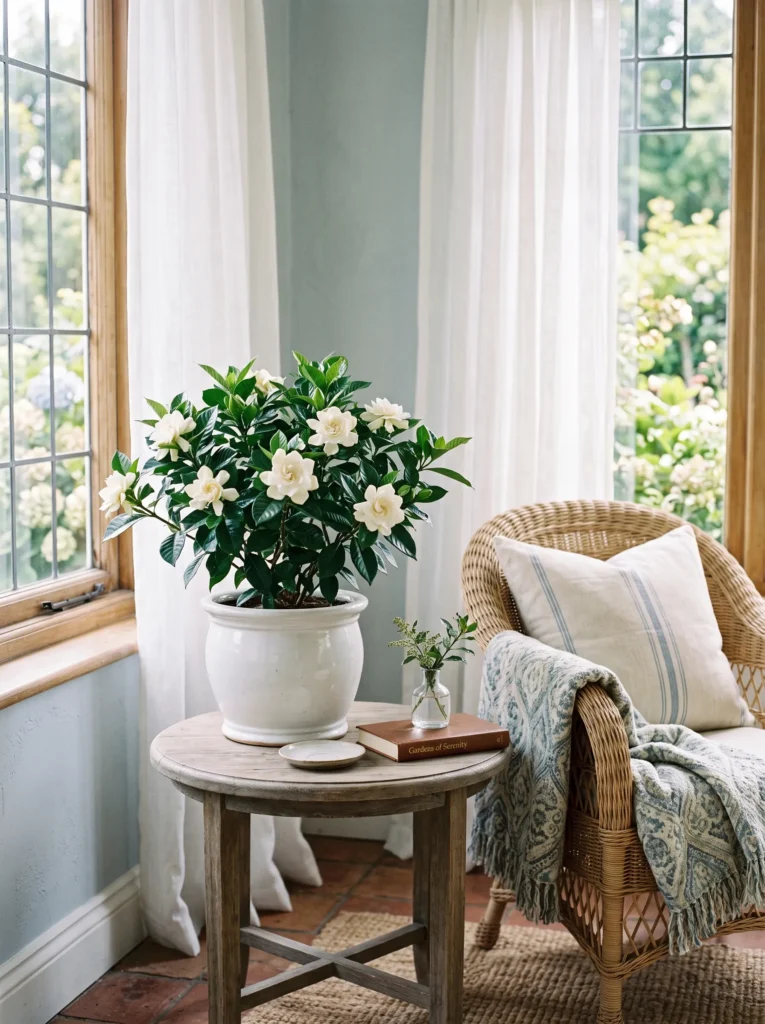
- Waxy white blooms carry one of the most recognizable fragrances of any houseplant, released strongest in the evening
- Needs consistently cool nights and warm days to set flower buds, a swing many indoor rooms don’t naturally offer
- Glossy, deep green leaves stay attractive year-round, so the plant earns its spot even between bloom cycles
- Sudden bud drop is almost always a reaction to a moved pot or temperature swing, not disease
- I’ve found gardenia sulks the moment it’s relocated, so it wants one steady, bright spot and nowhere else
Gardenia has a reputation for being temperamental, and that reputation is mostly earned by one specific quirk: it needs a noticeable temperature drop at night, ideally ten to fifteen degrees cooler than daytime, to actually form flower buds. Without that swing, the plant grows lush and green but rarely blooms, which explains why so many gardenias in centrally heated homes stay leafy and flowerless year after year. Its waxy white flowers, when they do appear, release a fragrance strong enough to fill a room, especially after sunset, making it one of the few houseplants people choose as much for scent as for how it looks.
I’ve found gardenia punishes being moved more than almost any other flowering plant, often dropping buds within days of a relocation, even a small shift across the same room. Pick one bright spot near a window with some natural night cooling, and leave it there. Water consistently rather than letting it dry out fully, since inconsistent moisture is the other major cause of bud drop. For styling, its glossy dark leaves and white blooms suit a soft, classic palette, pale blue, cream, or wicker, giving a sunroom or reading corner a quietly romantic feel even outside of bloom season.
Trailing Lipstick Vine for Playful Eclectic Shelves (Aeschynanthus radicans)
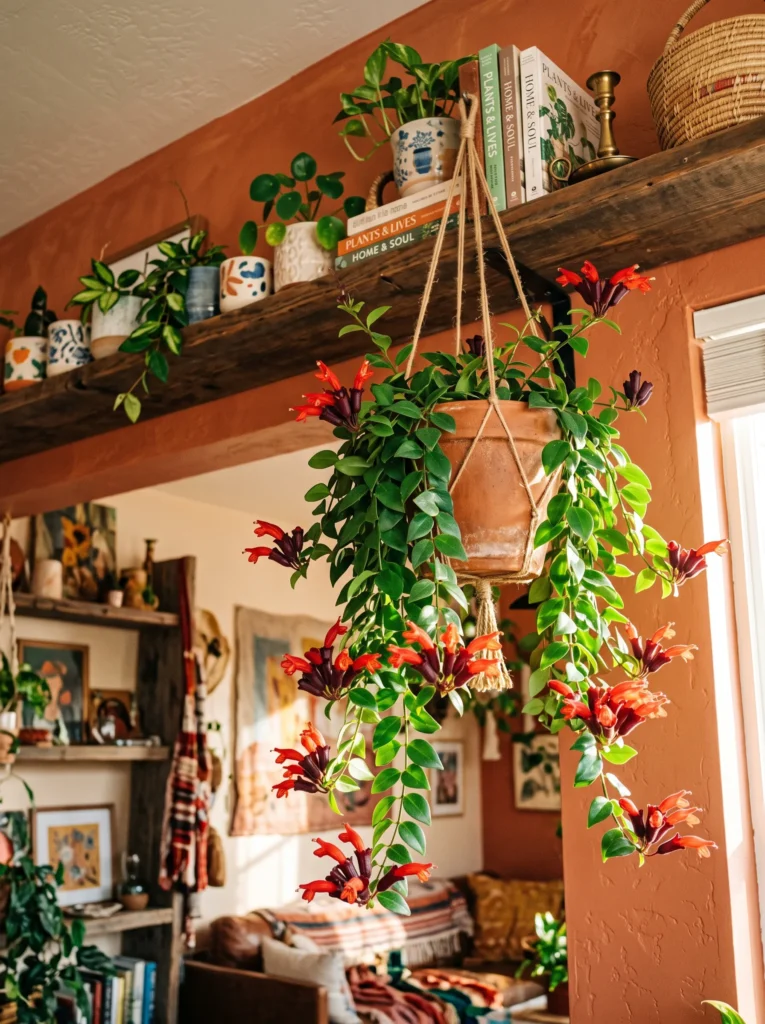
- Tubular red-orange blooms emerge from dark maroon calyxes, resembling tubes of lipstick sliding open
- An epiphytic trailing plant, so it prefers a hanging basket with airy, fast-draining mix over a standard dense pot
- Blooms in flushes when given bright light and a slight seasonal dip in watering to trigger flowering
- Thick, waxy leaves store some water, making it more forgiving of missed waterings than its delicate blooms suggest
- I’ve noticed mine flowers hardest right after a slightly drier stretch, not after extra feeding or fertilizer
Lipstick plant gets its name from the way each bud emerges, a small tube of red or orange sliding out of a dark, almost black-red calyx like a lipstick case opening. That small mechanical detail is part of what makes it feel more like a novelty than a typical trailing houseplant. In the wild it grows epiphytically on tree branches in humid forests, which is why a chunky, fast-draining mix in a hanging basket suits it far better than dense potting soil packed into a standard pot. Bright, indirect light is essential for blooming; without it, the vine trails nicely but rarely produces the flowers it’s actually grown for.
I’ve noticed my lipstick plant blooms hardest after a short stretch of slightly drier soil, almost like the plant reads that shift as a cue to flower rather than just grow leaves. Let it dry out a bit more than usual for a couple of weeks, then resume regular watering, and expect a flush of buds shortly after. For styling, let it trail from a high shelf or hanging planter where the tubular blooms can be seen from below and side-lit by afternoon sun. Its warm reds and oranges pair naturally with terracotta and rust-toned decor nearby.
Styling Principles for Choosing Indoor Plants That Match Your Decor Style
However the plant is chosen, the pot and placement decide whether it actually looks styled or just present. A few principles carry across every idea in this list.
Match pot material and color to mood, not just style labels. Matte, unglazed ceramics in bone, clay, or charcoal read as calm and grounded, while glossy or metallic pots add a sharper, more modern edge. In my experience, a plant photographed in the “wrong” pot material almost never looks as good as the same plant in the right one, even when the greenery itself is identical.
Use the rule of three. Grouping plants, or pots, in odd numbers, especially three, reads as intentional and collected rather than scattered. Even heights and matching pots tend to flatten a display; slightly varied heights within a group of three create the kind of visual rhythm design photos are built on.
Contrast leaf shape with furniture shape. A round-leaved plant softens a room full of hard, angular furniture, while an upright, architectural plant like Norfolk pine or aloe adds structure to a room full of soft, curved pieces. Pairing similar shapes together usually looks flat; contrast is what makes a plant read as chosen rather than incidental.
That’s the real throughline across indoor plants that match your decor style: the right plant for a room isn’t just about which one looks nice in a photo, but which one’s actual light, humidity, and growth habit match how that specific room lives day to day.
Quick Reference: Indoor Plants That Match Your Decor Style
| Decor Style | Plant | Scientific Name |
| Scandinavian | Norfolk Pine | Araucaria heterophylla |
| Farmhouse | Rosemary Topiary | Salvia rosmarinus |
| Japandi | Kokedama Moss Ball | Hypnum spp. moss + fern |
| Luxury / Moody | Silver Dragon Alocasia | Alocasia baginda ‘Silver Dragon’ |
| Moody / Warm | Burgundy Rubber Plant | Ficus elastica ‘Burgundy’ |
| Boho-Luxe | Pinstripe Calathea | Goeppertia ornata |
| Minimalist | Sculptural Aloe | Aloe vera |
| Boho | Trailing Fishbone Cactus | Epiphyllum anguliger |
| Industrial | Mounted Staghorn Fern | Platycerium bifurcatum |
| Modern Tropical | Waxy Anthurium | Anthurium andraeanum |
| Cottage | Fragrant Jasmine Vine | Jasminum polyanthum |
| Farmhouse | Compact African Violets | Streptocarpus ionanthus |
| Spa-Like | Cascading Orchid | Phalaenopsis spp. |
| Eclectic | Painted-Leaf Begonia | Begonia rex |
| Winter/Traditional | Cool-Season Cyclamen | Cyclamen persicum |
| Tropical | Bird of Paradise | Strelitzia reginae |
| Cozy | Delicate Hoya | Hoya carnosa |
| Festive/Modern | Layered Amaryllis | Hippeastrum spp. |
| Monochrome | Purple Shamrock Oxalis | Oxalis triangularis |
| Traditional-Modern | Statement Clivia | Clivia miniata |
| Calm/Restful | Reblooming Peace Lily | Spathiphyllum wallisii |
| Romantic | Fragrant Gardenia | Gardenia jasminoides |
| Eclectic | Trailing Lipstick Vine | Aeschynanthus radicans |
Conclusion: Finding Indoor Plants That Match Your Decor Style
Choosing plants for your home doesn’t have to feel like guesswork anymore. Once you understand why a plant fits a space, not just how it looks in a photo, the right choice becomes obvious.
I’ve seen how small changes, like swapping a snake plant for a sculptural aloe or hanging a fishbone cactus instead of another pothos, can completely shift how a room feels. Save this guide so you can come back to it as your space evolves, try one idea this week, and share it with a friend staring at an empty corner wondering what to put there. The perfect indoor plants that match your decor style are closer than you think.
Frequently Asked Questions
1. How do I choose indoor plants that match my decor style?
Start with your room’s palette and furniture lines, then pick a plant whose pot material, leaf shape, and light needs actually fit that space, not just one that looks good in an unrelated photo.
2. Which indoor plants work best for low-light rooms?
Peace lily and clivia are the most forgiving choices, both flowering reliably in soft, indirect light where most other flowering houseplants would stay green but never bloom.
3. What’s the easiest low-maintenance plant for a minimalist home?
Sculptural aloe is one of the easiest options since it’s a succulent that tolerates long gaps between waterings while keeping a clean, architectural shape.
4. Why do some houseplants drop leaves or buds suddenly?
Sudden leaf or bud drop is usually a reaction to a change in humidity, light, or location rather than disease, as seen with Norfolk pine, gardenia, and Silver Dragon alocasia.
5. How many plants should I group together for a styled look?
Grouping in odd numbers, especially three, with slightly varied heights, reads as intentional and collected rather than scattered or random.
6. Do flowering houseplants need more care than foliage plants?
Not always. Plants like peace lily and clivia bloom with minimal fuss, while others like gardenia or jasmine need specific temperature or rest conditions to flower well.