14 Fall Table Centerpiece Ideas Guests Will Notice
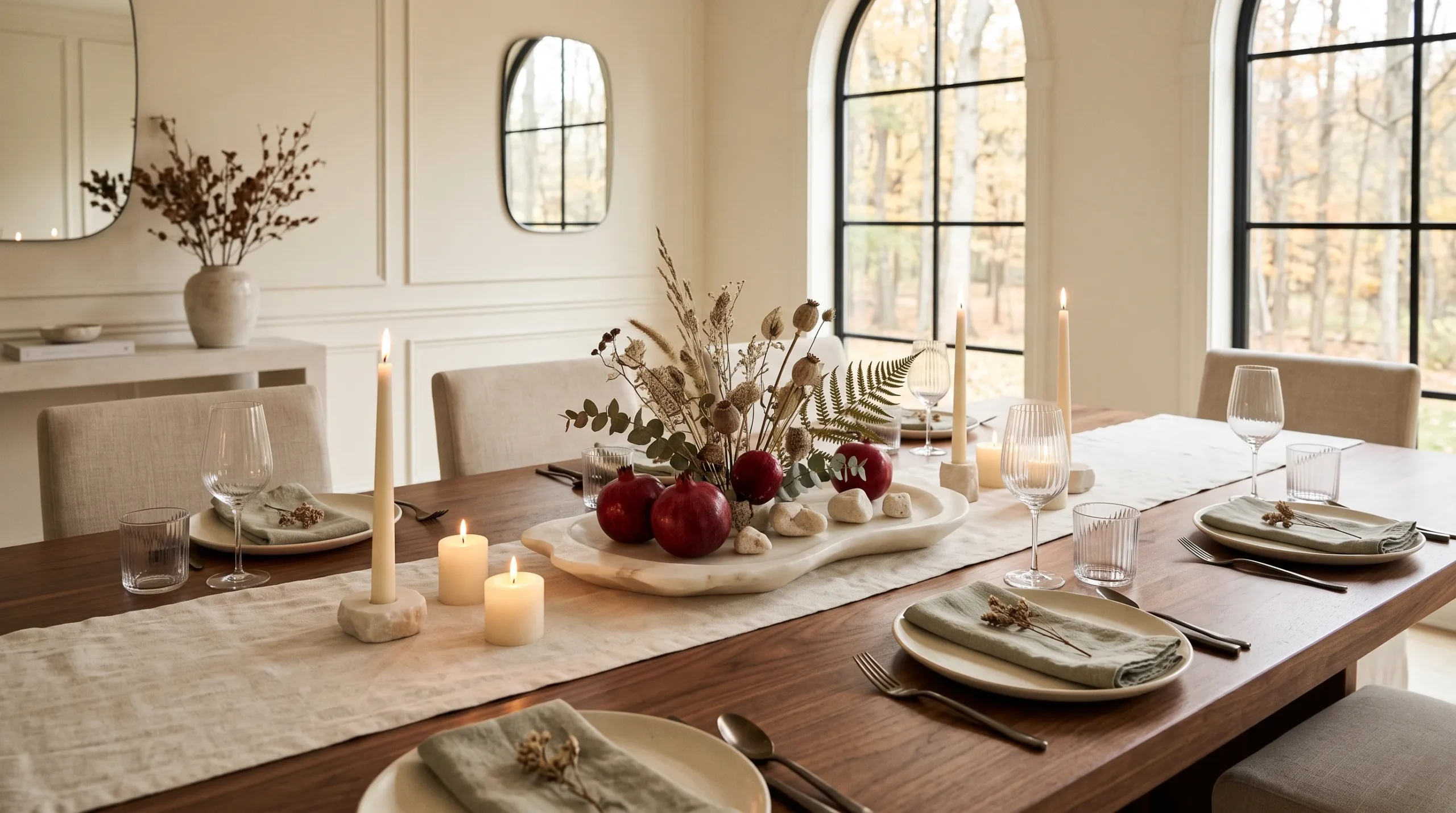
Fall tables don’t need another bowl of pumpkins to feel seasonal. The most memorable tablescapes use unexpected color combinations, interesting textures, sculptural vessels, and thoughtful proportions to create a centerpiece that feels collected rather than predictable. Whether you’re decorating a dining table for a special dinner or want your fall table centerpiece ideas to work throughout the season, the right arrangement should balance beauty with everyday function.
In this guide, I’m sharing 14 creative autumn tablescape ideas designed around real dining needs, from keeping arrangements low enough for conversation to choosing stable vessels and leaving enough space for serving dishes. You’ll also find several hands-on ideas you can make yourself, so your table can feel personal instead of looking like a copy of the same seasonal arrangement everywhere.
Why Most Fall Centerpieces Look the Same?
Most fall centerpieces look alike because they rely on the same visual shorthand: pumpkins, gourds, candles, and a predictable orange-and-rust palette. What makes a table memorable is not adding more decoration, but making deliberate decisions about height, proportion, color restraint, and how the arrangement interacts with the people sitting around it.
A centerpiece should typically stay under 14 inches so guests can comfortably see one another across the table—a basic hosting rule I see overlooked constantly in otherwise beautiful tablescapes. In my own decorating, I’ve found that the tables I remember most usually have one unexpected material or shape doing the visual work. The best fall centerpiece is designed around conversation first and decoration second. This post solves that balance with 15 distinctive ideas that look considered without making the table difficult to use.
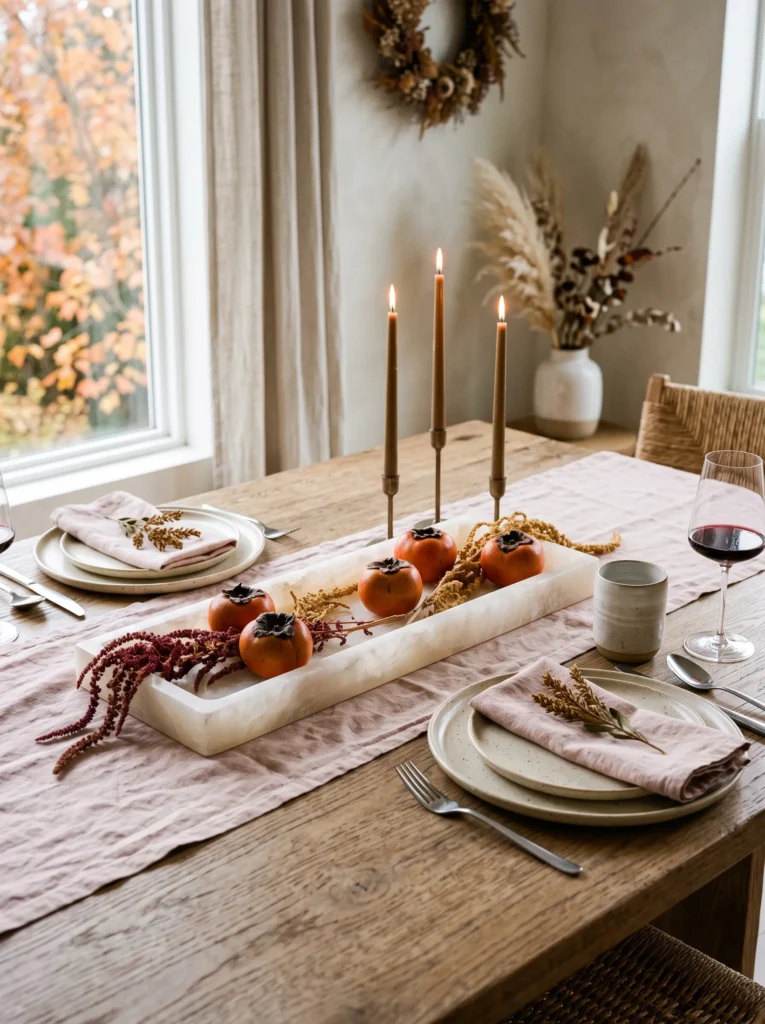
1. Floating Persimmon Line
- Palette: Burnt persimmon, dusty blush, creamy alabaster, and aged bronze.
- Materials: A long, shallow alabaster tray, five small persimmons, delicate dried amaranth, and thin bronze candleholders.
- Height: Keep the entire composition between 4 and 10 inches, using the tray to create width instead of height.
- Table Linen: Lay a washed blush linen runner slightly off-center beneath the tray.
- Lighting: Use three slim ivory tapers in narrow aged-bronze holders, spaced unevenly along the arrangement.
- Tableware: Pair creamy stoneware plates with blush linen napkins and bronze flatware.
- Standout detail: Slice one persimmon horizontally and display the jewel-like interior beside the whole fruit as a tiny botanical still life.
Why this works: This arrangement treats fall produce almost like sculpture rather than traditional harvest decor.
Persimmons bring a sophisticated burnt-orange note, but the blush linen softens the intensity and keeps the palette from becoming visually predictable. The long tray creates a strong horizontal line, which is especially effective on rectangular dining tables. Because the composition stays low, guests can see across it easily while still getting a memorable centerpiece moment.
I would use this idea when the table itself deserves some attention. A beautiful wood grain, stone surface, or antique dining table can become part of the composition instead of being hidden under layers of decoration. The persimmons can remain fresh for a while, and replacing them is simple if needed. I also like the cut fruit detail because it introduces the kind of small, unexpected observation that makes a table feel personally styled rather than pulled directly from a seasonal decor catalog.
2. Copper Leaf Arc
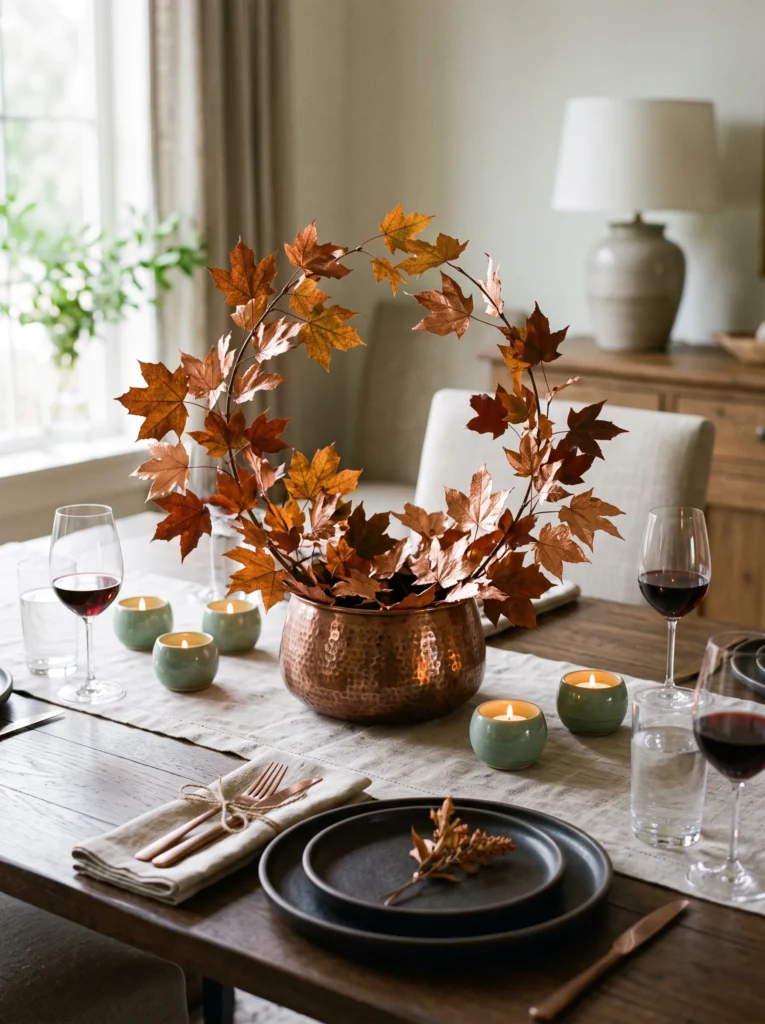
- Palette: Burnished copper, celadon, pale mushroom, and dark espresso.
- Materials: Low hammered copper vessel, freshly gathered maple branches, preserved seed pods, and handmade ceramic pieces.
- Height: Shape the branches into a broad 12-inch arc rather than allowing them to grow vertically.
- Table Linen: Use a pale mushroom tablecloth with no runner, allowing the copper to become the visual anchor.
- Lighting: Position four tiny celadon-glazed votive cups around the outer edge of the arrangement.
- Tableware: Use espresso-brown stoneware plates with clear wine glasses and simple antique-brass flatware.
- Standout detail: Paint only the underside of three maple leaves with a very thin wash of metallic copper, leaving their natural tops untouched.
Why this works: The strongest part of this arrangement is the contrast between something obviously seasonal and something unexpectedly refined.
Maple branches provide recognizable fall movement, while the copper vessel gives them an architectural base. Painting only the underside of selected leaves creates flashes of metallic color as guests move around the table, rather than making the entire centerpiece look glittery. The celadon votives introduce a cool green note that keeps the copper from dominating the palette.
This is one I would actually make rather than simply assemble. Collect several fallen maple branches, remove damaged leaves, and let them dry completely before styling. For the metallic detail, use a fine artist’s brush and a water-based metallic craft paint, applying just enough to catch the light. My husband’s construction experience has also taught me to think about weight distribution: a tall branch arrangement needs a vessel with enough mass and a broad enough base that it cannot easily tip if someone reaches across the table.
You’ll Also Love: 10 Fall Chalkboard Ideas Worth Copying
3. Pomegranate Stone Garden
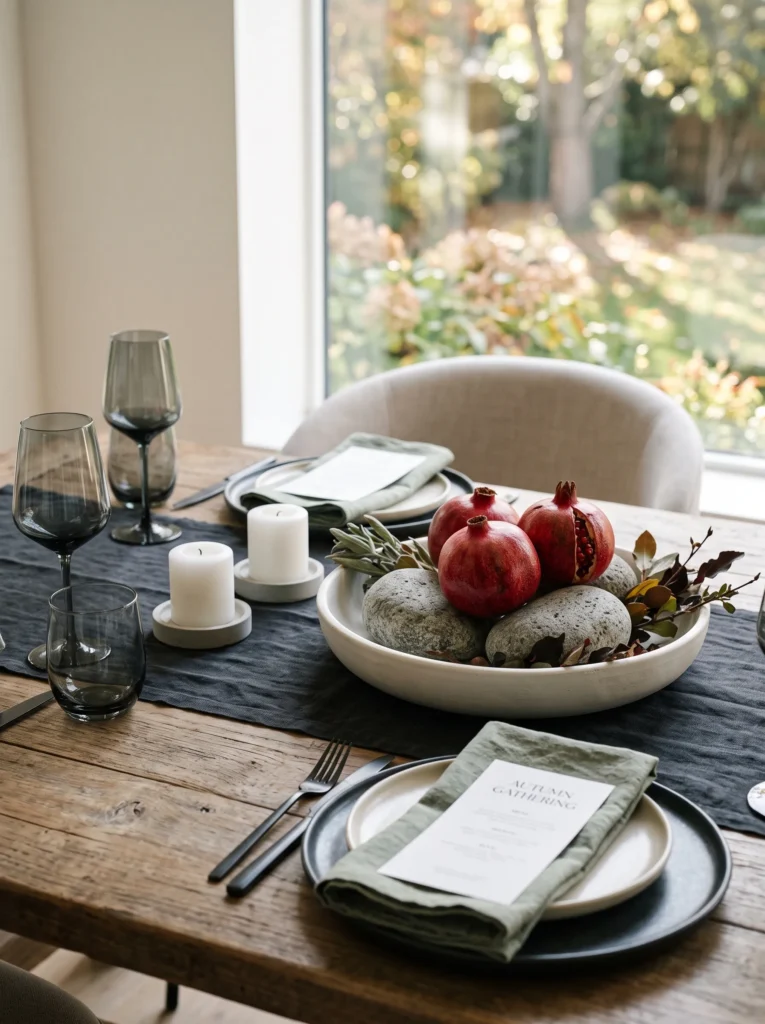
- Palette: Garnet red, chalk white, graphite, and muted sage.
- Materials: Three flat sculptural stones, a shallow chalk-white ceramic dish, whole pomegranates, and preserved sage leaves.
- Height: Keep every element between 3 and 9 inches, creating a layered landscape rather than a bouquet.
- Table Linen: Use a graphite-gray runner with a raw linen edge.
- Lighting: Add two low white pillar candles in heavy stone candle cups at opposite ends.
- Tableware: Combine chalk-white plates with sage napkins, graphite water glasses, and brushed nickel flatware.
- Standout detail: Arrange the stones beneath the pomegranates as if they were miniature architectural plinths, giving the fruit different visual levels.
Why this works: Instead of building upward, this centerpiece works like a tiny landscape.
The pomegranates provide saturated color, while the chalk ceramic and graphite linen create a quieter frame around them. Using stones as visual plinths adds texture and elevation without introducing another decorative color. The restrained palette also demonstrates why a limited color scheme can feel more sophisticated: the eye immediately lands on the garnet fruit instead of bouncing between competing seasonal accents.
I love arrangements like this for a dinner table because nothing feels precious or overly complicated. The stones can come from a garden, landscape-supply area, or even a clean collection you already have at home, as long as they are stable and won’t scratch the tabletop. For an evening dinner, use heavy candle cups rather than lightweight holders. The substantial bases keep the lighting secure while reinforcing the stone-garden concept. Once the pomegranates are removed, the same composition can transition into winter with almost no extra work.
4. Moss Sphere Trio
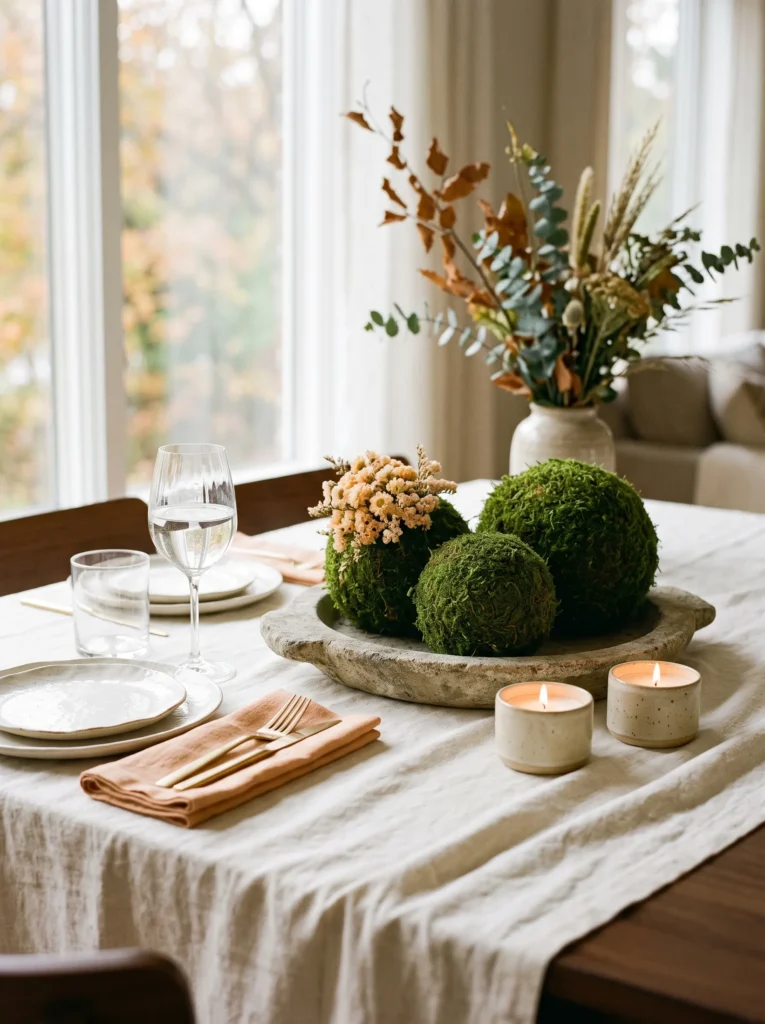
- Palette: Deep moss, pale apricot, warm ivory, and aged stone.
- Materials: Three preserved moss spheres, a low aged-stone platter, tiny dried apricot flowers, and ceramic candle cups.
- Height: Keep the spheres between 5 and 8 inches high, with the largest positioned slightly off-center.
- Table Linen: Use a warm ivory tablecloth with no runner to emphasize the organic shapes.
- Lighting: Place two small ceramic candle cups behind the outer spheres, creating soft points of light without exposing the flames directly beside foliage.
- Tableware: Combine ivory plates with pale apricot napkins and lightly textured clear glassware.
- Standout detail: Tuck only a few tiny dried flowers into one moss sphere so the three forms are intentionally different.
Why this works: Three related shapes can create more visual interest than one elaborate arrangement.
The moss spheres provide strong rounded forms, while the tiny apricot flowers introduce a delicate contrast without changing the basic structure. Because the shapes are compact, guests can see through and around the centerpiece easily. The nearly monochromatic green foundation also demonstrates how texture can replace color when you want a table to feel sophisticated rather than busy.
I like using preserved moss when I want something seasonal that doesn’t look obviously seasonal. It has the visual quality of living greenery but requires very little maintenance. Keep preserved moss away from direct moisture and intense sunlight, and avoid placing it immediately beside a flame. If you’re using a stone platter, check that the underside is smooth or add protective pads before placing it on a finished dining table. That extra step takes seconds but can prevent scratches, especially on softer wood surfaces.
5. Charred Citrus Bowl
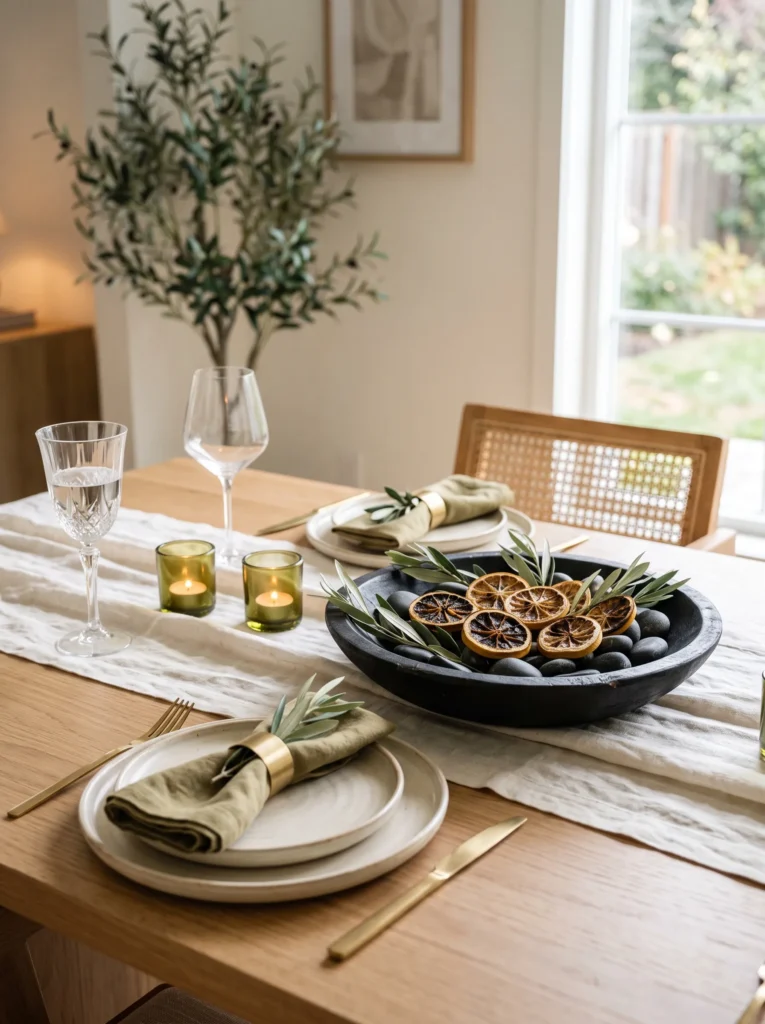
- Palette: Charcoal, muted lemon, creamy stone, and pale olive.
- Materials: A shallow blackened-wood bowl, dried lemon wheels, olive leaves, and small river stones.
- Height: Keep everything between 3 and 8 inches, creating a compact, low landscape.
- Table Linen: Use a creamy stone-colored linen runner with a raw, slightly irregular edge.
- Lighting: Place two low olive-green glass votives beside the bowl rather than inside it.
- Tableware: Pair creamy stoneware plates with pale olive napkins and clear stemware.
- Standout detail: Lightly char the edges of several dried lemon slices for a smoky, graphic finish.
Why this works: Citrus is rarely treated as a fall material, which is exactly why it can make a seasonal table feel fresh.
The muted lemon slices bring a small amount of brightness against charcoal and cream, while olive leaves connect the palette to the changing landscape outside. The low bowl keeps the composition practical, and the river stones add weight and texture without competing with the citrus. It is a good example of using an unexpected color rather than adding more traditional seasonal objects.
I would make the citrus several days ahead of time. Slice lemons thinly, pat away excess moisture, and dry them slowly in a low oven or dehydrator until they are completely firm. For the charred effect, briefly toast the edges in a dry pan rather than burning them heavily. If you’re using a wooden bowl, keep the candle flames separate from the dried citrus. My rule around anything combustible is simple: decoration can be close to the flame visually, but never close enough to become a heat problem.
6. Ribbon-Wrapped Branches
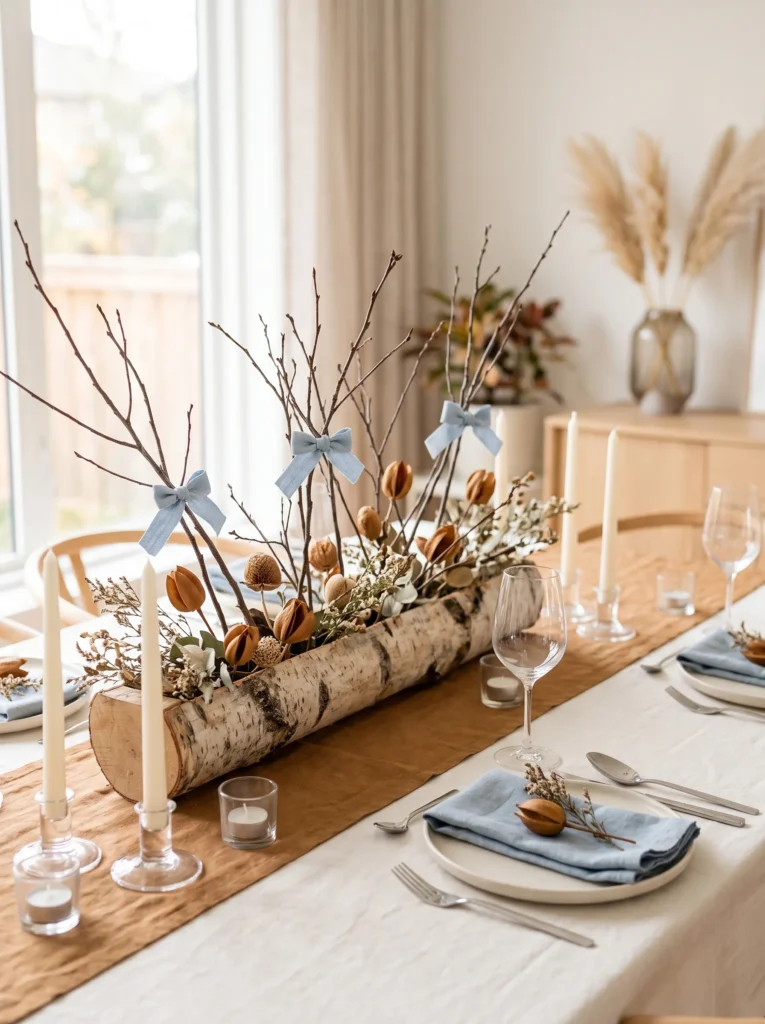
- Palette: Powder blue, caramel, ivory, and natural birch.
- Materials: A long narrow birchwood vessel, thin bare branches, powder-blue cotton ribbon, and small caramel-colored dried seed pods.
- Height: Keep the tallest branches between 11 and 13 inches, with the arrangement extending horizontally.
- Table Linen: Use an ivory tablecloth with a narrow caramel linen strip placed across the center.
- Lighting: Add three ivory LED candles in small clear glass holders between the branch groupings.
- Tableware: Choose ivory plates, powder-blue napkins, and simple clear glasses.
- Standout detail: Wrap only three branch joints with narrow powder-blue ribbon, leaving the rest completely natural.
Why this works: Powder blue is an unexpected fall color, but its softness makes it surprisingly easy to combine with caramel and ivory.
The natural birch provides enough warmth to keep the palette from feeling springlike, while the small ribbon details create deliberate repetition. Because the branches remain mostly bare, the centerpiece has an architectural quality rather than looking like a traditional floral arrangement. The horizontal silhouette also keeps the table visually open.
This would be one of my choices for a long rectangular table where a single compact arrangement might look undersized. The birch vessel can run along more of the table without needing additional decorative objects. If you make the vessel yourself, sand the edges smoothly and add felt pads underneath to protect the tabletop. I also recommend securing the branches inside with floral foam or a weighted insert so they cannot shift when someone brushes against the arrangement. Stability is easy to overlook when an arrangement is intentionally sparse.
7. Marbled Candle Garden
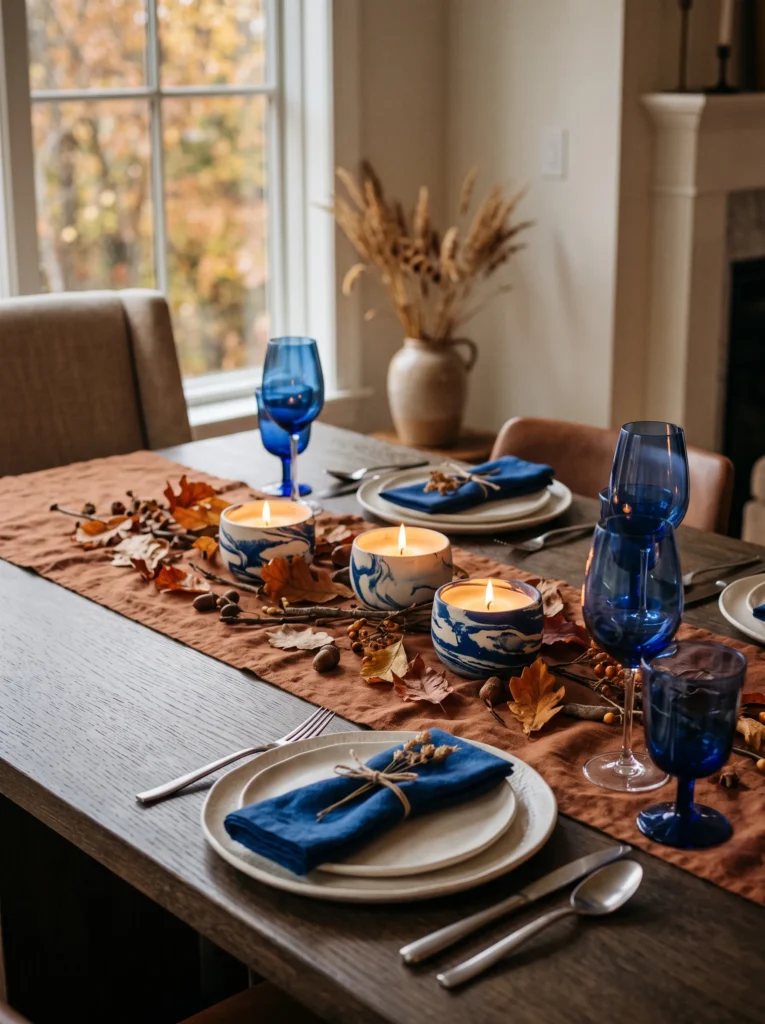
- Palette: Cobalt blue, cinnamon, ivory, and brushed nickel.
- Materials: Three low handmade marbled ceramic candle vessels, small cinnamon-colored dried leaves, and a narrow ivory stone tray.
- Height: Arrange candles from 4 to 10 inches, keeping the tallest candle well below eye level.
- Table Linen: Use a plain cinnamon-colored linen runner with no additional pattern.
- Lighting: Use unscented taper candles in the marbled vessels, spaced so each flame has clear air around it.
- Tableware: Combine ivory plates with cobalt-blue glasses and brushed-nickel flatware.
- Standout detail: Create the marbled vessels yourself using a simple two-color ceramic surface technique.
Why this works: Here, the centerpiece is built around pattern rather than foliage.
Cobalt and cinnamon have enough contrast to make the table visually interesting, but ivory gives the eye somewhere to rest. The three vessels create repetition without requiring identical placement, and the varied candle heights add movement while remaining conversation-friendly. This approach also proves that a fall centerpiece does not have to contain leaves, branches, pumpkins, or fruit to read as seasonal.
For a hands-on version, you can create the marbled effect on plain ceramic vessels using suitable ceramic paint or a compatible surface-finishing technique, following the product’s curing instructions. Test the method on a spare piece first because candle vessels need a durable finish. My husband is always the practical voice when I get carried away with a beautiful finish: anything holding heat needs to be treated as a functional object first. Choose vessels designed for candles, keep the flame well above the decorated exterior, and never crowd the taper flames together.
8. Pressed Leaf Panels
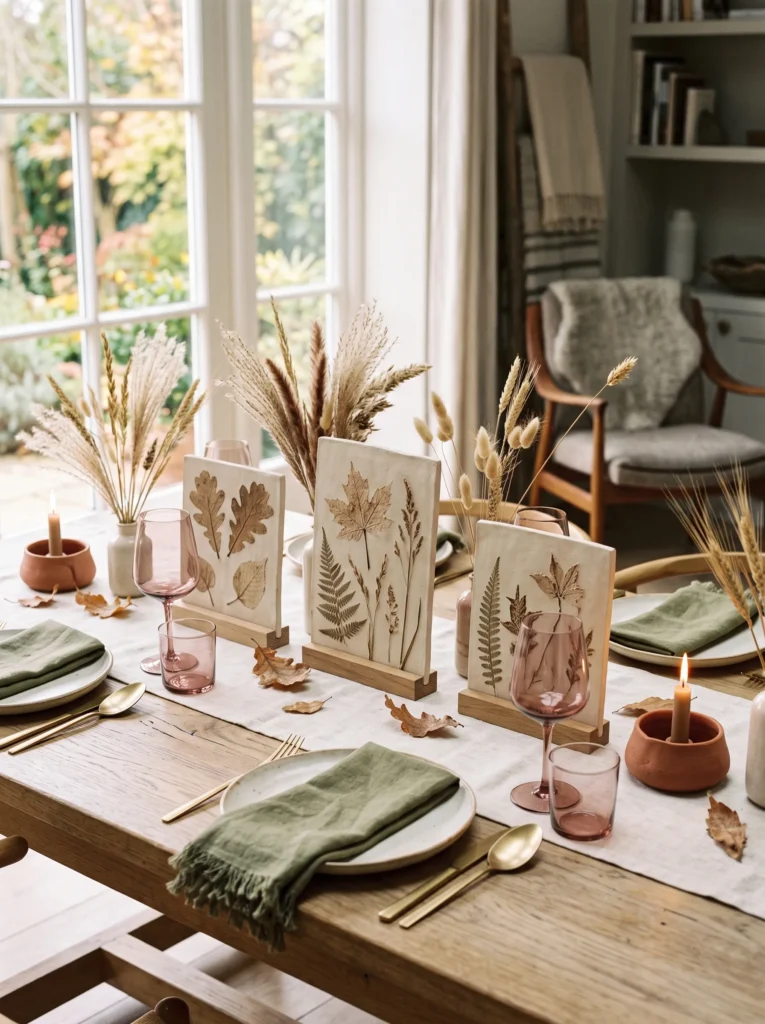
- Palette: Faded rose, moss green, cream, and natural clay.
- Materials: Three small handmade clay slabs, pressed autumn leaves, low floral frogs, and delicate dried grasses.
- Height: Keep the clay panels and grasses below 12 inches, arranged in a shallow triptych.
- Table Linen: Use a cream linen tablecloth with a narrow moss-green napkin at each place setting.
- Lighting: Position two small clay lanterns at the outer edges of the centerpiece.
- Tableware: Use cream plates with muted rose water glasses and natural wood-handled flatware.
- Standout detail: Press real leaves into soft clay to create botanical impressions before the slabs are fired or air-dried.
Why this works: Instead of displaying autumn foliage as loose decoration, this idea turns it into a permanent botanical texture.
Faded rose and moss green create a softer fall palette than the typical saturated seasonal colors, while natural clay adds an earthy neutral. The three-panel arrangement also gives the table a sense of rhythm without requiring height. Because the botanical marks are embedded into the material itself, the centerpiece remains interesting even when the table is viewed from across the room.
This is the kind of DIY project I enjoy because the finished pieces can be reused long after autumn. Press clean leaves firmly into unfired clay, carefully remove them, and follow the clay manufacturer’s drying or firing instructions. Choose leaves with pronounced veins for the clearest impressions. If you use air-dry clay, protect the finished slabs from prolonged moisture. I would keep the panels slightly separated rather than touching because the gaps make each botanical impression easier to appreciate. It turns a dinner table into a small study in natural texture.
9. Saffron Ceramic Ribbon
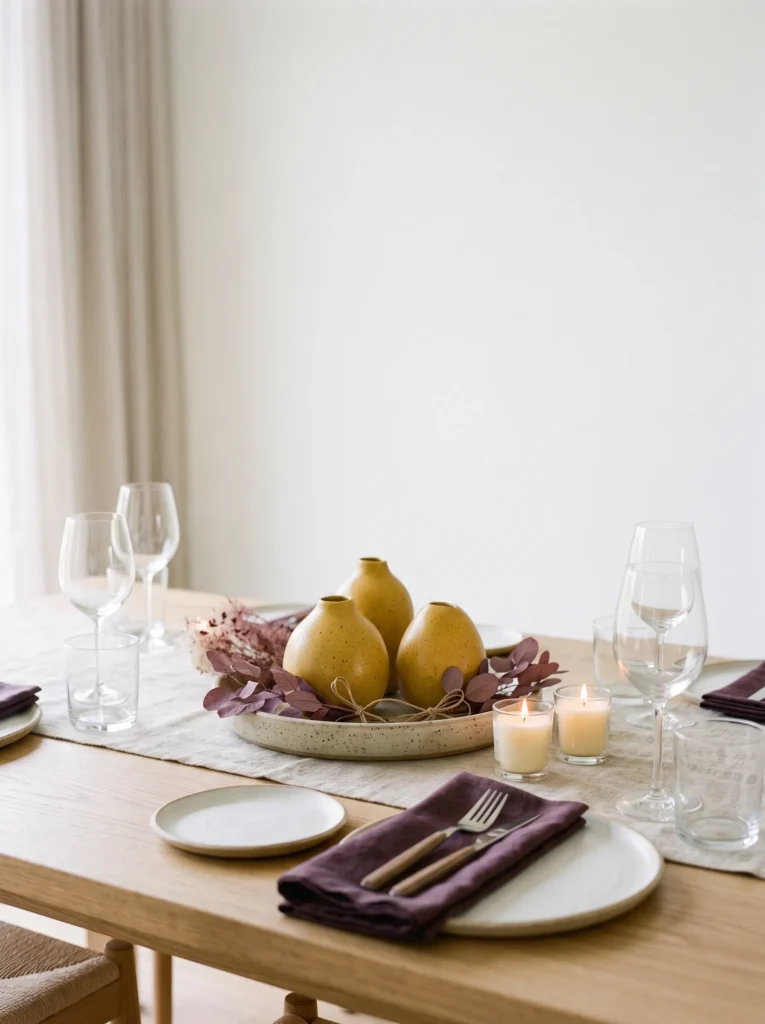
- Palette: Saffron yellow, muted plum, chalk white, and natural flax.
- Materials: A long, shallow handmade ceramic tray, three small saffron-glazed ceramic forms, dried plum-colored leaves, and flax cord.
- Height: Keep the arrangement between 4 and 9 inches, with the ceramic pieces creating a gentle visual progression.
- Table Linen: Use a natural flax runner positioned slightly off-center rather than perfectly aligned.
- Lighting: Add three tiny unscented ivory votives in separate low holders along one side of the tray.
- Tableware: Pair chalk-white plates with muted plum napkins, clear wine glasses, and simple matte flatware.
- Standout detail: Wrap a single loop of coarse flax cord around the smallest ceramic form, leaving the knot visible.
Why this works: Saffron and muted plum create a sophisticated complementary contrast without falling into the expected orange-and-burgundy combination.
The chalk-white elements soften both colors, while flax adds a natural neutral that keeps the arrangement grounded. Using several ceramic forms instead of one oversized object gives the centerpiece a collected, gallery-like quality. The slight height progression also guides the eye across the table rather than creating one dominant visual block.
This is a centerpiece I would choose when the dining room itself is fairly neutral and needs one controlled burst of color. Handmade ceramics are particularly useful because small variations in glaze keep the arrangement from looking mass-produced. You could recreate the look with thrifted ceramic pieces and a suitable decorative glaze, provided the pieces are appropriate for their intended use. I would keep the cord decorative rather than functional and make sure it cannot fall toward a candle. Small construction-minded decisions like that are what keep an artistic table practical.
10. Autumn Watercolor Vessels
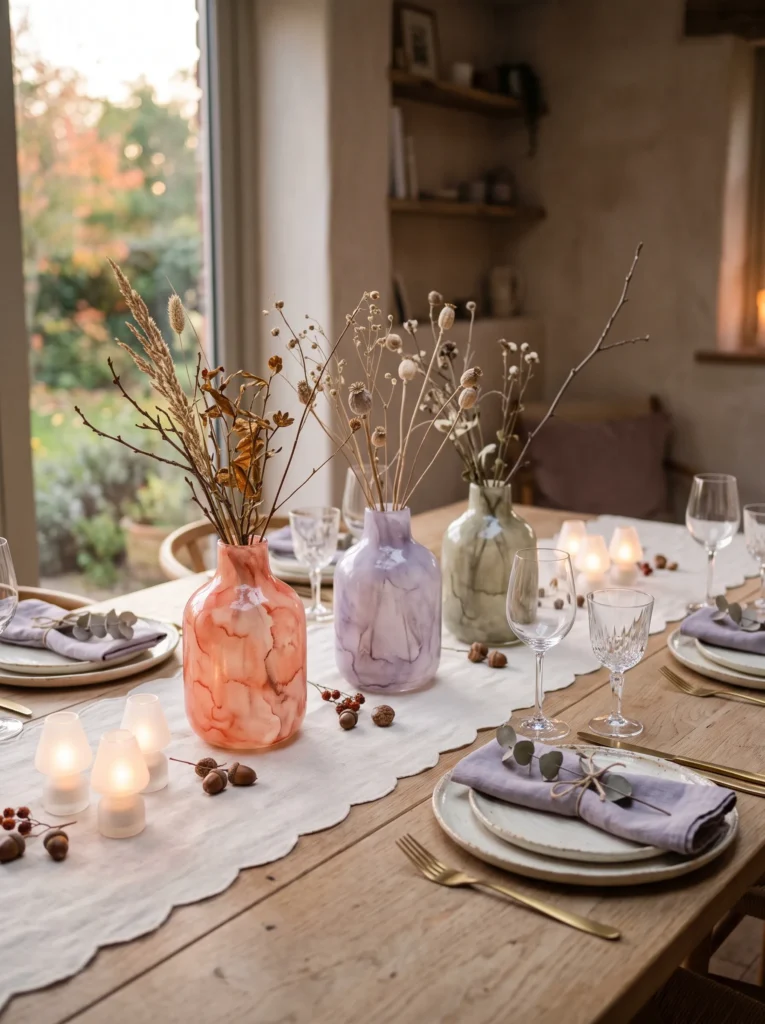
- Palette: Watercolor coral, dusty lavender, olive gray, and soft cream.
- Materials: Three small hand-painted glass vessels, single-stem dried flowers, narrow cream linen runner, and miniature ceramic dishes.
- Height: Keep the vessels between 6 and 12 inches, with each stem trimmed to a slightly different height.
- Table Linen: Use a narrow cream runner with softly scalloped edges.
- Lighting: Place two tiny rechargeable lamps with frosted covers at the ends of the arrangement for evening illumination.
- Tableware: Use cream plates, lavender-gray napkins, clear glasses, and understated silver flatware.
- Standout detail: Paint each vessel with a loose watercolor-style wash so the colors overlap rather than matching exactly.
Why this works: The centerpiece feels seasonal through its dusty colors and natural stems, but the hand-painted glass keeps it far away from conventional harvest styling.
Coral and lavender create visual tension, while olive gray acts as the bridge between the warmer and cooler tones. The three vessels also give you flexibility: they can be moved apart when serving food or brought closer together when the table is cleared. Functionally, that makes this one of the most adaptable arrangements in the collection.
This would be my choice for a table that needs something artistic but not overly formal. You can make the vessels with inexpensive clear bud vases and glass-compatible paints, using a sponge or soft brush to create translucent overlapping washes. Allow them to cure exactly as directed by the paint manufacturer. I would avoid painting the inside of vessels used with water and instead keep the decoration on the exterior. Once the season ends, the same vessels can be restyled with winter branches, spring stems, or even a single flower.
11. Velvet Fig Garland
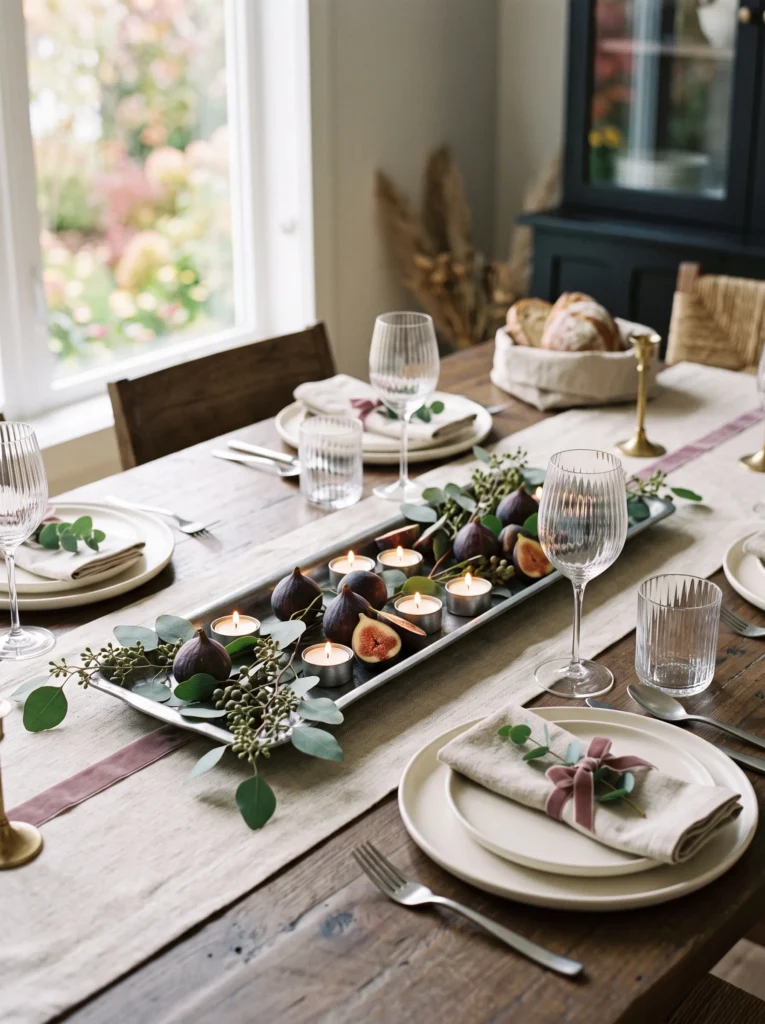
- Palette: Fig purple, dusty mauve, antique pewter, and soft oatmeal.
- Materials: A narrow oatmeal linen runner, fresh or faux figs, preserved eucalyptus stems, velvet ribbon, and a long pewter tray.
- Height: Keep the arrangement between 4 and 9 inches, with the greenery spilling gently sideways rather than upward.
- Table Linen: Use a loosely draped oatmeal runner with its ends left slightly uneven.
- Lighting: Place four tiny unscented tea lights in low pewter cups between the figs.
- Tableware: Pair ivory plates with mauve napkins and clear ribbed glasses.
- Standout detail: Thread small velvet ribbon loops around selected eucalyptus stems, allowing the ribbon to barely touch the tabletop.
Why this works: Figs bring an autumnal richness without relying on the familiar orange-brown spectrum.
Their deep purple skin works beautifully with dusty mauve because both colors have muted undertones, while oatmeal keeps the combination from becoming too heavy. The horizontal pewter tray also gives the arrangement a defined footprint without creating a visual barrier between diners. Rather than filling every inch, leaving portions of the tray exposed makes the composition feel deliberately edited.
I would use faux figs if you want this centerpiece to remain on the table for several weeks, particularly if the dining room receives afternoon sunlight. Real figs are beautiful for a dinner party, but they soften quickly. A few preserved eucalyptus stems can be reused afterward in another arrangement, making the initial investment more worthwhile. I also like the velvet detail because it gives the centerpiece a tactile element guests notice when they lean closer, without turning the table into a collection of seasonal decorations.
12. Frosted Fig Branches
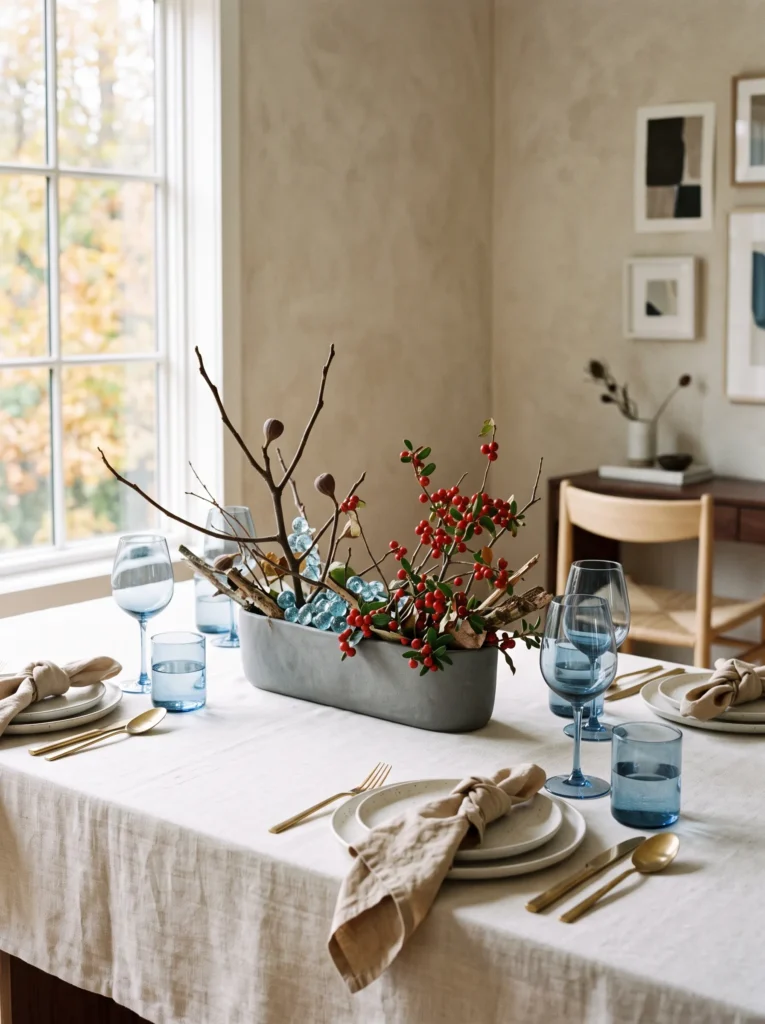
- Palette: Cranberry red, mineral blue, soft ivory, and weathered gray.
- Materials: A low matte-gray ceramic trough, bare fig branches, small cranberry-colored berries, and translucent mineral-blue glass beads.
- Height: Shape the branches into a 13-inch asymmetrical sweep, keeping the highest point toward one-third of the table rather than centered.
- Table Linen: Use a plain ivory tablecloth with no runner.
- Lighting: Set two low hurricane lanterns at the far ends of the table, well away from the branches.
- Tableware: Choose ivory plates, mineral-blue water glasses, and brushed pewter flatware.
- Standout detail: Add a handful of translucent blue glass beads among the branches so they catch daylight like tiny drops of frost.
Why this works: Cranberry and mineral blue create a less predictable fall combination because they sit at opposite temperature extremes: the red brings visual warmth while the blue cools it down.
The gray trough acts as a neutral bridge between them. Keeping the branches asymmetrical also prevents the centerpiece from becoming a formal bouquet with equal visual weight on both sides. The tiny glass elements provide sparkle without requiring metallic finishes or additional decorative objects.
This is the kind of arrangement I would choose for a dining room that already has strong natural materials. The bare branches give the table vertical movement, while the blue glass adds a subtle reflective quality when daylight shifts. If you’re collecting branches outdoors, inspect them carefully and remove loose bark before bringing them inside. For the cranberry elements, faux berries are practical because they won’t bruise or stain the tablecloth. My preference is always to make the arrangement look natural first and seasonal second.
13. Terracotta Ribbon Runner
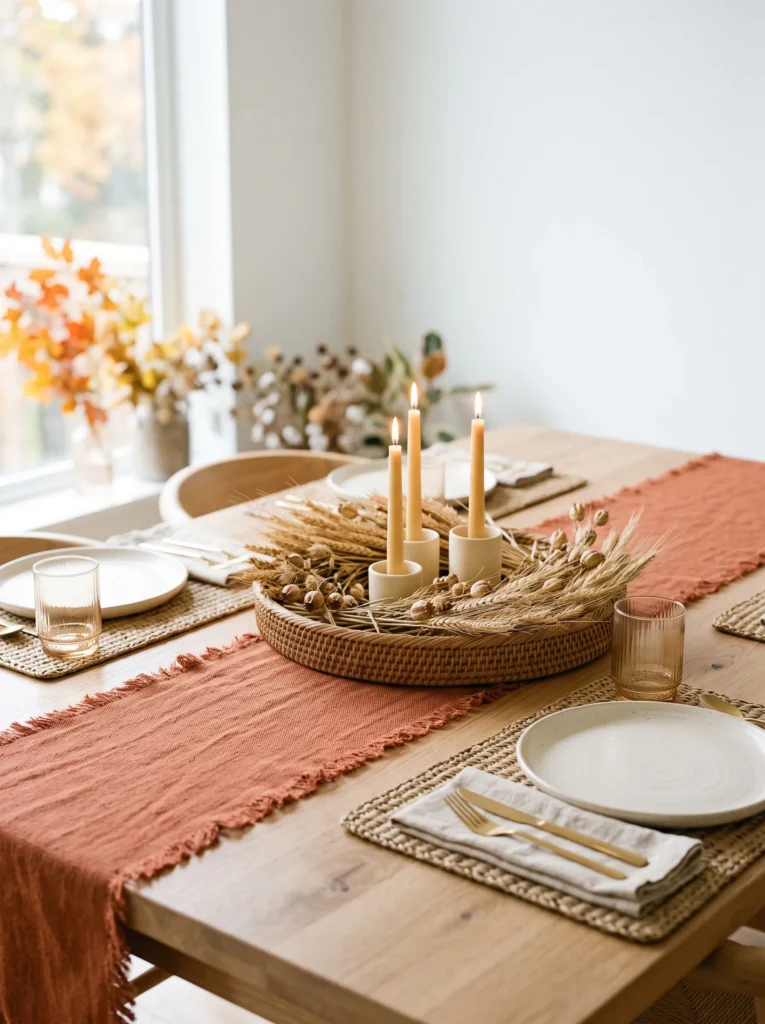
- Palette: Soft terracotta, buttercream, faded marigold, and natural rattan.
- Materials: Extra-wide terracotta cotton ribbon, shallow rattan tray, dried wheat stems, and handmade buttercream ceramic cups.
- Height: Keep the wheat between 8 and 12 inches, trimming individual stems so the arrangement remains loose.
- Table Linen: Instead of a conventional runner, use the terracotta ribbon as a narrow textile path down the center.
- Lighting: Place three buttercream ceramic candle cups directly along the ribbon, leaving generous gaps between them.
- Tableware: Use natural cream plates, woven placemats, and pale amber drinking glasses.
- Standout detail: Fray the ribbon edges by hand so the center strip has a soft, imperfect textile finish.
Why this works: Replacing a traditional runner with ribbon changes the visual rhythm of the entire table without requiring an elaborate centerpiece.
Terracotta feels unmistakably autumnal, but the buttercream and faded marigold keep it lighter than the darker fall palettes commonly used in dining rooms. The rattan tray introduces a natural texture while the handmade ceramics prevent the arrangement from feeling overly coordinated. It is a simple example of how changing one structural element can make familiar materials look completely different.
This is also one of the easiest DIY options in the collection. Cut a length of heavyweight cotton ribbon slightly longer than your table, then gently pull individual threads from both edges until you get the amount of fraying you like. Press it flat before placing it on the table. If you’re using real wheat, shake out the stems outdoors first and check for loose seeds. I would keep candles several inches away from the dried material; heat clearance matters more than symmetry when you’re styling anything flammable.
Image Alt Text: Fall table centerpiece ideas featuring a frayed terracotta ribbon runner, dried wheat, rattan tray, buttercream ceramics, and amber glassware.
14. Silver Seed Pod Tower
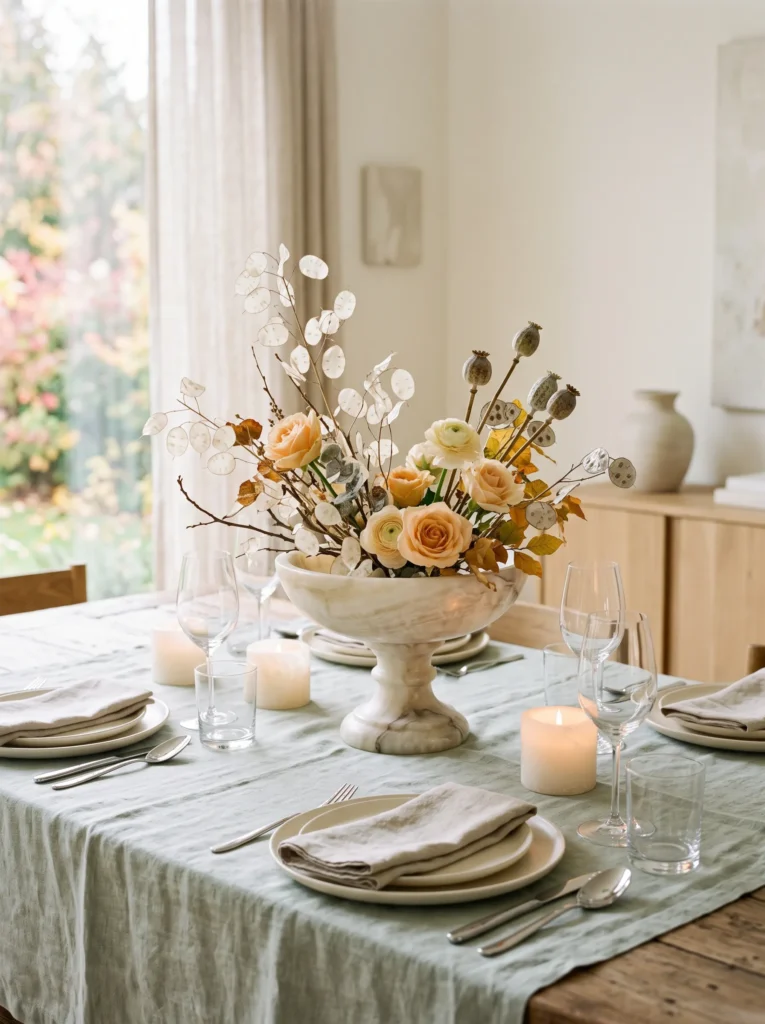
- Palette: Pewter silver, soft sage, pale peach, and warm white.
- Materials: A heavy alabaster pedestal bowl, preserved seed pods, dried lunaria, pale peach ranunculus, and small silver-toned ceramic beads.
- Height: Keep the tallest stems under 14 inches, using the pedestal to create elevation without making the foliage excessively tall.
- Table Linen: Choose a soft sage tablecloth with a completely clean surface.
- Lighting: Use four warm-white LED taper candles in low alabaster holders.
- Tableware: Combine warm-white plates with pale peach linen napkins and clear champagne-style glasses.
- Standout detail: Add a handful of naturally translucent lunaria leaves so the arrangement changes appearance as light passes through them.
Why this works: The pedestal gives the centerpiece a sense of importance while the actual botanical material stays remarkably low.
That distinction is useful when you want a centerpiece to feel substantial without blocking conversation. Pewter and sage create a quieter autumn palette, while pale peach prevents the table from becoming too cool. Lunaria is particularly effective here because its papery translucent seed discs reflect light differently throughout the day, giving the arrangement movement without needing additional decoration.
I would save this arrangement for a table where the centerpiece needs to carry more visual authority. The heavy alabaster base is important because elevated vessels can become unstable if the base is too narrow or lightweight. This is another place where my husband’s construction perspective influences how I style: visual height should never come at the expense of stability. If the table will be used by children or during a busy meal, swap the pedestal for a broad, low bowl and keep the same botanical combination.
Styling Principles for Fall Dining Tables
The strongest fall table centerpiece ideas start with the table’s function, not the decoration. Before choosing a vessel or seasonal material, consider how many people will sit there, where serving dishes will land, and whether guests need an uninterrupted sightline.
Keep the center low. As a practical rule, aim for a centerpiece under about 14 inches when guests need to converse across the table. If you want more height, create it with visual mass at the base rather than pushing stems directly into the sightline.
Restrict the palette. Two to four main colors are usually enough. If you love a dramatic seasonal color, let it occupy one strong role rather than introducing several competing shades.
Think horizontally. Long trays, shallow bowls, ribbons, branches, and groups of small objects can make a table feel substantial without creating a visual wall.
Leave serving space. A centerpiece should never force dinner plates, serving bowls, or glasses into awkward positions. On a smaller table, one compact arrangement is usually more successful than several decorative clusters.
Use lighting strategically. Candlelight works best when flames are separated from dried botanicals, textiles, and other combustible materials. Stable, weighted holders are especially important when the table will be busy.
Repeat materials, not objects. A linen color can appear in both the centerpiece and napkins; a ceramic finish can repeat in candleholders. You don’t need identical accessories everywhere to create cohesion.
Let one detail lead. A painted leaf, unusual fruit, sculptural stone, handmade vessel, or unexpected textile is often enough. Once that feature has your attention, additional decoration usually becomes unnecessary.
Fall Table Centerpiece FAQ
How low should a fall centerpiece be?
For a dining table where guests need to see each other, keeping the main arrangement under approximately 14 inches is a practical target. You can still create impact through width, texture, color contrast, reflective surfaces, and several low vessels rather than relying on tall flowers.
What is the cheapest way to make a fall centerpiece?
Start with materials you already have. A beautiful linen runner, a few branches, seasonal fruit, thrifted ceramic vessels, or stones from a garden can become the foundation. Changing the arrangement’s composition often makes a bigger difference than purchasing more decorations.
Are real or faux materials better?
Both can work. Real branches, fruit, and leaves generally provide more convincing texture and variation, while high-quality faux materials are easier to maintain throughout an entire season. For arrangements you plan to keep for several weeks, mixing durable preserved elements with a few replaceable fresh pieces is often the most practical approach.
What works best on a small dining table?
Choose one low centerpiece with a narrow footprint. A shallow tray, compact bowl, or three-piece vessel arrangement works particularly well. Avoid oversized branches or multiple decorative clusters that compete with plates and serving dishes.
How can I make a centerpiece last all fall?
Build the foundation from durable materials such as ceramic, stone, glass, preserved moss, dried branches, or quality faux botanicals. Then swap only the perishable element—such as fruit or fresh flowers—as needed. This gives you a seasonal look without rebuilding the entire arrangement every few days.
Should a centerpiece match the rest of my fall decor?
Not exactly. In fact, I prefer some separation. If your mantel or living room already uses deep autumn colors, the dining table can introduce a completely different seasonal palette. Repeating one material or subtle accent is enough to make the home feel connected without making every room look decorated from the same formula.
Final Thought
The best seasonal tables aren’t necessarily the ones with the most decoration. They’re the ones where every element has a reason to be there. A low branch can create movement, a limited color palette can make the table feel more refined, and one unexpected material can give the entire arrangement its personality.
When I style a dining table, I always come back to the same question: Can people comfortably use this table while still noticing the design? If the answer is yes, you’ve found the balance. Start with your table’s shape and proportions, choose one detail you genuinely love, and build outward from there. The result will feel much more personal—and much less like a standard fall centerpiece.
The best seasonal table styling treats beauty and usability as equal priorities. A centerpiece should give the table character, but it should also leave room for conversation, food, glasses, and the people who actually live around it.