10 Front Porch Fall Decor Ideas That Hold Up All Season
Fall porch decorating works best when you plan for weather before choosing seasonal accents. From damp mornings and early frost to strong winds and temperature swings, an outdoor entry needs materials that can handle more than a pretty September afternoon. The best front porch fall decor ideas combine durable textiles, weather-resistant furniture, cool-season plants, practical lighting, and restrained color palettes so the porch still looks intentional weeks later.
Whether you have a deep covered porch or a narrow front step, these seasonal setups show how to layer color, texture, seating, planters, and lighting without filling the space with disposable decorations.
Why Fall Porch Decor Needs Different Materials
Fall porch decor has to survive more than a pretty photo shoot. Unlike summer, fall brings wider temperature swings and more moisture from dew, early frost, and rain, so materials that tolerated July heat can warp, fade, or rot by November. That is why outdoor styling needs the same practical thinking you would give a small renovation. My husband, who works in residential construction, regularly points out that water and movement cause more outdoor problems than people expect. Fall porch decor lasts longer when every layer is chosen for outdoor exposure, not just appearance. This guide solves that problem with ten porch setups designed to look considered from September through Thanksgiving.
1. Teak and Ink
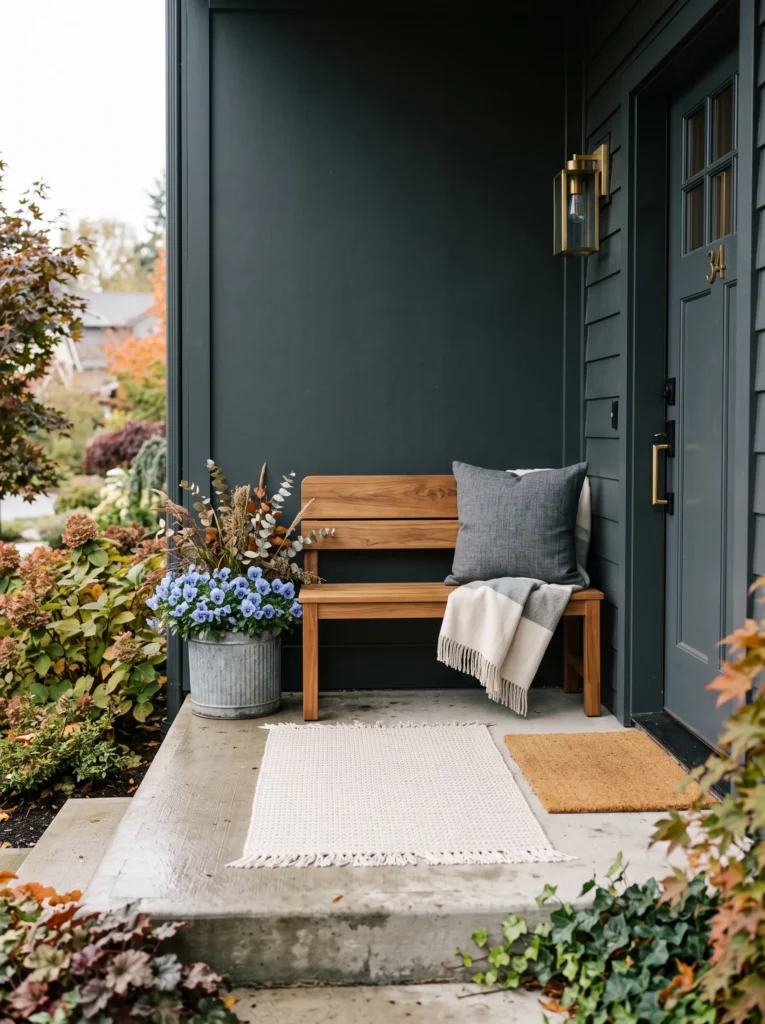
- Palette: Ink charcoal, cream, dusty blue, and muted olive.
- Materials: Teak, galvanized steel, polypropylene, and weather-rated acrylic fabric.
- Seating: Low-profile teak bench with a charcoal outdoor cushion.
- Planters: Galvanized containers filled with dusty blue violas and ornamental kale.
- Entry: Narrow eucalyptus swag rather than a traditional wreath.
- Lighting: Warm LED wall sconces with shielded bulbs.
- Construction note: Keep teak feet elevated from areas where rainwater collects.
Why this works: Durable materials and a restrained palette keep a sitting porch useful long after the first fall weekend.
A porch can feel seasonal without looking overloaded, and the trick is choosing one material story before adding anything decorative. Start with a low teak bench, a charcoal outdoor cushion, and a flat-woven polypropylene rug in cream and ink. Use dusty blue violas in galvanized planters, then add a single cluster of white and pale green gourds near the steps. Weather-rated fabric resists moisture better than ordinary indoor textiles, while teak handles outdoor exposure well when properly maintained. Keep the door simple with a narrow eucalyptus swag, and use warm LED sconces rather than portable candles in breezy conditions.
This arrangement is especially useful on a porch that needs to function as a sitting area throughout October and November. The restrained palette keeps the furniture usable after the first holiday decorations appear, while the galvanized containers add a durable metal layer that will not swell from repeated damp mornings. My husband once pointed out a porch bench whose feet sat directly in standing water; the wood looked fine at first, but the base deteriorated quickly. Elevating furniture slightly and keeping textiles rated for outdoor use are small choices that make seasonal styling much easier to maintain.
2. Terracotta Step Garden
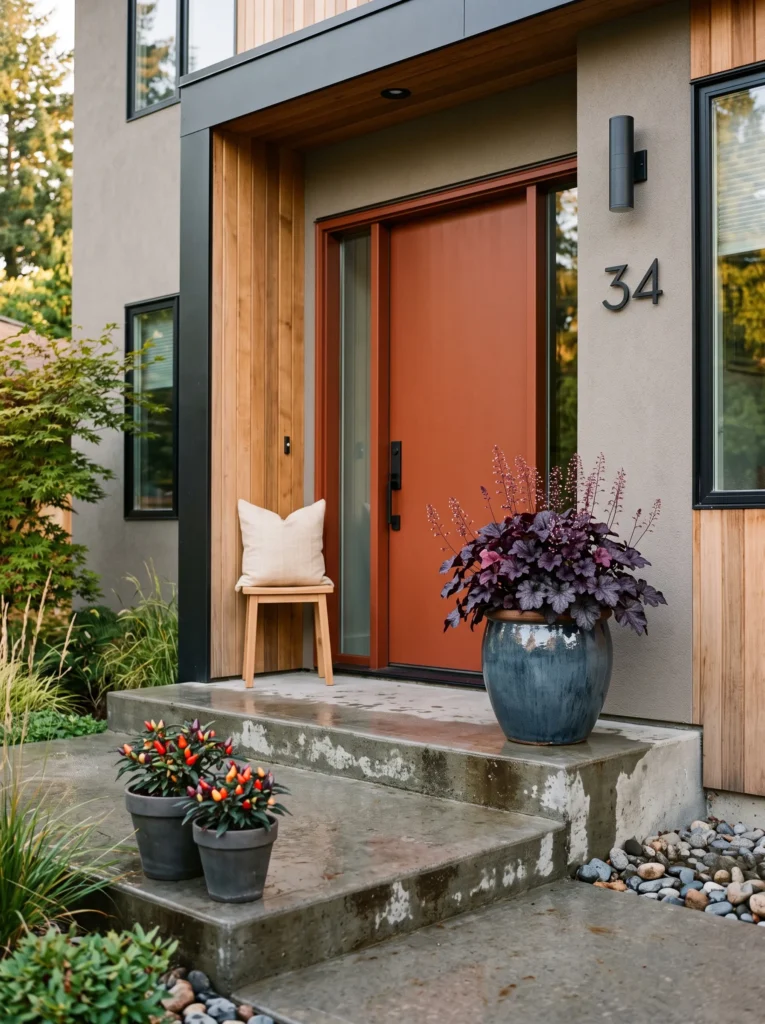
- Palette: Burnt sienna, parchment, deep moss, and faded plum.
- Materials: Glazed terracotta, treated cedar, outdoor canvas, and concrete.
- Seating: Slim cedar stool tucked beside the entry rather than a full chair.
- Planters: Three staggered terracotta pots with ornamental peppers and purple-leaf heuchera.
- Steps: Use one wide concrete planter on the lowest step as the visual anchor.
- Lighting: Small downward-facing step lights for safe footing after sunset.
- Construction note: Keep planters clear of stair edges so they cannot become a trip hazard.
Why this works: Repeating sturdy containers at different heights makes a narrow staircase feel intentional without filling every step.
The strongest fall porch arrangements do not always begin at the door. On a narrow entry, the steps themselves can carry the seasonal color while the doorway stays visually quiet. Arrange three glazed terracotta pots from largest to smallest, using ornamental peppers for saturated color and purple-leaf heuchera for foliage that remains interesting between blooms. Treated cedar adds a separate wood note through a slim stool, while a parchment-colored outdoor canvas cushion softens it. A flat concrete planter at the bottom grounds the composition without relying on pumpkins, baskets, or oversized seasonal signs.
I like this approach when a porch has more stairs than seating because it gives every level a job. The terracotta also develops a natural patina outdoors, so minor weathering does not make the display look neglected. From a plant-science perspective, heuchera is useful here because its foliage provides structure even when flowers are not doing the visual work. Keep pots slightly away from the stair nosing, and check that drainage holes remain unobstructed. Small safety details matter more as evenings become darker and wet leaves make outdoor steps slippery.
3. Oxblood Lantern Corner
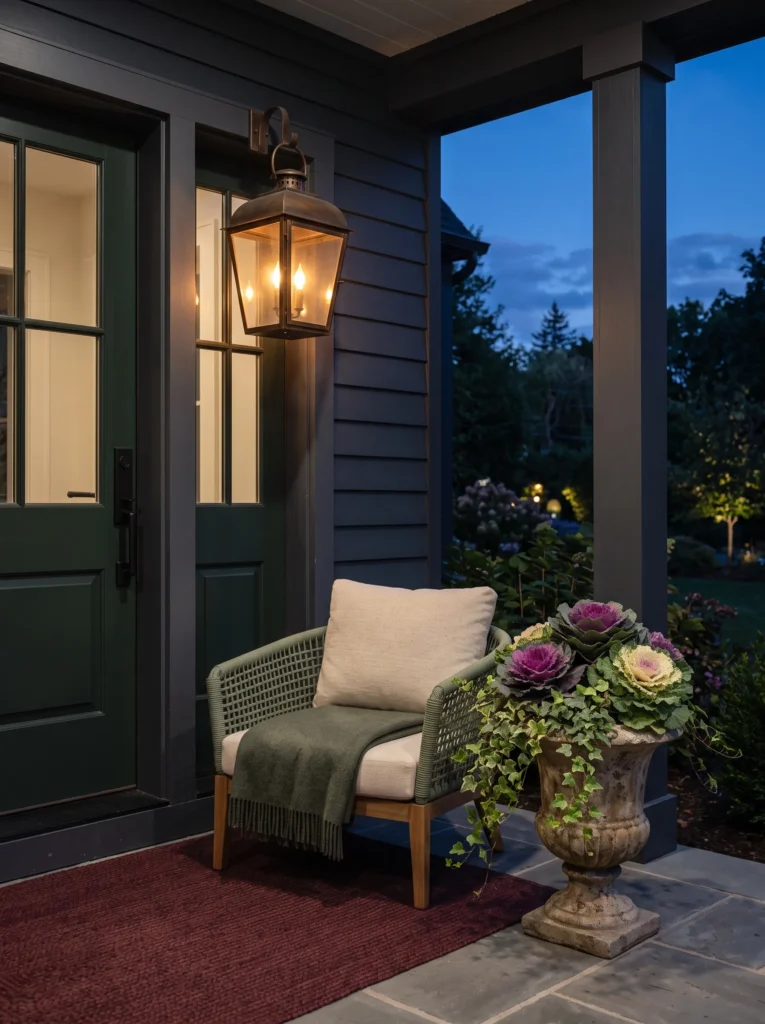
- Palette: Oxblood, warm ivory, aged bronze, and muted sage.
- Materials: Powder-coated steel, outdoor chenille, treated wood, and stone.
- Seating: Compact sage-green outdoor lounge chair with a simple square silhouette.
- Planters: Stone urn containing ornamental cabbage and trailing ivy.
- Entry: Oxblood door mat with a tightly woven low-pile construction.
- Lighting: One large weather-rated lantern with a warm LED bulb.
- Construction note: Place the lantern on a stable stone surface and keep cords away from walking paths.
Why this works: A single substantial light source can define an entry corner without covering the porch in fragile seasonal accessories.
Good fall lighting should do more than make a porch look pretty after sunset; it should make the route to the door easier to read. A weather-rated steel lantern beside the seating area provides that function while becoming the main decorative object. Pair it with a compact sage lounge chair, warm ivory outdoor chenille cushion, and a stone urn planted with ornamental cabbage and trailing ivy. The oxblood mat supplies the deepest color at ground level. Keep the door nearly bare so the lantern, rather than a wreath or sign, carries the seasonal identity of the corner.
My husband is particularly cautious about freestanding lighting near entrances because wind can turn a decorative object into a hazard. That is why I prefer a heavy stone base and a lantern designed specifically for exterior use rather than an indoor lamp placed outside temporarily. The cabbage also earns its space because it tolerates cool weather better than many summer container plants. When temperatures drop, the foliage can continue contributing structure while the rest of the porch transitions toward winter. The result feels finished without depending on delicate decorations that need constant repositioning.
You’ll Also Love: 15 Fall Mantel Decor Ideas That Actually Feel Designed
4. Rust Rail Display
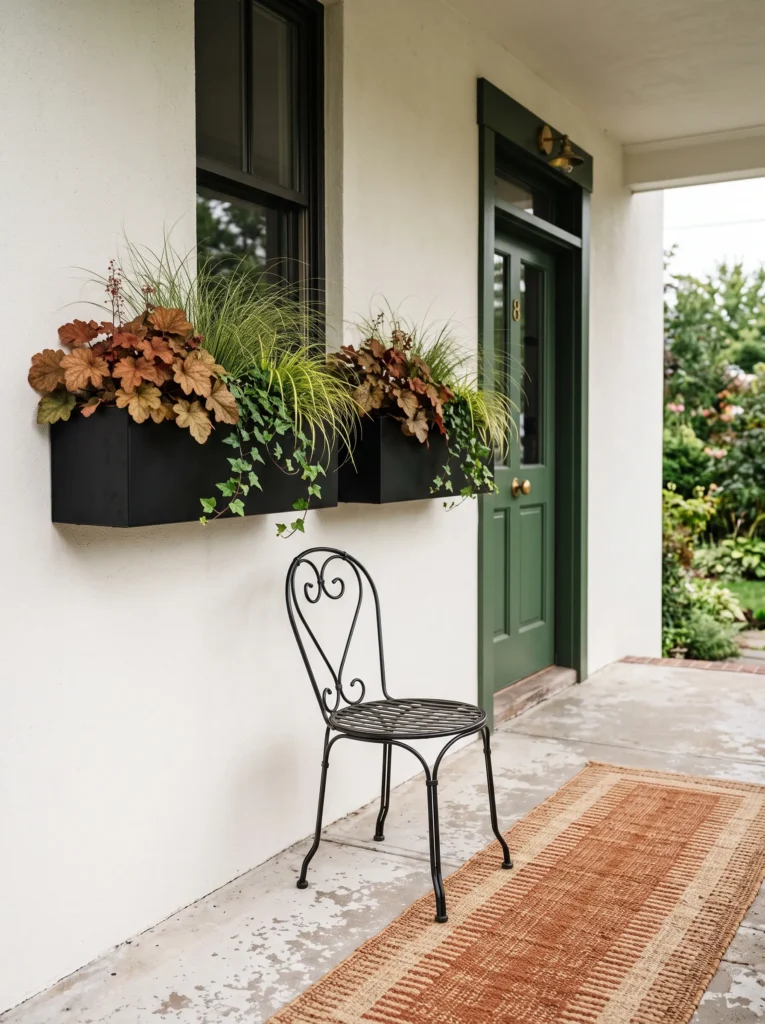
- Palette: Rust orange, bone white, forest green, and weathered black.
- Materials: Powder-coated steel, treated oak, outdoor polyester, and glazed ceramic.
- Seating: Narrow black metal bistro chair with a bone-white outdoor cushion.
- Planters: Glazed ceramic pots of ornamental grasses and bronze-leaf coral bells.
- Railing: Two shallow steel window boxes mounted securely along the rail.
- Lighting: Low-profile black wall fixture with a downward beam.
- Construction note: Use exterior-rated brackets and fasteners for any railing-mounted containers.
Why this works: Securely mounted planters turn an overlooked railing into a durable seasonal layer without consuming walking space.
A railing can carry more visual weight than people expect, especially when floor space is limited. Instead of lining the porch with containers, mount two shallow steel window boxes along the rail and fill them with compact ornamental grasses and bronze-leaf coral bells. Their foliage creates movement without depending on flowers that fade quickly. A black metal bistro chair and bone-white outdoor cushion keep the seating footprint small. Add a rust-colored outdoor polyester runner beneath the chair, then repeat that rust tone in one glazed ceramic accent near the door.
Railing displays need more engineering than tabletop decorations because wind puts repeated force on anything projecting outward. My husband would insist on exterior-rated brackets and corrosion-resistant fasteners rather than hardware chosen simply because it fits the box. That practical detail is easy to overlook until a storm moves through. Keep the containers shallow enough to avoid excessive weight, and make sure drainage cannot stain the porch surface. This setup works particularly well for small porches because the plants occupy vertical space while the floor remains open for packages, shoes, and everyday traffic.
5. Copper Leaf Bench
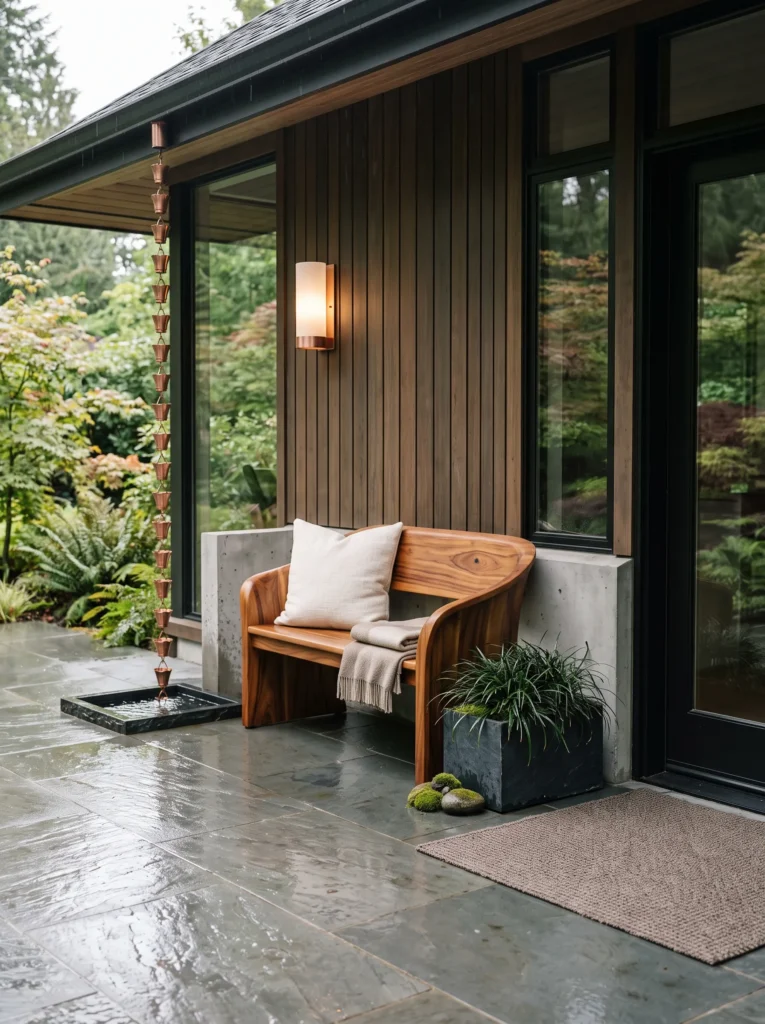
- Palette: Burnished copper, soft taupe, cream, and dark evergreen.
- Materials: Copper, acacia wood, outdoor performance velvet, and slate.
- Seating: Curved acacia bench with a cream performance-velvet cushion.
- Planters: Slate rectangular planter containing dwarf mondo grass and trailing bacopa.
- Entry: Taupe coir mat with a low-profile rubber backing.
- Lighting: Copper-toned hardwired sconce with frosted glass.
- Standout detail: Small copper rain chain positioned near the porch corner.
- Construction note: Anchor the rain chain where runoff naturally exits rather than redirecting water toward the foundation.
Why this works: Copper, slate, and acacia create a layered outdoor material palette while directing rainwater away from vulnerable porch areas.
Rain management can become part of the design instead of something hidden at the edge of the house. A short copper rain chain beside the porch provides a visible connection between the roof and ground while adding a distinctive fall note without relying on seasonal ornaments. Pair it with an acacia bench, cream performance cushion, and rectangular slate planter filled with dwarf mondo grass. A taupe coir mat keeps the entry practical, while a copper-toned sconce with frosted glass repeats the metal finish. The palette stays deliberately quiet so the rain chain remains the memorable detail.
When we worked on outdoor projects around our house, my husband always paid attention to where water actually traveled after a storm, not where it appeared to be traveling from the doorway. That habit changed how I style porches. A decorative rain chain should never send runoff toward the foundation or create a slick walking area. Acacia also benefits from appropriate exterior maintenance, while performance fabrics are better suited to repeated moisture than indoor upholstery. This arrangement therefore combines decoration with a functional water-management detail, making the porch feel considered without adding clutter.
6. Plum Doorstep Layers
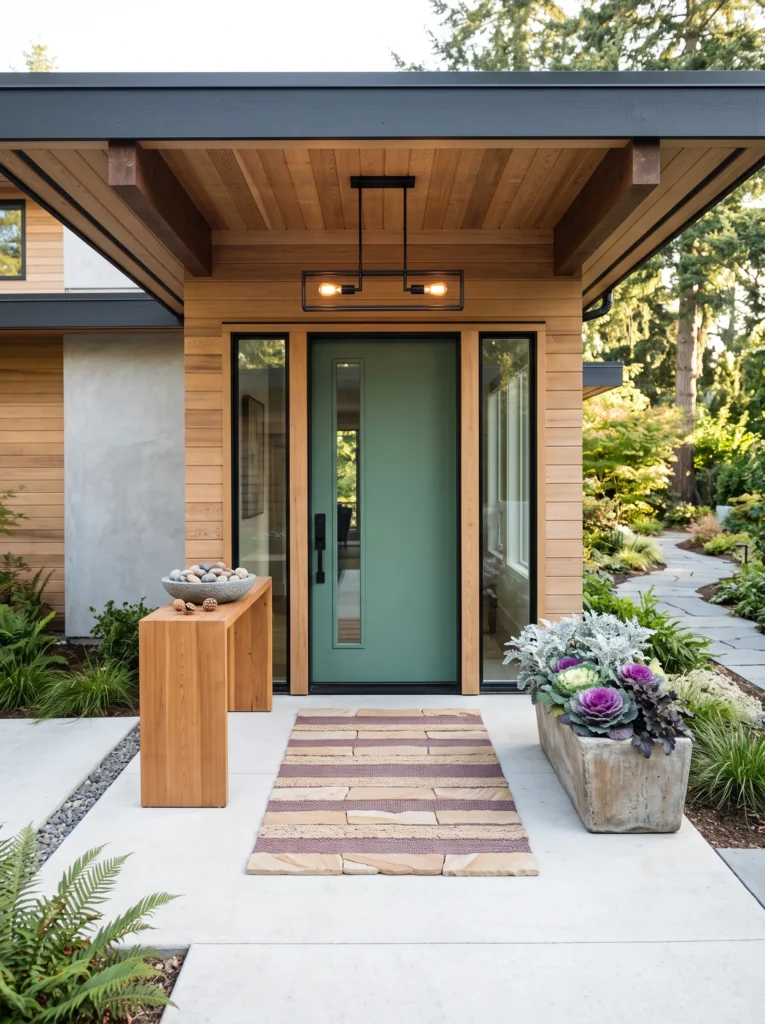
- Palette: Muted plum, sandstone, eucalyptus green, and blackened iron.
- Materials: Concrete, outdoor polypropylene, blackened iron, and weather-treated cedar.
- Seating: Small cedar folding chair with a sandstone outdoor cushion.
- Planters: Concrete trough planted with ornamental cabbage, dusty miller, and creeping thyme.
- Entry: Layered sandstone-and-plum polypropylene mats with low profiles.
- Lighting: Blackened-iron ceiling fixture with a fully enclosed exterior-rated bulb.
- Standout detail: Slim cedar console holding one shallow stone bowl.
- Construction note: Keep the console narrow enough to preserve a clear minimum walking route to the door.
Why this works: Layering two low-profile mats gives the entry depth while keeping the practical path clear and easy to maintain.
Layered mats can change the proportions of a small entry without adding another piece of furniture. Start with a sandstone polypropylene base mat and place a smaller muted-plum pattern over it, keeping both low enough that the door clears comfortably. Beside the door, use a narrow weather-treated cedar console with a shallow stone bowl rather than a collection of small accessories. A concrete trough filled with ornamental cabbage, dusty miller, and creeping thyme supplies varied foliage. The cedar chair remains available for sitting, but its folding silhouette keeps the entrance from feeling crowded.
There is a useful plant lesson in this combination: fall containers do not need every plant to flower at the same time. Foliage differences can carry the composition through several weeks of changing temperatures, which is why dusty miller and cabbage work well together here. Creeping thyme adds a lower texture without competing for height. The blackened-iron fixture should be fully exterior rated and securely installed overhead, especially where the porch receives wind-driven rain. With the mats kept flat and the furniture pulled away from the swing of the door, the arrangement stays practical as well as seasonal.
7. Olive Barrel Seating
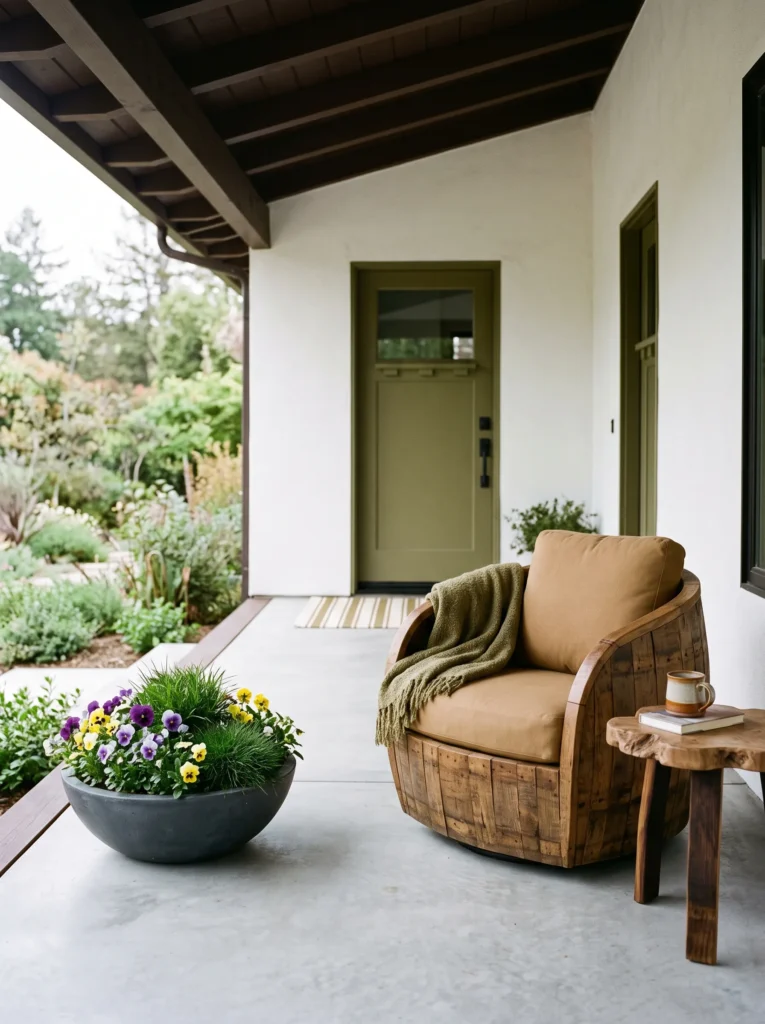
- Palette: Olive green, camel, cream, and dark brown.
- Materials: Reclaimed oak, outdoor canvas, sealed concrete, and iron.
- Seating: Rounded reclaimed-oak barrel chair with a camel outdoor canvas cushion.
- Planters: Sealed concrete bowl planted with pansies and compact ornamental grass.
- Entry: Cream-and-olive striped polypropylene mat.
- Lighting: Small iron lanterns mounted beside the seating area.
- Standout detail: One reclaimed oak side table with a thick, naturally irregular edge.
- Construction note: Use only properly stabilized reclaimed wood outdoors and keep it protected from prolonged standing moisture.
Why this works: A single substantial wood chair and restrained plant grouping make a large porch feel furnished without filling it with seasonal objects.
Large porches often become cluttered because every empty corner gets treated as an invitation for another decoration. A better approach is to give one seating piece enough visual authority to carry the zone. Here, a rounded reclaimed-oak barrel chair sits on a cream-and-olive polypropylene mat, with a camel outdoor canvas cushion adding the only textile layer. A sealed concrete bowl holds compact ornamental grass and pansies, while one irregular-edged oak side table provides useful landing space. Small iron lanterns near the chair supply evening light without competing with the furniture.
The reclaimed wood needs more attention than its appearance suggests. Outdoor exposure can accelerate movement, checking, and moisture damage if the timber was not prepared for exterior conditions, so properly stabilized material and appropriate sealing matter. That is one reason I would rather use one verified outdoor piece than several beautiful indoor objects temporarily moved onto the porch. Pansies also make sense for many fall containers because they tolerate cool conditions and can continue blooming when summer annuals begin declining. The whole arrangement feels furnished first and seasonal second, which makes it easier to leave in place for weeks.
8. Cranberry Textile Nook
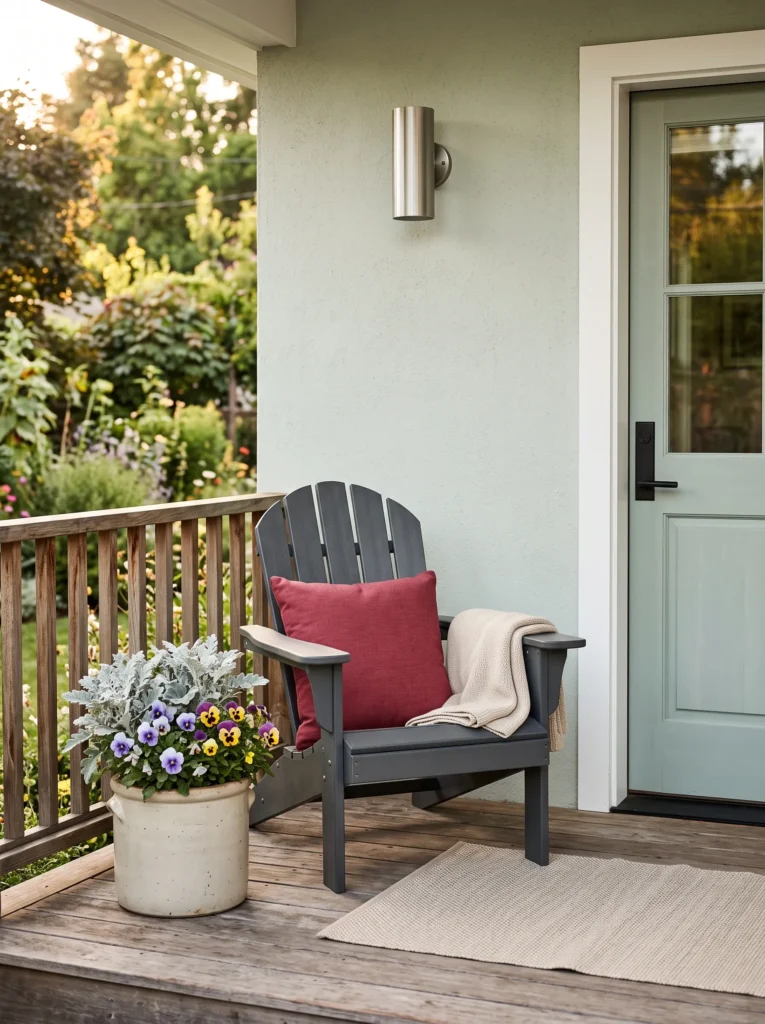
- Palette: Cranberry red, oat, charcoal, and pale eucalyptus.
- Materials: Weather-rated acrylic, composite decking, brushed aluminum, and glazed stoneware.
- Seating: Compact charcoal Adirondack chair with a cranberry outdoor cushion.
- Planters: Pale stoneware containers filled with pansies and silver-green dusty miller.
- Entry: Oat-colored recycled-polyester outdoor mat.
- Lighting: Slim brushed-aluminum sconces with warm LED illumination.
- Standout detail: A cranberry outdoor throw folded over the chair arm.
- Construction note: Store removable textiles during extended rain rather than leaving them saturated.
Why this works: Performance textiles deliver strong seasonal color without requiring fragile indoor fabrics on an exposed porch.
A small seating nook can carry plenty of seasonal color when the textile is doing the work instead of the decorations. Use a charcoal Adirondack chair with a cranberry outdoor cushion, then fold one matching weather-rated throw over the arm for cooler evenings. Pale stoneware planters filled with dusty miller and pansies soften the hard surfaces without introducing another dominant color. An oat recycled-polyester mat sits beneath the chair, while brushed-aluminum sconces provide a clean architectural finish. The door can remain pale eucalyptus, giving the cranberry accents enough contrast without turning the porch into a holiday display.
Outdoor acrylic and other performance fabrics are engineered differently from ordinary indoor textiles, but “weather resistant” does not mean “leave everything wet indefinitely.” I learned this after leaving a beautiful outdoor cushion uncovered during several rainy days and finding that the fabric took far longer to dry than expected. Now I treat removable textiles as working pieces: they can stay outside during ordinary weather but should be brought under cover during prolonged rain. That simple habit protects the cushion and keeps the seating area usable instead of turning it into a damp storage spot.
9. Slate Step Lanterns
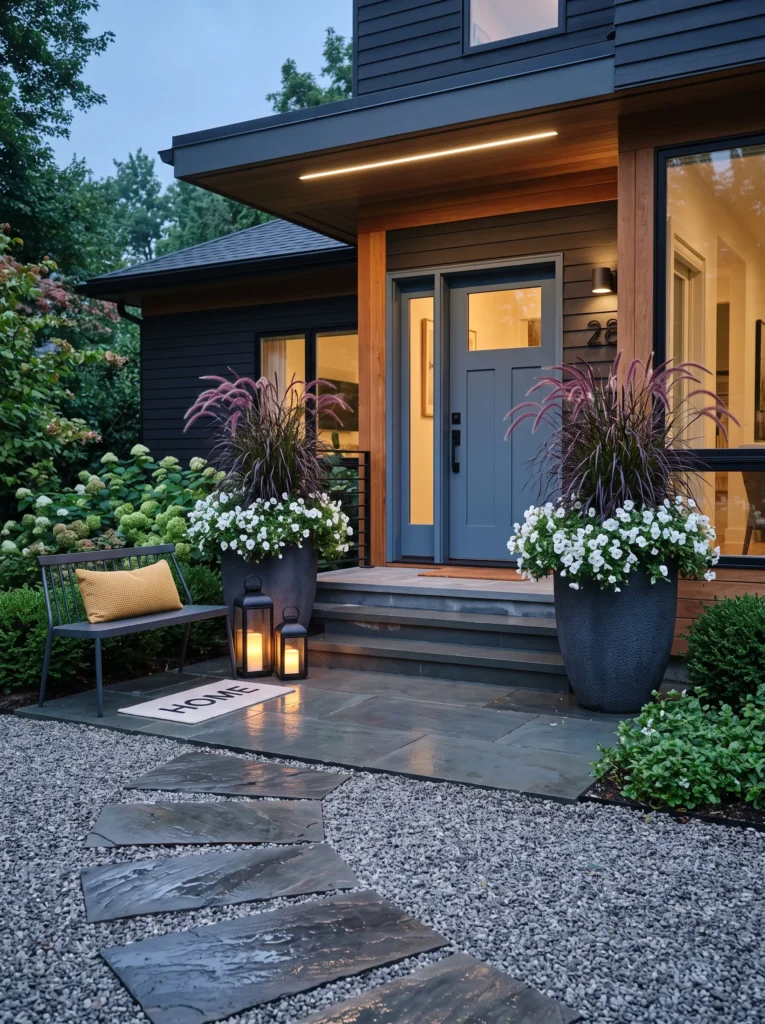
- Palette: Slate blue, mustard, ivory, and deep charcoal.
- Materials: Natural slate, fiberglass, outdoor polyester, and blackened aluminum.
- Seating: Slim charcoal bench with a mustard outdoor seat cushion.
- Planters: Fiberglass urns filled with purple fountain grass and white pansies.
- Entry: Ivory flat-weave polypropylene mat.
- Lighting: Two matching battery-free, hardwired wall lanterns positioned beside the steps.
- Standout detail: A slate stepping-stone border framing the lowest planter.
- Construction note: Keep lighting fixtures outside the direct splash zone and have permanent wiring installed to local code.
Why this works: Repeating slate at the ground level gives the porch structure while carefully placed lighting makes the steps safer after dark.
Steps deserve their own styling strategy because they are both decorative surfaces and circulation routes. Instead of placing objects randomly along each tread, frame the lowest landing with a slate stepping-stone border and position matching fiberglass urns to either side. Fill them with purple fountain grass and white pansies for movement and contrast. A slim charcoal bench with a mustard outdoor cushion sits against the wall, while an ivory polypropylene mat marks the threshold. Matching hardwired lanterns beside the steps provide a practical lighting rhythm without introducing portable objects that could be knocked over.
Permanent exterior lighting deserves construction-level attention because placement affects both safety and longevity. My husband would check the fixture location against splash exposure, wiring requirements, and the path people actually use before choosing the decorative style. That is especially important on fall evenings when wet leaves can obscure step edges. Fiberglass planters also make sense here because they can mimic heavier materials while remaining easier to reposition. Keep the slate edging level and avoid creating a raised lip across the walking route. Seasonal decoration should make navigation clearer, never harder.
10. Amber Glass Entry
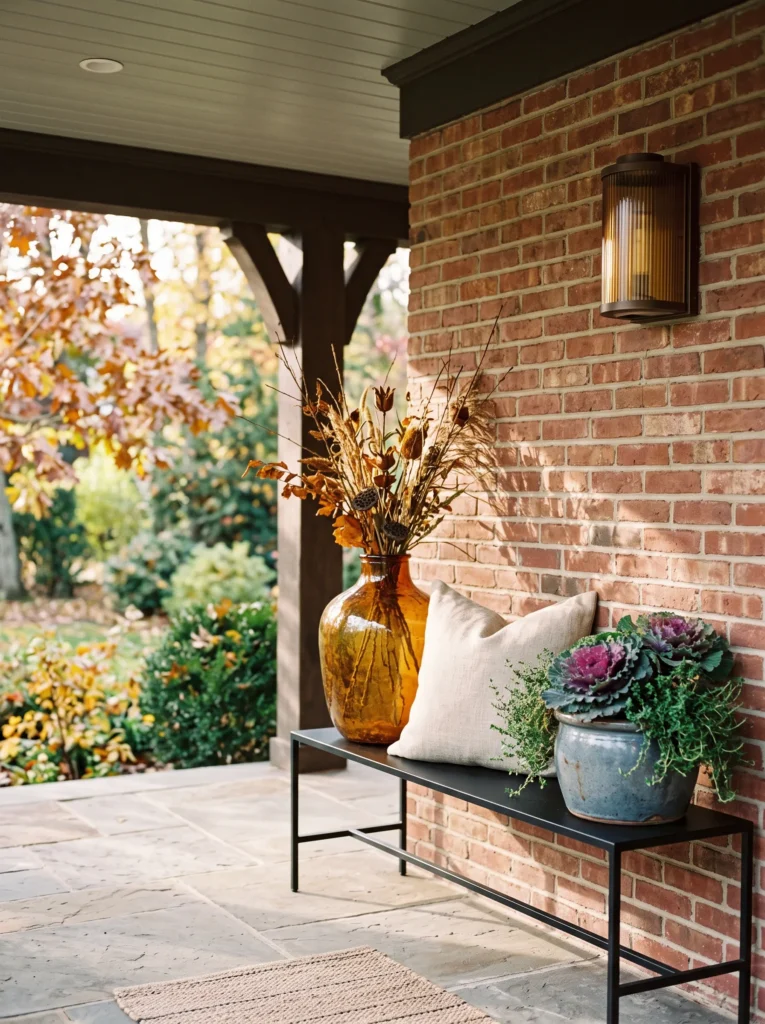
- Palette: Amber, soft black, flax, and blue-gray.
- Materials: Tempered glass, powder-coated aluminum, outdoor linen-look polyester, and brick.
- Seating: Slim black steel bench with a flax-colored outdoor cushion.
- Planters: Blue-gray ceramic containers filled with ornamental kale and lemon thyme.
- Entry: Flat black polypropylene mat with a subtle linear pattern.
- Lighting: Amber glass pendant-style exterior fixture with an enclosed bulb.
- Standout detail: One oversized amber glass vase placed on the bench.
- Construction note: Use tempered or exterior-rated glass and secure the fixture according to the manufacturer’s mounting requirements.
Why this works: One translucent amber accent introduces fall color while the remaining materials stay restrained and practical.
Amber glass can bring a distinctly autumnal note without relying on orange foliage or traditional harvest decorations. Place one oversized amber glass vase on a slim black steel bench, then repeat the material through an enclosed exterior light fixture near the door. Blue-gray ceramic containers filled with ornamental kale and lemon thyme add cooler foliage tones, while a flax-colored outdoor polyester cushion softens the bench. A flat black polypropylene mat handles daily foot traffic. Keep the brick or siding around the entry visually quiet so the translucent amber becomes the one unmistakable seasonal detail.
The glass should be selected with outdoor use in mind rather than treating a decorative indoor vase or fixture as interchangeable with exterior products. I especially like this arrangement on covered porches where the amber catches low autumn sunlight without being exposed directly to every storm. Lemon thyme also contributes a useful fine-textured layer beside the broader kale leaves, giving the containers dimension without requiring a large collection of plants. If the porch receives strong wind, secure lightweight decorative pieces or move them inside during storms. Good seasonal styling should be easy to adjust when the weather changes.
Fall Porch Styling Principles
A porch that lasts from early September through Thanksgiving needs restraint before decoration. Start with materials that can tolerate repeated exposure, then add seasonal color through removable pieces rather than fragile objects.
Choose outdoor-rated textiles. Look for cushions, pillows, and mats specifically manufactured for exterior use. Performance polyester, acrylic, and polypropylene are generally more appropriate than ordinary indoor fabrics because they are designed to handle outdoor conditions.
Give water somewhere to go. Keep furniture feet out of standing water, make sure planters have functioning drainage, and never position decorative containers where runoff can collect against the foundation.
Layer by height, not quantity. A floor-level mat, medium-height planter, and taller furniture or light fixture can create enough visual variation without covering every available surface.
Keep the color count controlled. Two strong seasonal colors plus one or two supporting neutrals usually look more intentional than combining orange, red, yellow, green, brown, and metallic accents throughout the same porch.
Use plants for lasting seasonal structure. Ornamental cabbage, kale, pansies, dusty miller, coral bells, ornamental grasses, and thyme can provide changing texture and foliage as temperatures cool, although suitability depends on the local climate.
Treat lighting as infrastructure. Exterior-rated fixtures should be mounted securely, positioned away from unnecessary water exposure, and installed according to applicable electrical requirements. Portable decorative lighting should never obstruct the walking path.
Let weathering be part of the plan. Materials such as properly maintained teak, galvanized metal, slate, and suitable exterior finishes can develop subtle changes outdoors without making the porch look damaged.
A durable seasonal porch is not one that survives untouched; it is one that still looks intentional after several weeks of changing weather.
Frequently Asked Questions
What are the best weather-durable materials for fall porch decor?
Weather-rated polypropylene, exterior acrylic, powder-coated metal, galvanized steel, properly treated exterior wood, slate, and suitable outdoor ceramics are practical choices for fall porch styling.
Are real or faux pumpkins better for an outdoor fall porch?
Faux pumpkins are generally easier to maintain for an entire season because they do not soften, rot, or attract pests as readily as many real pumpkins. Real pumpkins can still work when they are inspected regularly and protected from prolonged moisture.
How can I decorate a small front porch for fall?
Use vertical and perimeter zones rather than filling the center. A narrow bench, one substantial planter, a durable mat, and a single seasonal accent can provide enough visual interest while keeping the entrance clear.
What is the most budget-friendly way to refresh a fall porch?
Reuse existing outdoor furniture and change only a few high-impact layers, such as an exterior-rated mat, one seasonal cushion, and a container planted with cool-season foliage.
How long should fall porch decor stay up?
Fall porch decor can remain from early September through Thanksgiving when the materials and plants are appropriate for the local weather. Replace or remove anything that becomes damaged, waterlogged, unstable, or unsuitable for freezing temperatures.
How do I keep fall porch decor from blowing away?
Use heavier planters and furniture, secure railing-mounted containers with exterior-rated hardware, and avoid placing lightweight objects in exposed areas. Bring removable textiles and fragile accessories inside during strong winds or severe storms.
What plants last well on a fall porch?
Cool-season options can include pansies, ornamental kale, ornamental cabbage, dusty miller, coral bells, ornamental grasses, and thyme, depending on the local climate and exposure.
Final Thought
The best fall porch is not the one with the most pumpkins, signs, or seasonal accessories. It is the one where every material has a reason to be outside, every plant suits the changing weather, and every decorative layer leaves enough room for everyday life.
Choose durable foundations first, then introduce fall through color, foliage, texture, and one memorable detail. That approach makes your porch easier to maintain and much more likely to look beautiful from the first cool evening through Thanksgiving.