15 Fall Herbs to Grow for Fresh Flavor
Not every herb that looks good at the nursery earns a permanent spot in your kitchen — and this list of fall herbs to grow is built to fix that. If you’ve ever bought a pretty potted basil in October only to watch it die within weeks, you already know the problem with buying on looks alone. This guide is organized around what you actually cook once the weather turns, not what photographs well on a garden center display table. I’ve spent years testing which herbs genuinely earn their place in a working kitchen, and the answer almost always comes down to three things: real culinary use, honest cost savings compared to store-bought options, and how forgiving the plant is for someone who isn’t a natural gardener.
Most fall herb guides get this backwards. They start with what looks good in a nursery display, then figure out where to put it — which is exactly how you end up with six pots of thyme and no dill when your soup recipe actually calls for it. The smarter approach starts in your kitchen, not your yard. Before buying a single seedling, look at what you actually cook once temperatures drop — the soups, roasts, and braises you make on repeat — and match your herbs to those dishes, not to whichever plant photographs best. In my own kitchen, that shift from appearance-first to cooking-first is what turned my herb containers from decorative clutter into something I reach for almost weekly.
A fall herb garden earns its space by ending up in your recipes, not just your photos.
This list is organized around that logic: fifteen herbs sorted by what they’re genuinely good for, with honest notes on which ones to skip depending on how you cook.
1. Thyme — Thymus vulgaris
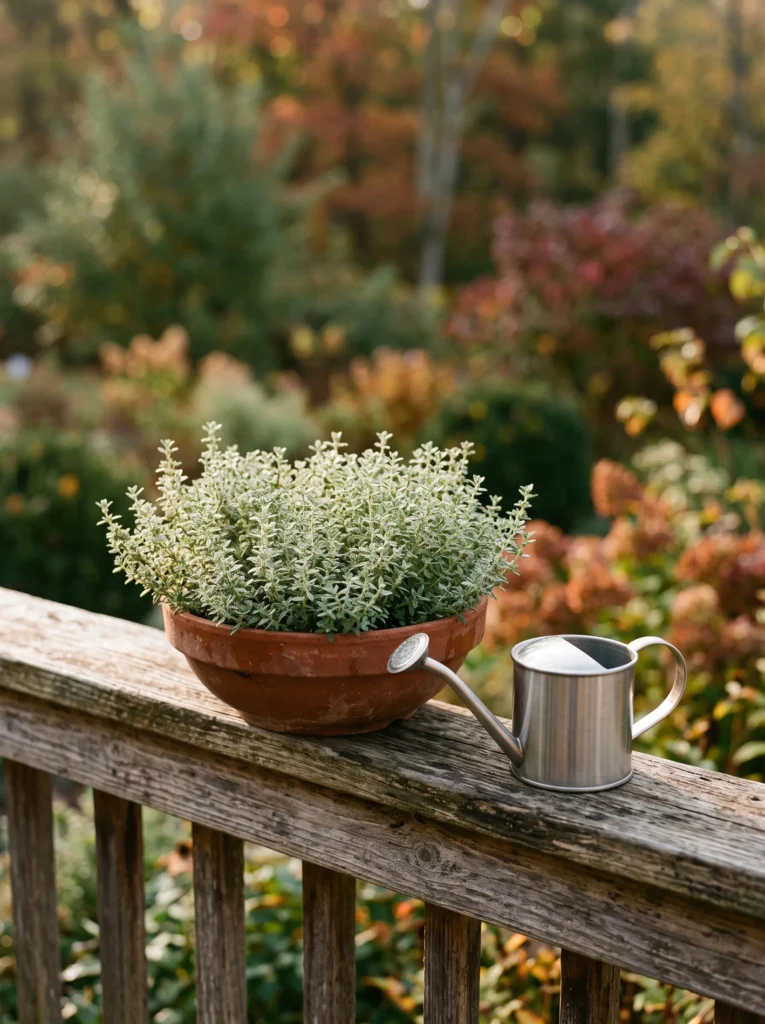
- Scientific name: Thymus vulgaris
- Benefit: A single perennial plant covers what you’d otherwise buy in $3 plastic clamshells every week or two — thyme shows up in roasts, stocks, and marinades often enough to justify permanent counter space.
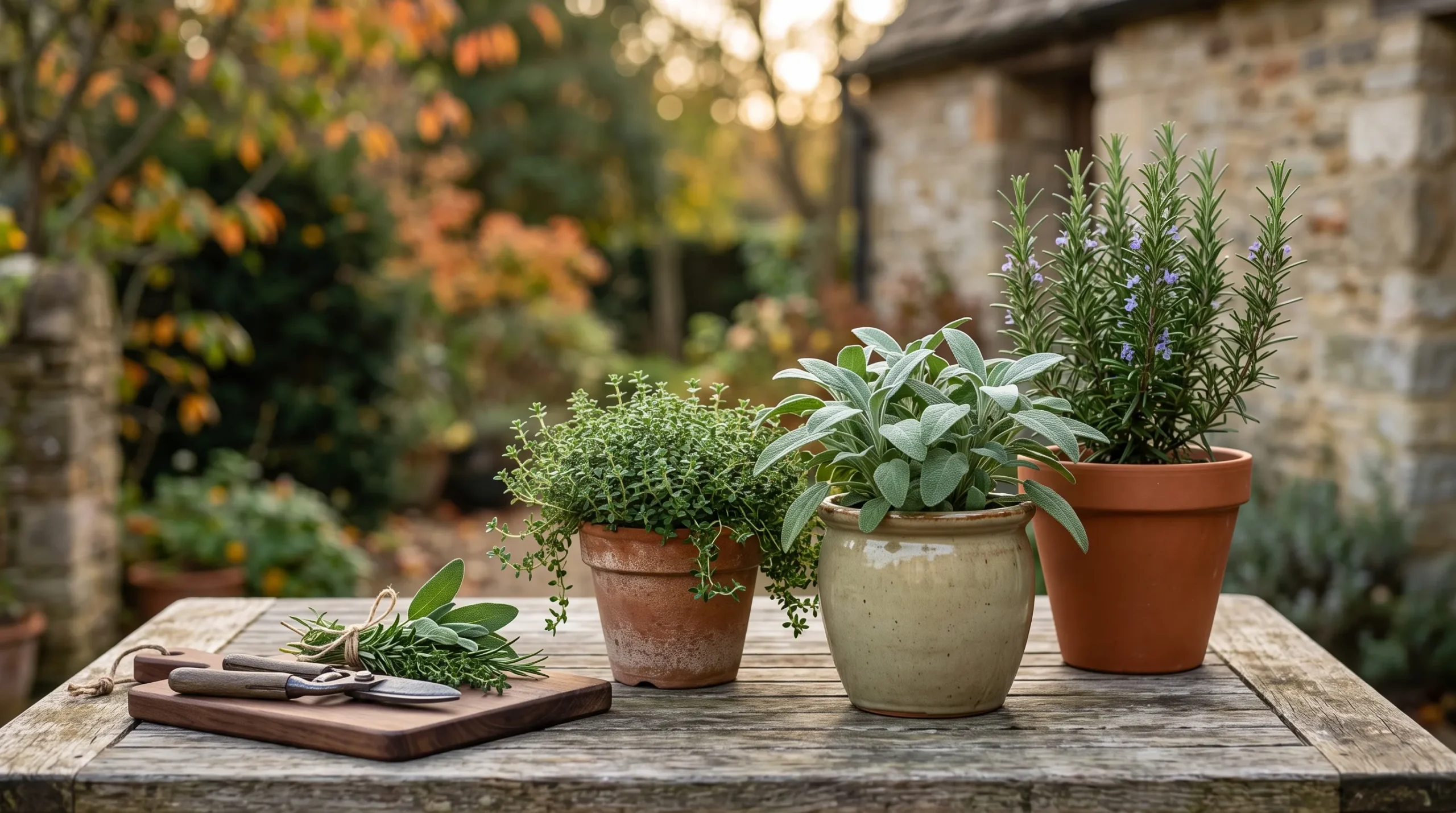
- Growing Conditions: Needs 6+ hours of direct sun and soil that drains fast. It’s genuinely drought-tolerant once established and comes back year after year in most US climates. Starter plants establish weeks faster than seed, which can take 14–21 days just to germinate.
- Container: A shallow terracotta bowl, about 10 inches wide, works better than a deep pot — thyme’s roots spread more than they dig down.
- Cost: $3–4 for a seed packet, $5–6 for a 4-inch starter plant.
Why this works: Thyme is one of the few herbs that genuinely gets better with neglect, which makes it the safest first perennial for a fall herb garden.
Thyme’s drought tolerance isn’t marketing language — it’s rooted in where the plant originally grew. Thymus vulgaris is native to the rocky, sun-baked hillsides of the western Mediterranean, which is why it actually resents rich, moisture-retentive potting soil. According to NC State Extension’s plant database, thyme performs best in soil that’s on the leaner, drier side, closer to what it would find growing wild. That’s the opposite instinct most new gardeners have, since we’re trained to think more watering and richer soil always means healthier plants. With thyme, less genuinely is more.
I’ve grown thyme in the same terracotta bowl on my back porch for three years now, and it’s survived Austin’s triple-digit summers and a couple of surprise January freezes without complaint. What I’ve learned is that the container matters almost as much as the plant — a shallow, wide bowl lets excess water drain and evaporate quickly, which mimics thyme’s rocky native soil far better than a deep, narrow pot ever could. If you only add one perennial to your fall containers, make it this one. It asks for almost nothing and gives back constantly, all season long.
2. Dill — Anethum graveolens
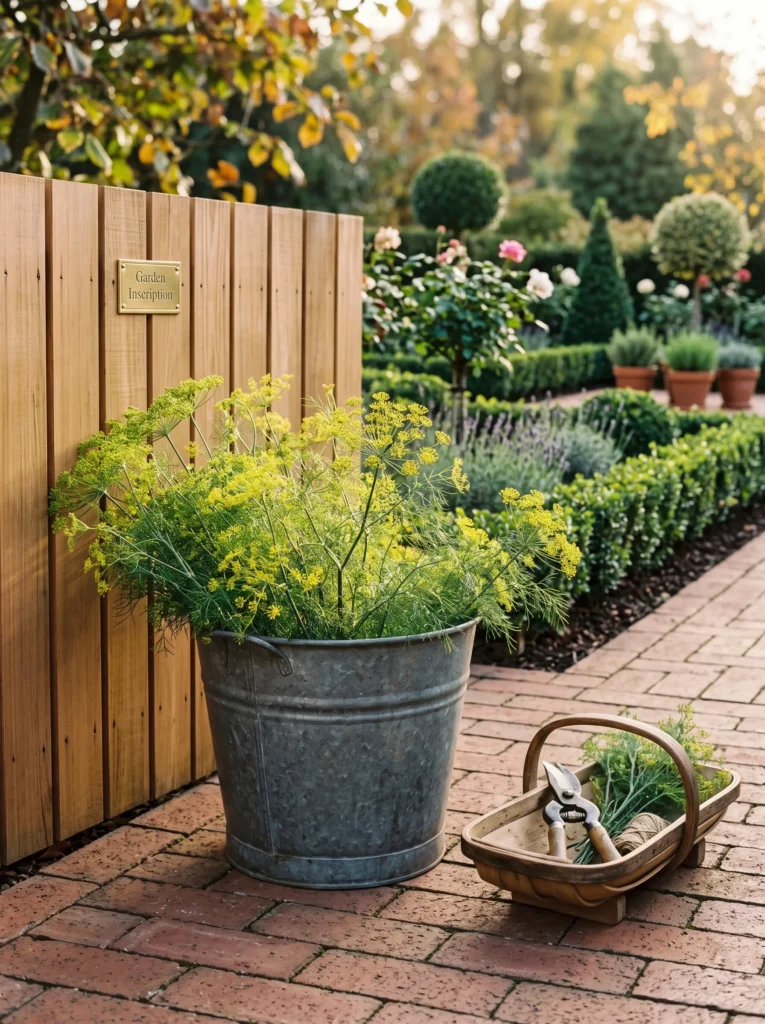
- Scientific name: Anethum graveolens
- Benefit: Store-bought dill wilts within days and rarely costs less than $3 a bunch, but a single fall-planted patch keeps producing for weeks — genuinely useful if you make pickles, potato salad, or anything Eastern European.
- Growing Conditions: Needs full sun and germinates quickly, usually within 10–14 days. Dill grows a long taproot and resents being transplanted, so direct-sow the seed where you want it to stay. Fall’s cooler temperatures also slow the bolting that ruins most summer-planted dill.
- Container: A deep, narrow galvanized steel bin, at least 12 inches deep, gives the taproot room without competing with shallow-rooted neighbors.
- Honest note: Skip this one unless you actually cook with dill regularly — it has a distinct, polarizing flavor and doesn’t substitute well for other herbs on this list.
- Cost: $2–3 for seed; dill rarely transplants well enough to justify buying a starter plant.
Why this works: Dill’s biggest enemy is heat, not neglect, which is exactly why fall is the season most gardeners finally get it right.
I spent three summers watching my dill bolt and turn bitter within two weeks of planting, convinced I just had bad luck with it. What I eventually learned is that dill bolts in response to heat and long daylight hours, not because it’s a difficult plant — it’s actually one of the easiest herbs to grow once the temperature cooperates. Planting it in early fall, when Austin’s afternoons finally drop below 90 degrees, changed everything. The same seed packet that failed me in July gave me dill for six straight weeks in October. Timing, not skill, was always the real issue.
Because dill grows a long taproot almost immediately, it doesn’t like being moved Wisconsin Horticulture Extension notes that deep containers are recommended specifically to accommodate that root system, and that seeds typically germinate within 10 to 14 days. That’s the real reason nursery six-packs of dill rarely thrive once transplanted home. I’ve had far better luck scattering seed directly into a deep galvanized bin than trying to save a wilting starter plant. If you want dill this fall, skip the seedling aisle entirely and go straight to a seed packet instead.
3. Sage — Salvia officinalis
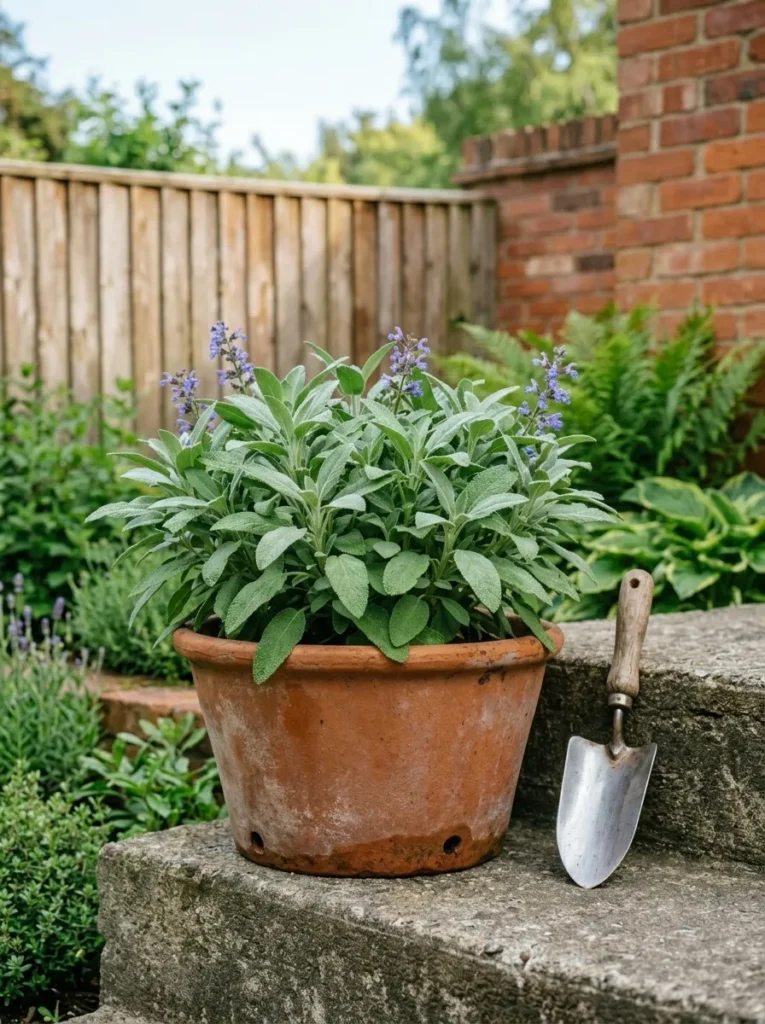
- Scientific name: Salvia officinalis
- Benefit: Dried sage from the spice aisle loses its earthy, slightly peppery punch fast; fresh sage keeps that flavor intact for stuffing, roasted squash, and brown butter sauce all season.
- Growing Conditions: Full sun, well-drained soil, drought-tolerant once established, and perennial in most US climates — though it struggles through wet winters. It grows slowly from seed, so a starter plant is the better fall choice.
- Container: A wide, unglazed clay pot with multiple drainage holes.
- Cost: $5–6 for a starter plant; seed is available but too slow for reliable fall harvest.
Why this works: Root rot, not frost, is what actually kills most container sage — which means the pot matters more than the winter weather.
Sage’s biggest threat in a container isn’t Texas cold snaps — it’s water that has nowhere to go. Salvia officinalis is native to the rocky Mediterranean coastline, where thin, fast-draining soil is the norm, and it has almost no tolerance for sitting in damp potting mix. Root rot, not frost, is what kills most container sage over a single wet winter. That’s a fact more people learn the hard way than the easy way, usually after losing a plant that looked perfectly healthy in October. The fix has nothing to do with plant care and everything to do with the pot.
My husband spends half his workweek dealing with drainage on job sites, and the same principle applies to a $12 terracotta pot as it does to a foundation: water needs somewhere to go, immediately, not eventually. Most decorative pots ship with a single small drainage hole that isn’t enough for sage’s sensitive roots, so he always drills two or three additional holes before we plant anything Mediterranean. It takes about ninety seconds with a masonry bit. That small step has saved every sage plant we’ve grown since, through several wet Austin winters that once killed them by February.
4. Cilantro — Coriandrum sativum
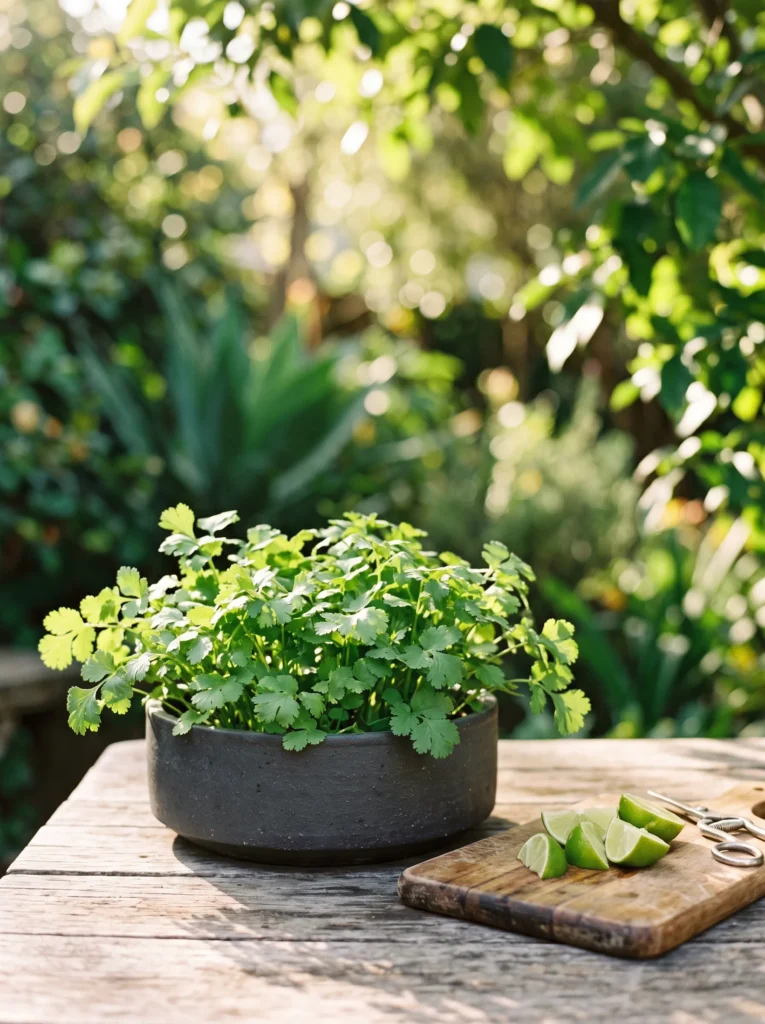
- Scientific name: Coriandrum sativum
- Benefit: Fresh cilantro from the store wilts within two or three days and runs $1.50–2 a bunch; a cool-season patch keeps producing for salsa, tacos, and Southeast Asian cooking for weeks at a fraction of the cost.
- Growing Conditions: Prefers full sun to light afternoon shade and temperatures below 75°F. It has a taproot like dill, so direct sowing works best. Germinates in about 7–10 days.
- Container: A low, wide ceramic planter in a matte charcoal glaze, placed where it gets morning sun and afternoon shade.
- Honest note: Don’t try to grow this through a hot Texas summer — it will bolt and turn bitter within weeks. Fall and early spring are cilantro’s actual season.
- Cost: $2–3 per seed packet; succession-sow every 2–3 weeks for continuous harvest.
Why this works: Cilantro isn’t a difficult herb — it’s a herb that most people plant in the wrong season and then blame themselves.
Cilantro has a reputation as a difficult herb, but the difficulty is almost entirely about timing, not skill. According to Oregon State University Extension, both temperature and day length influence when the plant bolts, or switches from producing leaves to flowering and setting seed and in warm weather, it can complete that shift in just four to six weeks. That’s why so many spring-planted cilantro patches disappoint by early summer. Planting in fall, once daylight shortens and temperatures cool, gives the plant weeks longer in its leafy stage before it ever considers flowering.
I’ve tried growing cilantro in July exactly once, and within three weeks it had shot up a flower stalk and turned bitter — a mistake I don’t repeat anymore. Now I only plant it in September and again in late February, and both times it rewards me with weeks of usable leaves before it even thinks about bolting. Cilantro isn’t a “grow it once and forget it” herb the way rosemary is; it’s more like a seasonal guest that shows up twice a year and needs to be replanted from seed each time. Once you accept that rhythm, it’s genuinely easy.
5. Rosemary — Salvia rosmarinus
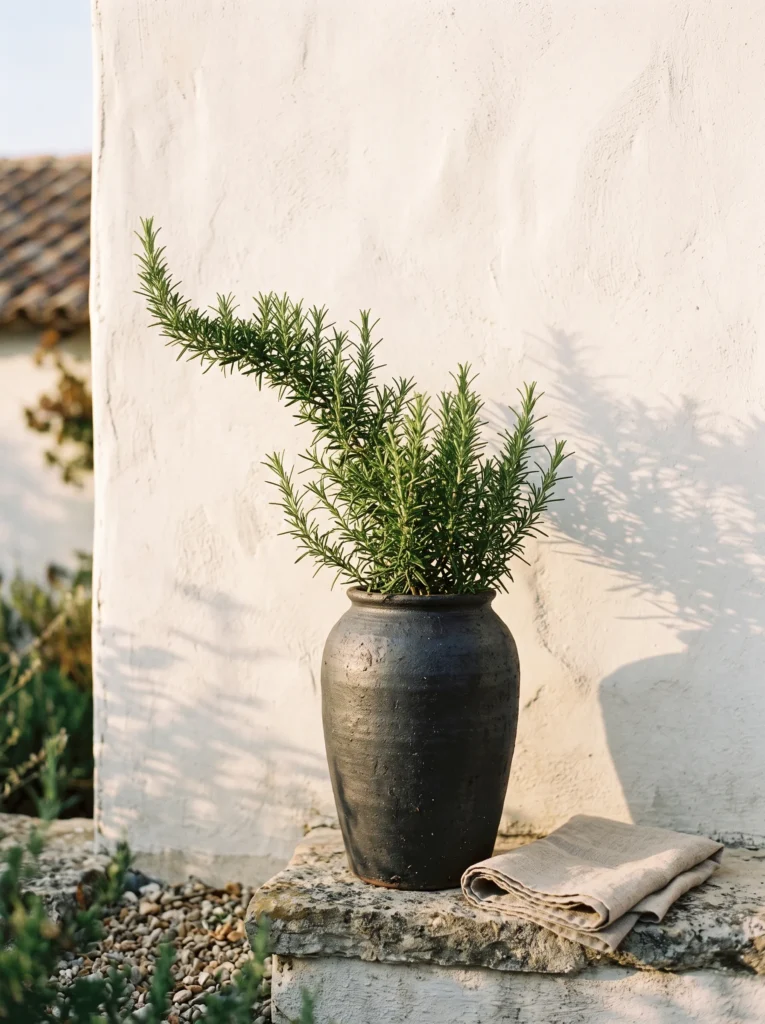
- Scientific name: Salvia rosmarinus (recently reclassified from Rosmarinus officinalis)
- Benefit: One woody perennial replaces the $4 plastic-wrapped sprigs at the store indefinitely. Rosemary holds its flavor well even dried, so it’s forgiving if you go a week or two without harvesting.
- Growing Conditions: Full sun, lean well-drained soil, drought-tolerant once established. Hardy as a perennial through most Texas winters, but can suffer dieback in a hard freeze without protection. Slow and unreliable from seed — buy a starter plant.
- Container: A tall, narrow charcoal-glazed ceramic pot that gives the woody stems room to arch outward.
- Cost: Starter plant $6–8; seed isn’t worth the wait.
Why this works: Rosemary is now genetically classified alongside sage, not as an isolated Mediterranean herb — which is exactly why the two thrive in nearly identical containers.
Most home gardeners still call it Rosmarinus officinalis, but botanists reclassified rosemary years ago into the genus Salvia, based on genetic research showing how closely it’s related to sage and other mint-family plants. The name change hasn’t altered how the plant behaves: rosemary still wants lean, fast-draining soil and as much direct sun as your patio can offer. What has changed is how gardeners should think about it — as a close cousin of sage rather than an isolated Mediterranean oddity, which explains why the two thrive under nearly identical container conditions.
Rosemary survives most Austin winters outdoors without a fuss, but the occasional hard freeze — the kind that dips into the teens for a night or two — can kill even an established plant back to bare wood. My husband’s crew wraps outdoor pipes and hose bibs before those nights, and we do the same thing for our rosemary: a simple frost cloth draped loosely over the pot, removed the next morning. It’s a five-minute task that’s saved the same rosemary plant for four winters running. Skip it, and you’re gambling with a plant that takes years to regrow that size.
6. Parsley — Petroselinum crispum
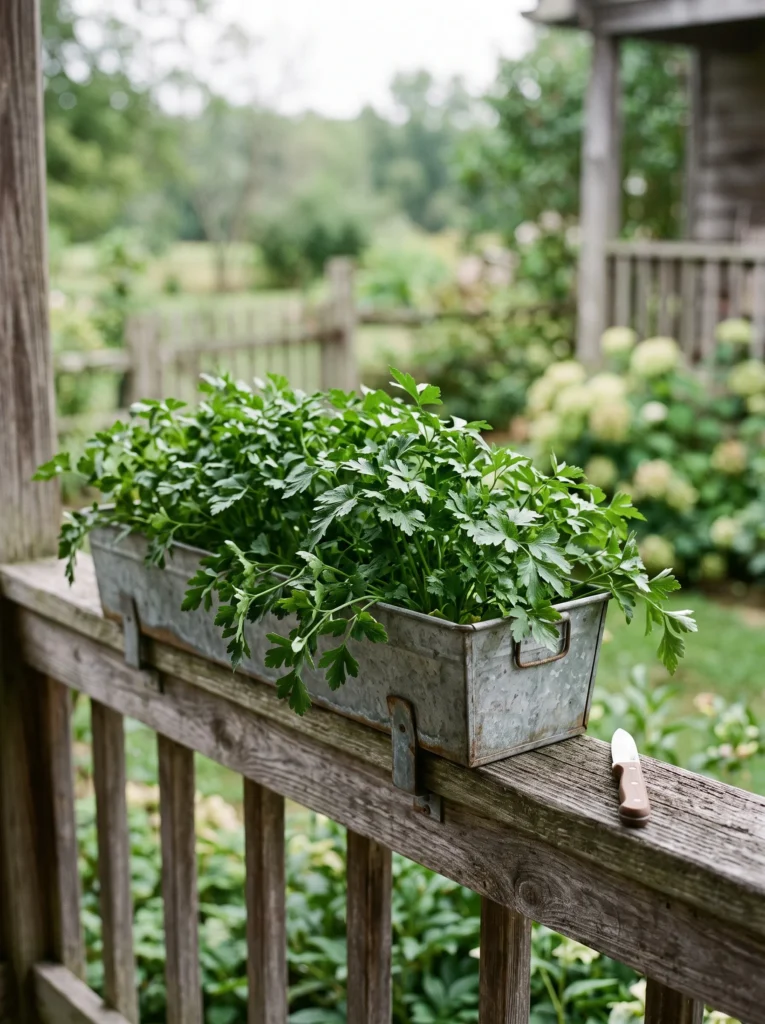
- Scientific name: Petroselinum crispum
- Benefit: Flat-leaf parsley tastes noticeably fresher than dried and gets used constantly as a finishing herb — garnish, chimichurri, tabbouleh — far cheaper to grow than the $2–3 bunches that go slimy within a week.
- Growing Conditions: Full sun to partial shade, consistent moisture, grown as an annual (technically a biennial). Notoriously slow to germinate — often 3–4 weeks — because the seed coat contains natural germination inhibitors.
- Container: A long rectangular window box in aged galvanized metal, mounted at railing height for easy cutting.
- Honest note: Buy a starter plant if you want parsley before Thanksgiving. Seed is cheap, but the multi-week germination window means a long wait.
- Cost: Seed $2; starter plant $3–4.
Why this works: Parsley seed contains natural compounds that delay germination, which is the real reason it feels slower and harder than every other herb on this list.
Parsley has a reputation for being slow, and that reputation is scientifically accurate rather than exaggerated. Petroselinum crispum seeds contain natural compounds that inhibit germination, which is why the seed can sit in soil for three to four weeks before anything visible happens, testing the patience of even experienced gardeners. Soaking seed overnight before planting can shave off a few days, but there’s no real shortcut around the wait. That single fact explains most of the frustration people report with growing parsley from seed, and it’s also the best argument for starting with a nursery transplant instead.
I mounted a galvanized window box of parsley on our porch railing two Octobers ago, mostly for the way it looked against the weathered wood, and it turned into one of the most-used containers in our whole setup. Chopped parsley goes into nearly everything I cook — finishing a pan sauce, brightening roasted vegetables, folding into grain salads — in a way that made me realize how often I’d been skipping fresh herbs simply because the grocery store bunch felt wasteful for a single recipe. Having it always within reach removed that hesitation, and I’ve replanted the same box every fall since.
7. Chives — Allium schoenoprasum
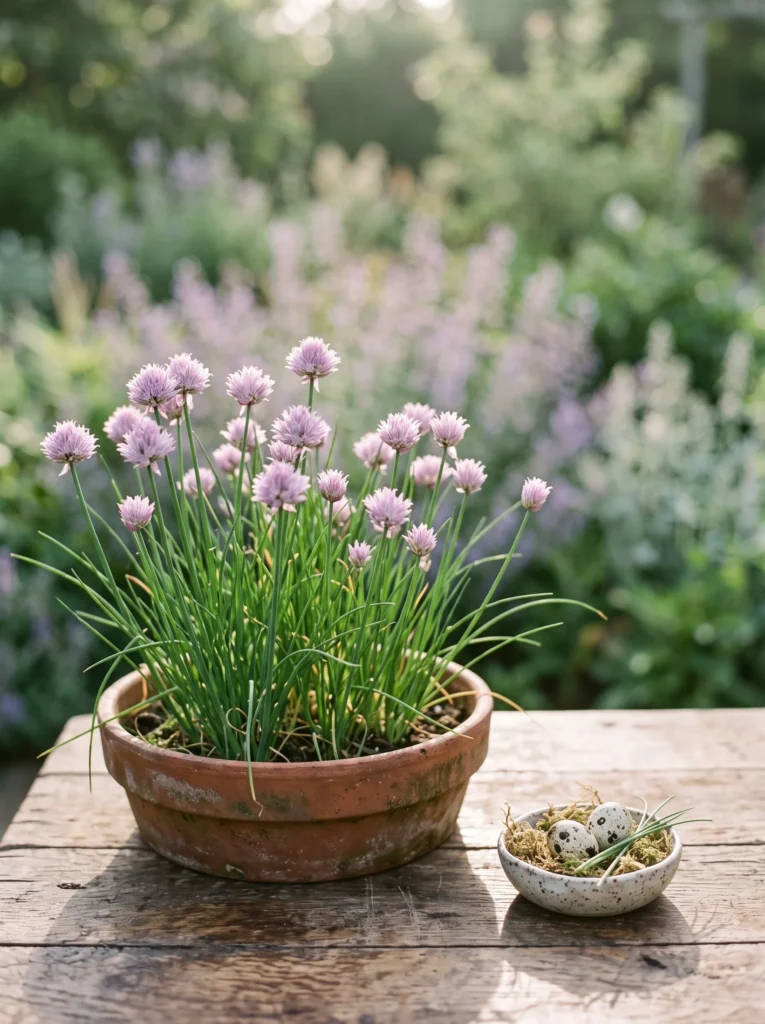
- Scientific name: Allium schoenoprasum
- Benefit: Chives regrow almost immediately after cutting, so one perennial clump replaces $2–3 clamshells indefinitely. The edible purple flowers double as a genuinely useful garnish for salads and deviled eggs.
- Growing Conditions: Full sun to partial shade, consistent moisture, cold-hardy perennial. One of the easiest herbs to start from seed, germinating in 10–14 days.
- Container: A round, low terracotta saucer, planted densely for a full clumping look, grouped alongside garlic chives for contrast.
- Cost: Seed $2, or divide an existing clump for free.
Why this works: Cutting chives back doesn’t stress the plant — it signals the clumping bulbs to keep sending up new growth all season.
Chives are one of the few herbs where cutting the plant back actually speeds up growth rather than stressing it — regular harvesting encourages the clumping bulbs to send up new shoots continuously through the growing season. That regenerative habit is why a single chive plant, divided every couple of years, can supply a household indefinitely without ever needing to be replaced. I’ve split the same clump three times since we moved into our house, giving pieces to neighbors each time, and it still comes back thicker the following spring. Few plants offer that kind of return for so little effort.
Where chives fall short is in cooked dishes — their delicate onion flavor breaks down fast under heat, turning flat and slightly bitter if added too early in the cooking process. That’s why professional kitchens treat chives as a finishing herb only, scattered over a dish right before it’s served rather than simmered into a sauce. I learned this the hard way after adding a handful to soup while it was still simmering, expecting a mild onion note, and getting almost nothing for the effort. Save the flavor for the very last step, and chives earn their place easily.
8. Oregano — Origanum vulgare
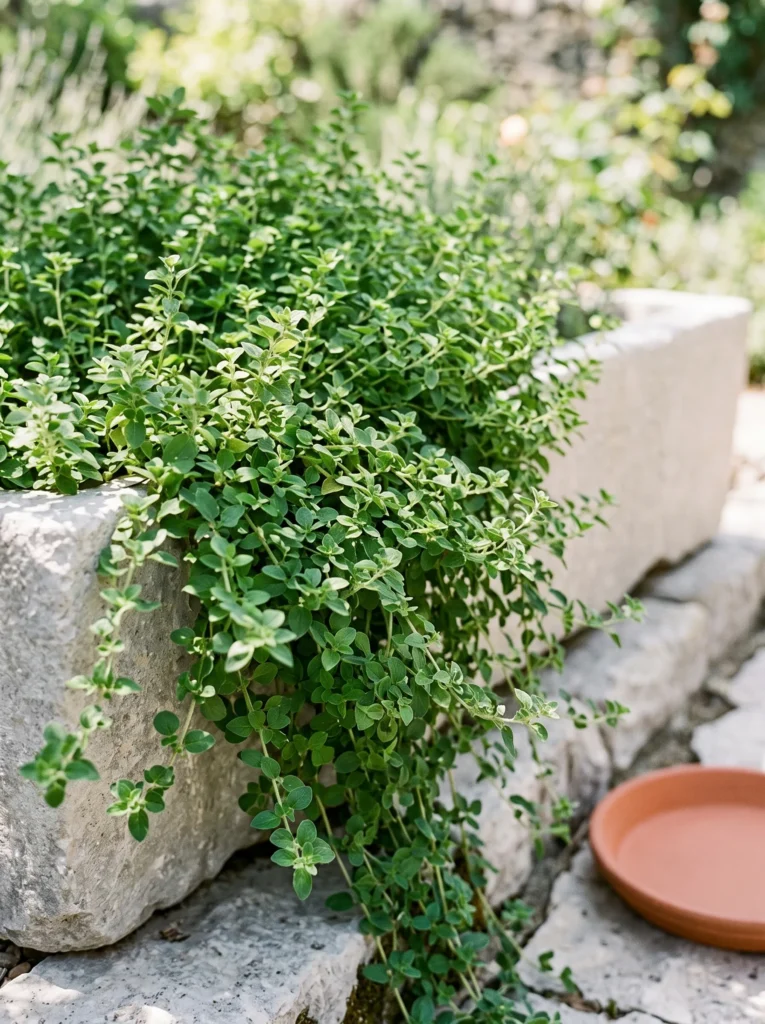
- Scientific name: Origanum vulgare
- Benefit: Dried oregano loses its punch fast, and fresh oregano is one of the cheapest herbs to maintain — it spreads readily and rarely needs replanting.
- Growing Conditions: Full sun, tolerates poor, dry soil, drought-tolerant once established. Perennial and vigorously spreading — can become weedy if planted directly in garden beds without a barrier.
- Container: A wide, shallow concrete trough that lets the trailing stems spill over the edges.
- Honest note: Keep it contained. The spreading habit that makes oregano low-maintenance in a pot becomes a real nuisance planted straight into garden soil, where it can crowd out neighboring plants.
- Cost: Starter plant $4–5, or seed $2.
Why this works: Oregano’s aggressive spreading habit is a liability in open soil and an asset in a container — the growing method matters more than the plant itself.
Oregano’s toughness is exactly what makes it worth growing and exactly what makes it worth containing. Origanum vulgare spreads by both seed and creeping stems that root wherever they touch soil, a growth habit that serves it perfectly in a container but turns into a genuine problem in an open garden bed. Left unchecked in the ground, oregano can crowd out slower-growing neighbors within a single season. That same vigor, redirected into a trough or a hanging basket, becomes an asset instead of a liability — full, trailing, and virtually impossible to kill through inattention.
I planted oregano straight into a garden bed our first year here, thinking it would behave like the tidy mounds I’d seen photographed online, and within one summer it had crept nearly two feet into the space I’d set aside for basil. Now I only grow it in containers, where that same spreading habit works in my favor, filling out a shallow concrete trough until stems cascade over the sides. It’s one of the few herbs on this list where the growing method matters more than the growing conditions. Get the container right, and oregano genuinely takes care of itself.
9. Tarragon — Artemisia dracunculus
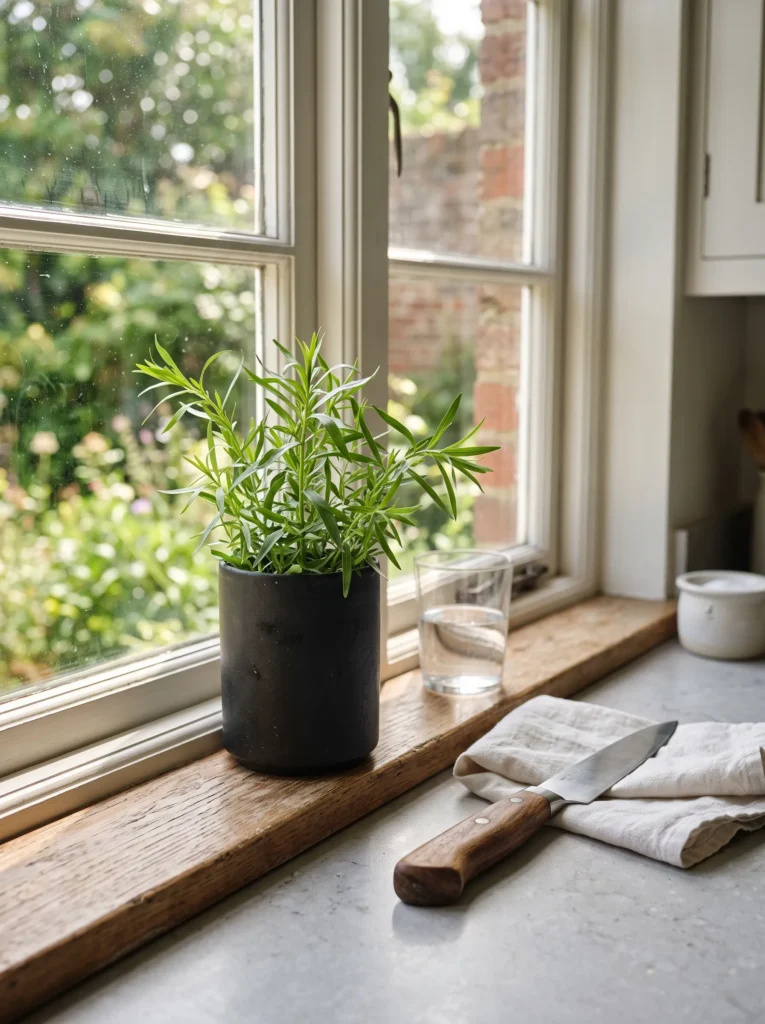
- Scientific name: Artemisia dracunculus (French tarragon, specifically var. sativa)
- Benefit: Anise-like flavor central to béarnaise sauce and classic French cooking. Fresh tarragon is hard to find at most grocery stores and loses potency fast once dried.
- Growing Conditions: Full sun to light afternoon shade in hot climates, well-drained soil, perennial with moderate water needs. French tarragon rarely sets viable seed, so it’s propagated from cuttings or divisions, not seed packets.
- Container: A narrow, matte black ceramic pot tucked near a kitchen door for easy cutting.
- Honest note: Buy from a nursery, not a seed rack. Most “tarragon seed” sold commercially is actually Russian tarragon, a coarser, far less flavorful relative.
- Cost: Starter plant or division, $6–8.
Why this works: The tarragon sold in seed packets almost never produces the herb chefs actually want, which is the single most common mistake home gardeners make with this one.
Most gardeners are surprised to learn that French tarragon, the variety prized in classic cooking, can’t reliably be grown from seed at all. Artemisia dracunculus var. sativa rarely produces viable seed, so nurseries propagate it through cuttings and root division instead. The seed packets labeled simply “tarragon” almost always contain Russian tarragon, a related but noticeably blander plant with a coarser texture and far less of the anise-like flavor cooks are after. That distinction rarely gets explained on plant tags, which is why so many home gardeners end up disappointed with tarragon that tastes like almost nothing at all.
I made this exact mistake my first year gardening, buying a seed packet labeled “tarragon” without knowing to check for the word “French” anywhere on it. What grew was fine, technically tarragon, but it had almost none of the flavor I was hoping to add to a béarnaise sauce that fall. Now I only buy tarragon as an actual plant, always checking the tag for Artemisia dracunculus specifically, and the difference in flavor is genuinely dramatic. It’s a small detail that most gardening advice skips entirely, but it’s the one thing that actually determines whether this herb is worth growing.
10. Marjoram — Origanum majorana
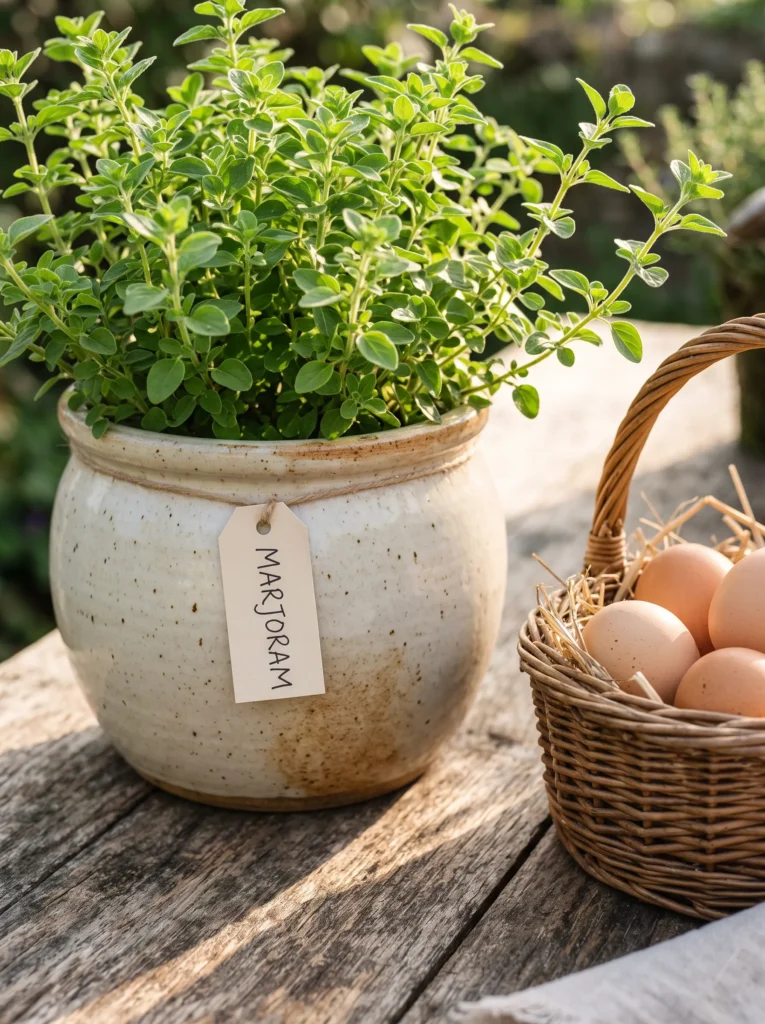
- Scientific name: Origanum majorana
- Benefit: Sweeter, more delicate flavor than its close cousin oregano; works well in egg dishes, roasted vegetables, and other dishes where oregano would overpower.
- Growing Conditions: Full sun, well-drained soil. Grown as a perennial in mild climates but usually treated as an annual outside zones 9–10, since it’s not reliably frost-hardy. Germinates in about 7–14 days.
- Container: A round, cream-glazed ceramic pot, grouped near other Mediterranean herbs for a cohesive kitchen-garden look.
- Honest note: If you already grow oregano, marjoram may feel redundant unless you specifically want its softer, sweeter flavor for delicate dishes.
- Cost: Seed $2–3, starter plant $4–5.
Why this works: Marjoram and oregano are close enough botanically that people assume they’re interchangeable, but the flavor difference is the entire reason to grow both.
Marjoram and oregano belong to the same genus and look nearly identical in a container, which leads a lot of people to assume growing one makes the other redundant. In practice, the flavors are different enough that professional kitchens treat them as separate ingredients rather than substitutes. Marjoram is sweeter, more floral, and far more delicate than oregano’s sharper, slightly bitter bite, which means it disappears under high heat in a way oregano doesn’t. That makes it better suited to dishes added near the end of cooking — scrambled eggs, a finished soup, roasted vegetables pulled straight from the oven.
I almost skipped marjoram entirely, assuming it would just taste like a milder version of the oregano I already had growing a few feet away. A friend convinced me to try it in a simple egg scramble, added at the very last minute off the heat, and the difference was immediate — softer, almost floral, nothing like the punchy bite oregano brings to a pizza. I’ve kept a small pot going ever since, mostly for eggs and roasted carrots. It’s not a herb I reach for constantly, but when a dish calls for something gentler, nothing else on this list substitutes.
11. Lovage — Levisticum officinale
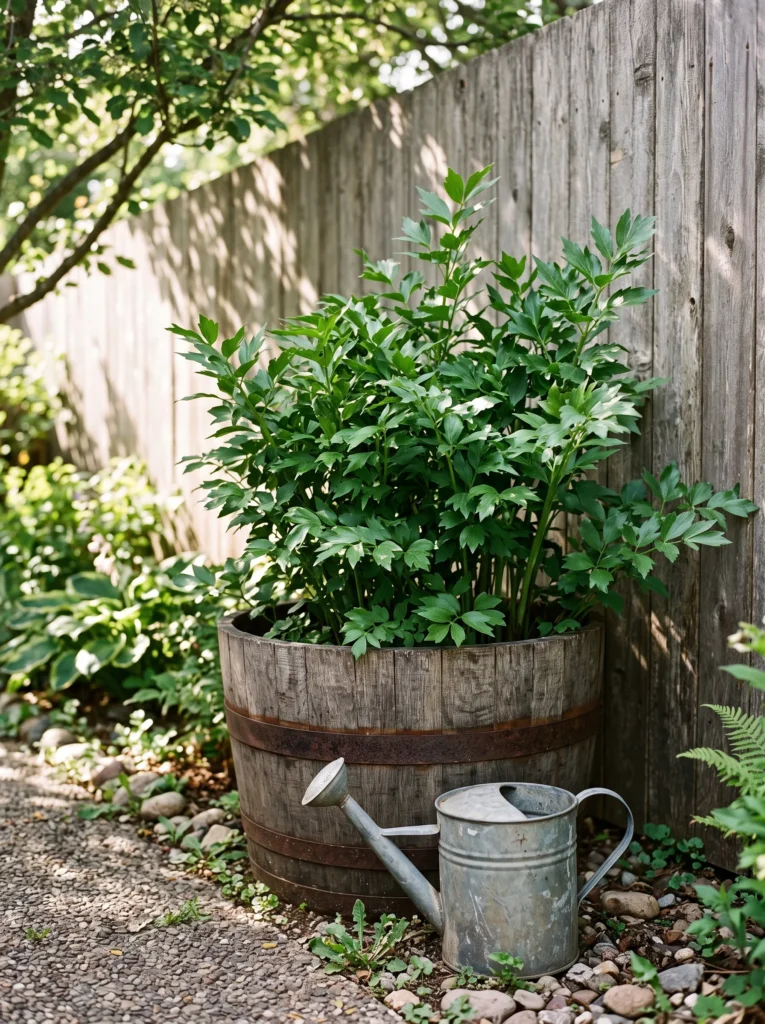
- Scientific name: Levisticum officinale
- Benefit: Tastes like a cross between celery and parsley; a few chopped leaves replace an entire stalk of celery in stocks and soups — useful if you cook from scratch and don’t want a whole bunch for one recipe.
- Growing Conditions: Partial shade to full sun, consistent moisture, cold-hardy perennial. Grows large — 3 to 6 feet tall at maturity — so it needs real ground space, not a small tabletop pot.
- Container: A large half-barrel planter, positioned against a wall or fence where its height won’t crowd neighboring plants.
- Honest note: Skip lovage unless you actually cook soups and stocks from scratch regularly. It’s not a garnish herb, and its size makes it impractical for small patios or narrow balconies.
- Cost: Seed $3, starter plant $6–8; slow to establish in year one.
Why this works: Lovage is the most overlooked herb on this list simply because most gardeners have never tasted it — not because it isn’t useful.
Lovage is one of the most underused herbs in American home gardens, largely because it’s rarely sold fresh and few recipes call for it by name. Levisticum officinale tastes remarkably close to celery, but more concentrated, which means a small handful of chopped leaves can replace an entire stalk of celery in a soup or stock without losing balance. Unlike most herbs on this list, lovage also grows genuinely large, often reaching four to six feet at full maturity, so it behaves more like a perennial vegetable than a tidy container herb. That size is exactly why it gets skipped.
My husband gets asked to build raised beds and large planter boxes for clients who want vegetables but only have a patio, and lovage is exactly the kind of plant that needs that scale of thinking. A half-barrel planter, the kind rated to hold 20+ gallons of soil once wet, gives lovage enough root room to reach its full size without tipping over in strong wind — something a lightweight plastic pot can’t handle once the plant matures. We placed ours against a solid fence line for wind protection. It’s an unglamorous herb, but once established, it keeps producing for years.
12. Winter Savory — Satureja montana
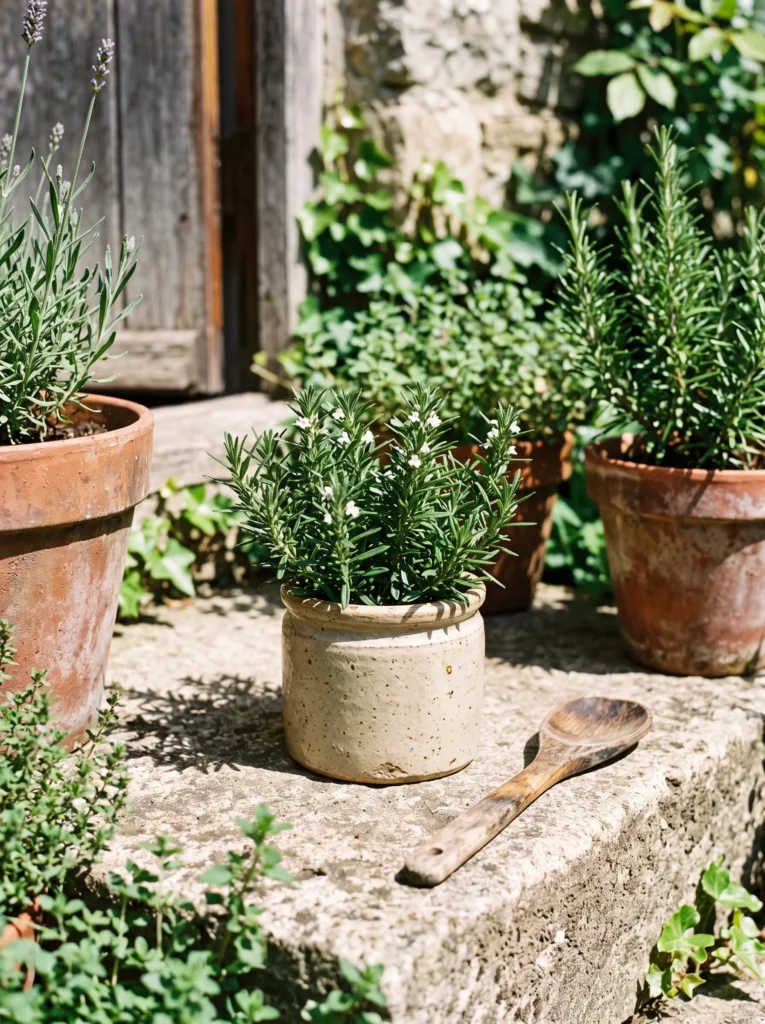
- Scientific name: Satureja montana
- Benefit: Peppery, slightly resinous flavor traditionally paired with dried beans and lentils — a genuinely different flavor profile from anything else on this list.
- Growing Conditions: Full sun, lean well-drained soil, drought-tolerant once established, and reliably cold-hardy as a perennial — unlike its softer annual cousin, summer savory.
- Container: A small, rustic stoneware crock, tucked into a sunny gap between larger pots.
- Honest note: Skip this unless you regularly cook dried beans or lentils from scratch. It’s a specialty herb with a narrow but genuinely useful purpose.
- Cost: Seed $2–3, starter plant $4–5.
Why this works: Winter savory earns its spot for one narrow reason — it’s the traditional seasoning for dried beans, and nothing else on this list replicates that exact flavor.
Winter savory has a long culinary history as the traditional seasoning for dried beans and lentils across Mediterranean and German cooking, added to the pot alongside the legumes as they simmer. Cooks have used it this way for generations, partly for its peppery, slightly resinous flavor and partly out of a long-held belief that it makes beans easier to digest. Unlike summer savory, which is a soft, short-lived annual, Satureja montana is a genuinely tough perennial — woody, drought-tolerant, and capable of surviving winters that would kill most of the other herbs on this list without any extra protection at all.
I planted winter savory almost as an afterthought years ago, tucked into a gap between two larger pots, and it’s quietly become one of the toughest plants in my whole herb collection. It’s survived neglect, drought, and freezes that damaged plants twice its size, without ever needing extra attention. I mostly use it the traditional way, tossed into a pot of dried pinto beans as they cook low and slow, and I’ve noticed it does add a flavor nothing else in my kitchen replicates. It’s not an herb I reach for often, but when I need it, nothing substitutes.
13. Fennel — Foeniculum vulgare
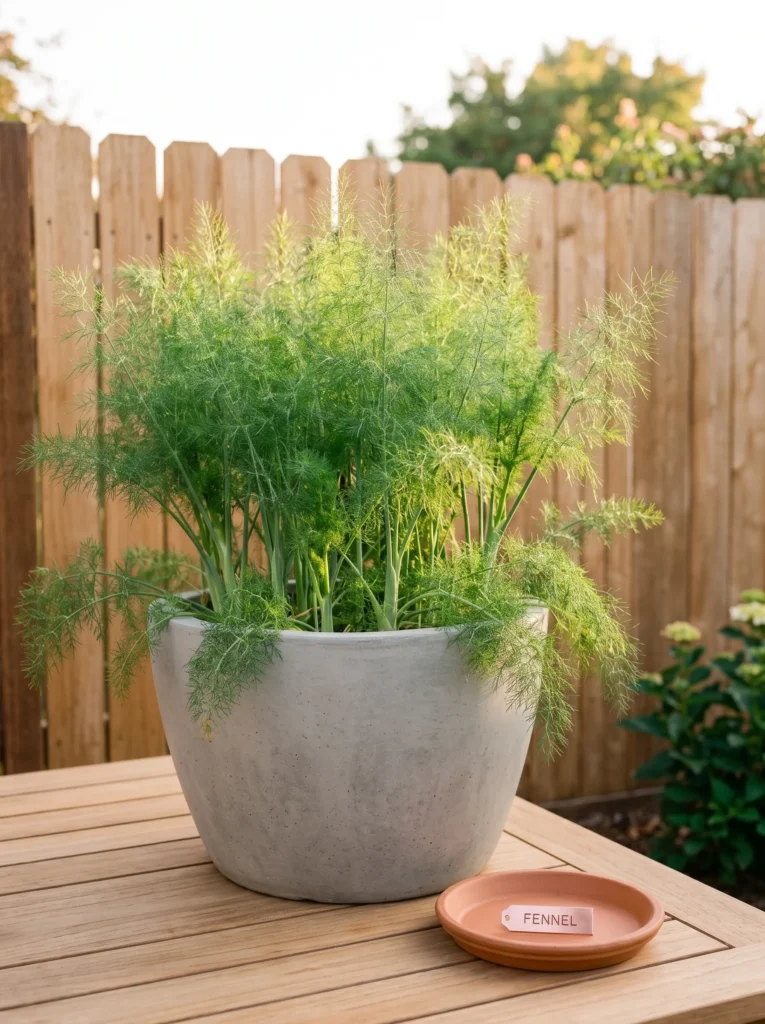
- Scientific name: Foeniculum vulgare (herb fennel, distinct from the bulb-forming variety, F. vulgare var. azoricum)
- Benefit: Feathery fronds add a mild anise flavor to fish and salads, and the plant is a genuine host for swallowtail butterfly caterpillars — a rare herb that pulls double duty as both kitchen ingredient and pollinator support.
- Growing Conditions: Full sun, well-drained soil, tolerant of heat and drought once established. Grows tall — 4 to 5 feet at maturity — and self-seeds readily, which makes it low-maintenance but also means it can spread beyond where it’s planted if left unchecked.
- Container: A large, deep concrete planter positioned against a fence line, giving the tall stems something to lean against in wind.
- Honest note: In several states, herb fennel is flagged as invasive in open landscapes because of how aggressively it self-seeds. Container growing avoids that problem entirely — don’t plant it directly in garden beds near natural areas.
- Cost: Seed $2–3; starter plant $4–5.
Why this works: Fennel’s self-seeding habit is a genuine liability in open ground, which is exactly why container growing exists as the responsible middle ground.
Fennel occupies an unusual place among herbs — genuinely useful in the kitchen, genuinely good for pollinators, and genuinely capable of becoming a problem if planted carelessly. Its feathery foliage is a preferred host plant for black swallowtail butterfly caterpillars, meaning a single fennel plant can support several generations of butterflies over a season. At the same time, its seeds spread easily on wind and water, and in several regions the plant has escaped cultivation into wild areas. That combination — beneficial in a controlled space, disruptive outside one — is why container growing isn’t just a styling choice with fennel. It’s a practical safeguard.
I grew fennel directly in a garden bed my second year here, mostly because I liked the height and texture against my fence, and by the following spring I had volunteer seedlings coming up in places I never planted. It wasn’t a disaster, just an unexpected amount of weeding I hadn’t budgeted for. Now I keep fennel exclusively in a deep concrete planter, which lets me enjoy the fronds and the butterfly visits without the seed spread. It’s one of the few herbs on this list where the growing method isn’t just about plant health — it’s about being a considerate neighbor.
14. Chervil — Anthriscus cerefolium
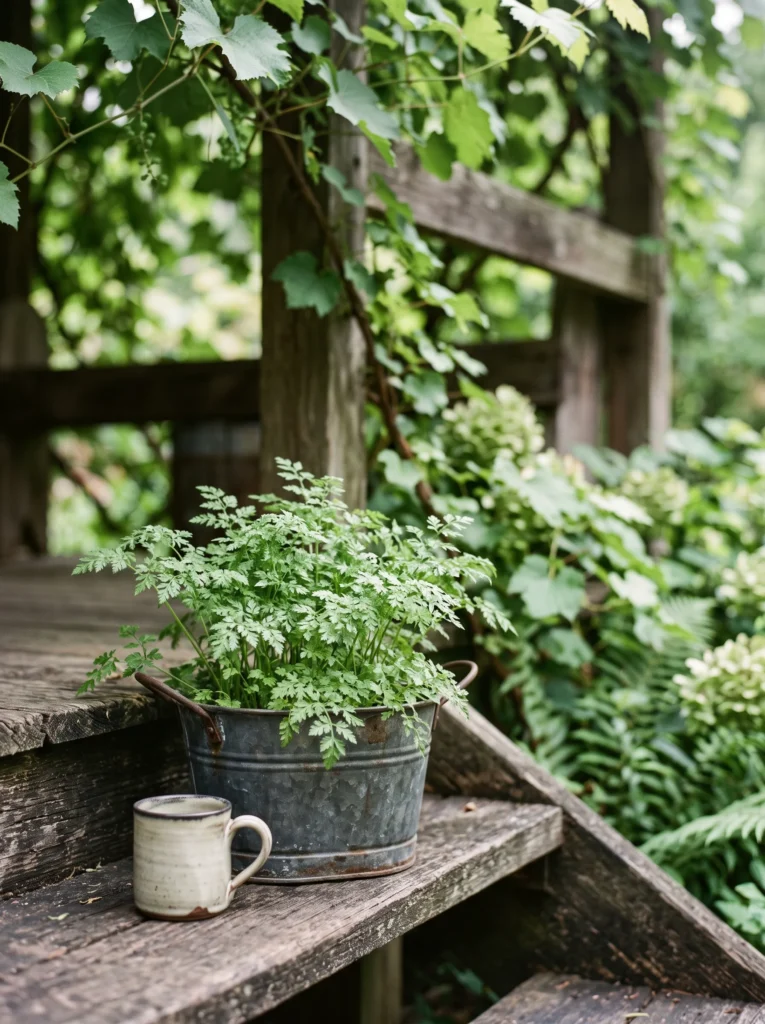
- Scientific name: Anthriscus cerefolium
- Benefit: Delicate anise-parsley flavor central to French fines herbes; one of the few herbs that genuinely doesn’t survive drying well, making home-grown chervil noticeably better than anything sold dried at the store.
- Growing Conditions: Partial shade, consistent moisture, cool temperatures. A fast-bolting cool-season annual very similar to cilantro in behavior — germinates in 10–14 days and prefers protection from afternoon sun.
- Container: A small vintage tin planter, tucked on a shaded porch step where it won’t get scorched by midday light.
- Honest note: Skip chervil if you don’t cook French food regularly. It’s a specialty herb with a short, delicate flavor window and doesn’t hold up in most everyday American cooking.
- Cost: Seed $2–3; rarely sold as starter plants because it dislikes root disturbance.
Why this works: Chervil is one of the few herbs that genuinely loses its identity when dried, so growing it fresh isn’t a preference — it’s the only way to actually taste what it offers.
Chervil rarely appears on grocery store shelves, dried or fresh, and there’s a real reason for that beyond low demand. Its flavor compounds break down quickly once cut, which means the dried version sold in some specialty stores bears almost no resemblance to the fresh herb — mild, slightly sweet, with a faint anise note that fades within a day of harvesting. That fragility is exactly why chervil rewards home growers more than almost any other herb on this list. You genuinely cannot buy an equivalent substitute, fresh or dried, from a typical American grocery store. Growing it is the only realistic option.
I first grew chervil almost by accident, tucked into a shaded gap on my porch where I didn’t think anything else would thrive, and it turned into a small, quiet favorite. It’s not a herb I use constantly, but folded into an egg dish or a simple green salad right before serving, it adds something genuinely different from parsley or basil. Because it bolts fast in heat, I only keep it going through the cooler months, October through March here in Austin. It’s not for everyone, but if you already lean French in the kitchen, it earns its space easily.
15. Lemon Balm — Melissa officinalis
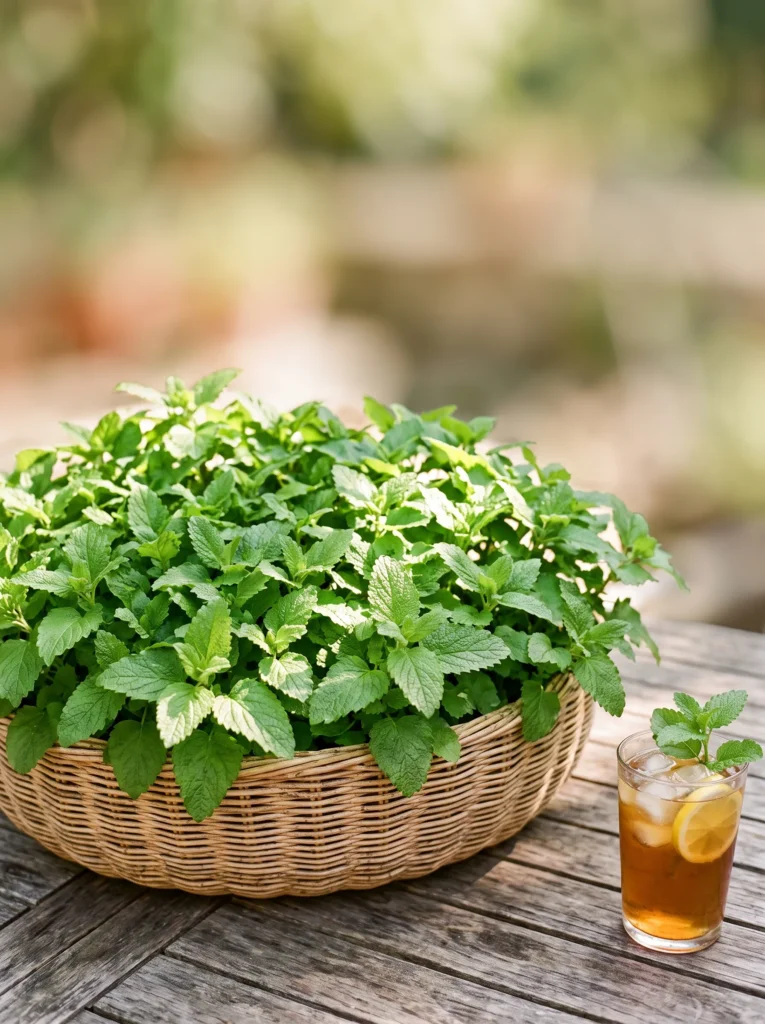
- Scientific name: Melissa officinalis
- Benefit: Bright, lemony leaves work well steeped fresh in tea or muddled into drinks; a genuinely low-maintenance perennial that tolerates more shade than most herbs on this list.
- Growing Conditions: Partial shade to full sun, consistent moisture, cold-hardy perennial in the mint family. Spreads vigorously by rhizomes — the same aggressive habit that makes true mints a problem in open garden beds.
- Container: A wide, shallow woven-look resin basket, sized generously since lemon balm fills out quickly.
- Honest note: Never plant lemon balm directly in the ground unless you want it to spread well beyond its original spot. It behaves like mint because it’s related to mint — expect the same containment issues.
- Cost: Seed $2, or start from a division if you know someone growing it already.
Why this works: Lemon balm’s mint-family lineage is the single fact that explains both why it’s so easy to grow and why it needs to stay contained.
Lemon balm belongs to the Lamiaceae family alongside true mints, and it shares their most defining trait: rhizomatous roots that spread laterally underground, sending up new shoots well beyond the original planting spot. That’s part of what makes it such a resilient, low-effort perennial in a container — the same vigor that would make it a nuisance in an open bed keeps it consistently full and productive when its roots are physically restricted. Gardeners who’ve dealt with runaway mint patches will recognize the pattern immediately. The plant isn’t difficult. It’s just genuinely built to spread, and that’s a fact worth knowing before you choose where to put it.
My husband installed underground root barriers for a client years ago whose mint had spread into a neighboring vegetable bed, and it’s the reason I never plant anything in the mint family directly into open soil anymore. Lemon balm gets the same treatment — container only, no exceptions, regardless of how harmless a small starter plant looks in spring. Within one growing season, an unconfined lemon balm plant can triple its footprint. Contained in a wide basket-style planter, though, it’s one of the easiest, most forgiving herbs I grow, and I use the leaves constantly for iced tea through the fall.
Choosing Herbs by Use, Not Looks
The biggest mistake in fall herb shopping happens at the nursery, not in the garden — reaching for whatever looks fullest and prettiest on the display table instead of thinking about what’s actually in your recipe rotation. The most useful fall herb garden is built backward, starting from your weekly meals rather than from what’s blooming at the garden center. Before buying anything, spend a week paying attention to what you actually reach for while cooking. If you’re making soup and braises most weekends, prioritize thyme, sage, and rosemary. If you cook a lot of Latin American or Southeast Asian food, cilantro earns its space fast. If your kitchen leans French, chervil and tarragon are worth the extra effort; if it doesn’t, skip them without guilt.
Container choice matters almost as much as herb choice, and the two decisions are connected. Mediterranean herbs — thyme, rosemary, sage, oregano, winter savory — all want the same thing: full sun and a container that drains fast, since their native soil is lean and rocky, not rich. Cool-season herbs like cilantro, dill, and chervil want the opposite: some afternoon shade and consistent moisture, since they bolt fast under heat and stress. Grouping herbs by these shared needs, rather than by how they look together, makes maintenance dramatically simpler — one watering schedule for the drought-tolerant cluster, another for the moisture-loving one.
Size and spread deserve real consideration too. Herbs like mint-family lemon balm, self-seeding fennel, and sprawling oregano behave aggressively when given open ground, and containing them isn’t optional styling — it’s the only way to keep them from taking over neighboring plants. Meanwhile, something like lovage needs genuine space to reach its mature size and shouldn’t be crammed into a small tabletop pot. Matching the container to the plant’s actual growth habit, not just its current nursery size, saves a lot of frustration by spring.
Frequently Asked Questions
How many herbs should I start with in a fall herb garden?
Three to five is realistic for most first-time growers. Start with herbs that match dishes you already cook weekly — thyme, rosemary, and parsley cover an enormous range of everyday cooking, and they’re also some of the most forgiving to grow. Adding specialty herbs like tarragon or lovage can come later, once the basics are established.
Should I buy seeds or starter plants?
It depends on the herb. Fast-germinating annuals like dill and cilantro do well from seed and are inexpensive that way. Slow-to-establish perennials like rosemary, sage, and French tarragon are almost always better as starter plants, since growing them from seed can take a full season or longer before they’re usable — and in tarragon’s case, true French tarragon rarely produces viable seed at all.
How much light do herbs really need?
Most Mediterranean herbs — thyme, rosemary, sage, oregano — genuinely need 6 or more hours of direct sun daily to develop their strongest flavor and stay compact rather than leggy. Cool-season herbs like cilantro and chervil are the exception: they prefer some afternoon shade, especially in warmer climates, since direct heat accelerates bolting.
What’s a realistic yield expectation from a small herb container?
A single well-established perennial like thyme, rosemary, or sage can supply a household’s cooking needs indefinitely, since they regrow after light, regular harvesting. Annuals like dill and cilantro have a shorter productive window, typically several weeks of usable leaves before bolting, which is why succession planting every two to three weeks keeps a steady supply through fall.
How do I know if an herb is actually worth growing for my kitchen?
Ask how often you’d use it fresh in a normal month, and be honest about it. An herb only earns container space if it appears in at least one dish you cook regularly — otherwise, the small amount saved compared to store-bought rarely justifies the space and attention, no matter how appealing the plant looks.
Can I grow cool-season herbs like cilantro and dill through a Texas summer?
Not successfully. Both bolt — flower and turn bitter — once temperatures climb past roughly 75°F, and the shift can happen within a few weeks in peak summer heat. Fall and early spring are their real growing windows in warm climates; trying to force them through summer heat typically wastes both the seed and the effort.
Conclusion
Growing herbs well isn’t about a green thumb — it’s about matching the right plant to the right use, season, and container, then letting the rest take care of itself. There’s very likely a herb on this list built for exactly what your kitchen needs this fall, ready to grow with almost no fuss. Save this guide to Pinterest so it’s easy to find again, and try two or three of these fall herbs to grow in your own space this season.
I’ve watched a single well-placed container change how often someone actually cooks with fresh herbs — it might do the same for you. Share it with a fellow home cook who’d appreciate the head start.