15 Boho Patio Decor Ideas for an Effortless Outdoor Retreat
Most boho patio decor ideas on Pinterest repeat the same trap: gorgeous jute rugs, raw rattan chairs, and cotton macrame that photograph beautifully and fall apart within one Texas summer. Here’s what nobody mentions — the exact materials that make indoor boho decor feel effortless are actually the worst possible choice outdoors. UV exposure breaks down untreated jute and rattan within a season, and humidity turns cotton macrame moldy fast. Genuine outdoor boho style depends on weather-treated or synthetic-fiber materials that mimic natural texture without that vulnerability. I learned this after replacing my own patio rug twice in a single year.
These 15 ideas show you how to build the full boho look — seating, plants, lighting, and every layer between — so it actually survives the weather instead of just surviving one photo.
1. Sunwashed Terracotta Corner — A Boho Patio Decor Idea for Warm, Sun-Heavy Spaces
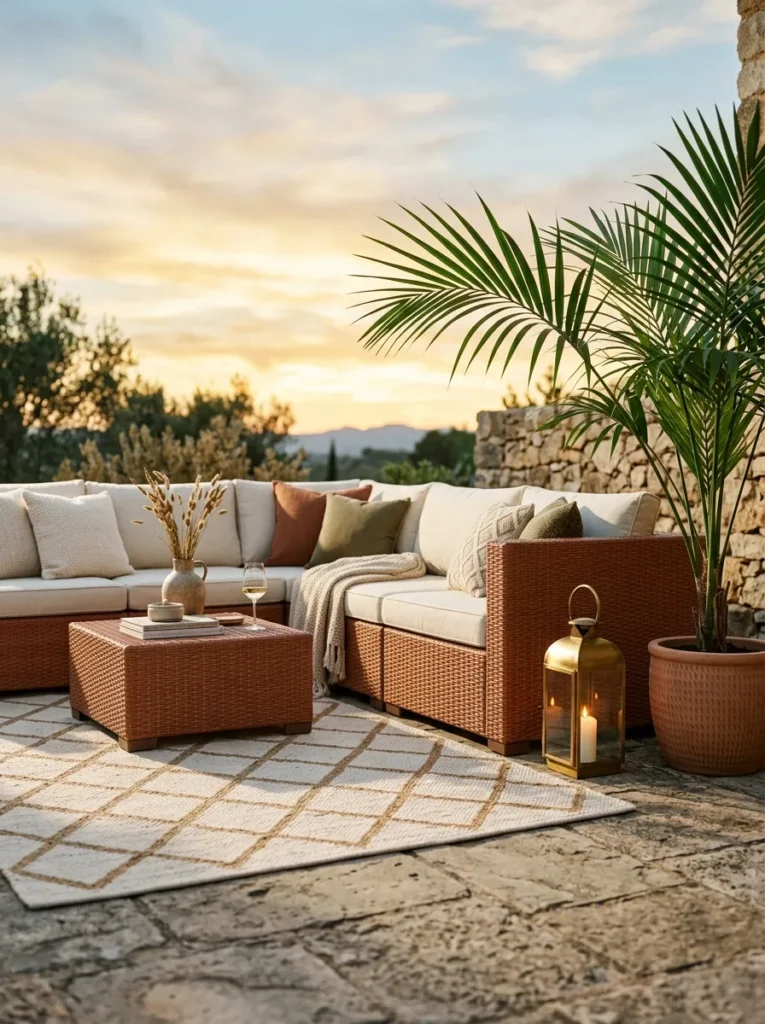
- Seating: Powder-coated aluminum sectional with resin wicker in a warm terracotta tone, topped with cream Sunbrella cushions rated for direct sun.
- Rug: Cream-and-rust diamond-pattern rug in polypropylene, built to handle rain without staining or curling at the edges.
- Plants: Pindo palm as the anchor plant, paired with potted agave and trailing Silver Falls dichondra spilling over urn planters.
- Lighting: Aged-brass lanterns with flicker-effect LED candles on the side tables, plus warm-white string lights strung in loose swags overhead.
- Textiles: Rust-striped outdoor cushions and a cream burlap-look throw woven from solution-dyed acrylic, made to resist fading.
- Hanging element: Plant hangers knotted from solution-dyed polyester rope, holding trailing pothos look-alikes that tolerate full sun.
- Standout detail: A vintage-style equipale chair reupholstered in outdoor leather-look vinyl, angled in as the reading seat.
Why this works: A single warm color family pulled through the seating, rug, and plant pots keeps a mixed-material patio from feeling cluttered or thrown together.
Untreated rattan and true jute look gorgeous in photos, but neither survives an Austin summer intact. UV rays make natural rattan brittle within months, and jute rugs left outdoors absorb moisture and grow mildew before the first frost arrives. That’s exactly why this corner leans on resin wicker and polypropylene instead, materials engineered to hold their color and shape through heat, storms, and humidity. The terracotta and cream palette reads as warm as natural fiber would, but it holds up for years outdoors instead of one photo. Choosing durable materials means fewer replacements and a patio that stays looking finished.
This corner earns its keep because every piece pulls double duty — shade, seating, and greenery working together instead of competing for attention. The equipale-style chair adds a handmade, well-traveled feel without pretending to be genuine vintage rattan, and the brass lanterns carry the same warmth after sunset that the terracotta carries by day. Guests tend to gravitate here first, since the low profile and soft cushions make it the most inviting seat on the patio. In my experience, corners like this get used far more than a formal dining set, because they feel like somewhere you’d want to sit down.
2. Midnight Rattan Lounge
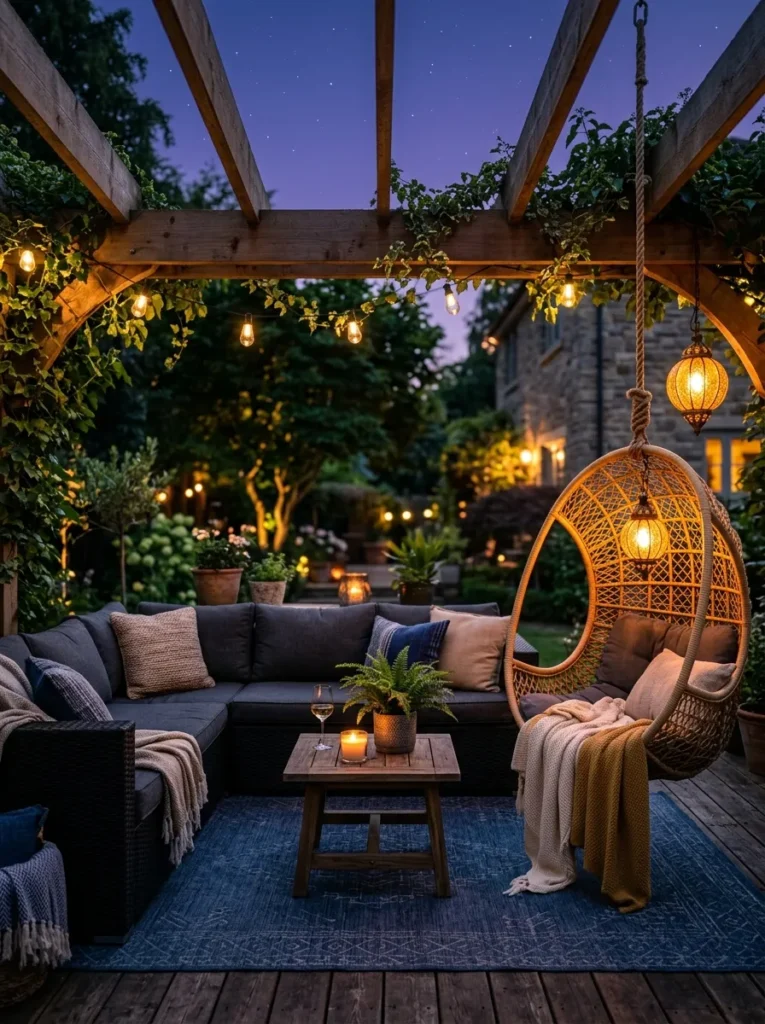
- Seating: Black all-weather synthetic rattan deep-seat sofa with teak wood legs and dark charcoal outdoor cushions.
- Rug: Indigo-and-cream geometric flatweave rug in solution-dyed polypropylene, rated for direct exposure.
- Plants: Pride of Barbados as the anchor shrub for color, paired with drought-tolerant Mexican feather grass in matte black planters.
- Lighting: Brass pendant lanterns with amber flame-tone bulbs, dimmed low for evening use.
- Textiles: Deep indigo mudcloth-print cushions and a charcoal waffle-weave throw, both printed on solution-dyed acrylic.
- Hanging element: A rattan-look hanging egg chair suspended from a cedar pergola beam.
- Standout detail: The pergola beam reinforced with steel blocking so the hanging chair can hold real weight without sagging or pulling loose over time.
Why this works: Dark, saturated color absorbs glare instead of reflecting it, which is why deep charcoal and indigo patios read as calm rather than harsh under bright Texas sun.
My husband gets called out to more failed hanging chairs than anything else on a patio job. Homeowners hang an egg chair from a thin pergola rafter or a single screw eye, and within a season the wood splits or the hardware pulls loose. His fix is simple: add a short length of steel blocking between the rafters before the pergola is finished, then anchor the chair’s hook directly into that blocking. It costs almost nothing extra during construction, but it means the chair holds real weight safely for years instead of becoming a liability nobody wants to sit in.
Dark color does something bright boho patios can’t — it makes an outdoor space feel like a room instead of an afterthought. The charcoal rattan sofa and indigo rug ground the space, while the amber lantern light keeps it from feeling cold after dark. Pride of Barbados adds a hit of orange-red bloom against all that black and indigo, so the space never reads as flat or moody in a bad way. Guests notice the hanging chair first every single time, but it’s the grounded, dark furniture underneath that makes the whole lounge feel finished rather than staged.
3. Desert Hammock Nook
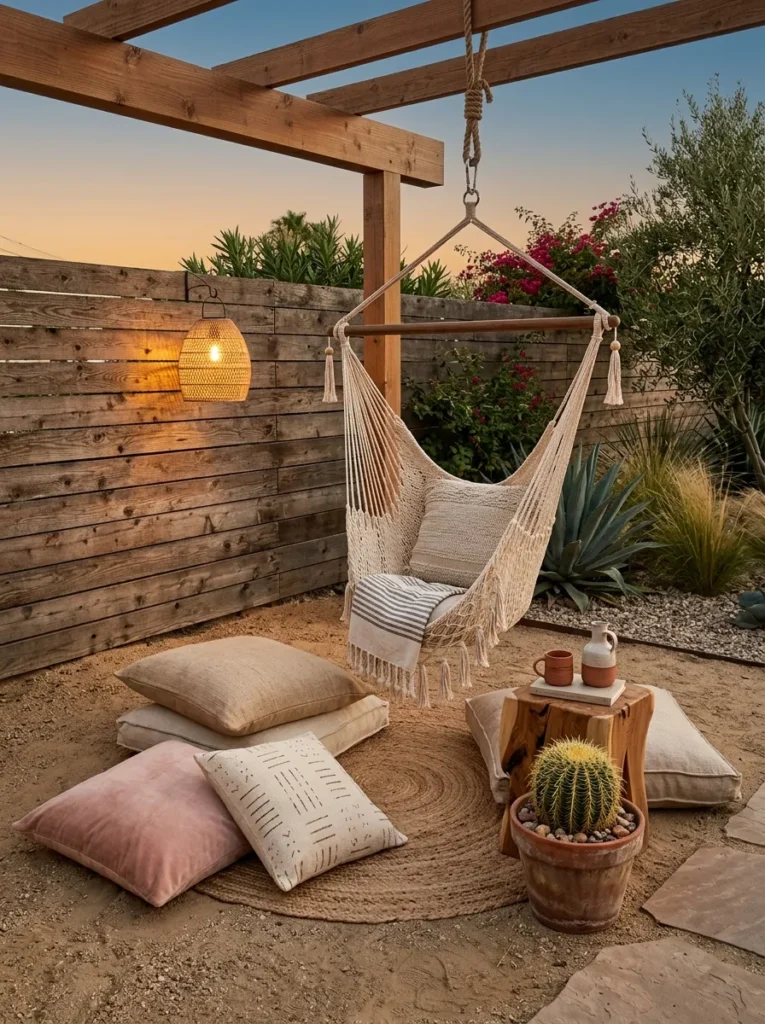
- Seating: Woven hammock chair in recycled polyester rope, paired with low floor cushions in sand and dusty rose.
- Rug: Sand-and-blush jute-look rug woven from polypropylene, resistant to fading and mildew.
- Plants: Barrel cactus and blue agave for structure, with trailing string-of-pearls in hanging pots, brought indoors before the first freeze.
- Lighting: Solar-powered pendant lights with woven rattan-look shades, charging during the day and glowing at dusk.
- Textiles: Dusty rose outdoor cushions and a sand canvas throw blanket, both treated for water resistance.
- Hanging element: A synthetic macrame wall hanging in cream and rust, mounted on the privacy fence behind the nook.
- Standout detail: A side table built from a reclaimed cedar fence post, cut and sanded into a low stool-height surface.
Why this works: Grouping desert plants with warm neutral textiles creates a patio that feels sun-baked and restful at the same time, without relying on a single piece of greenery to carry the whole look.
String-of-pearls looks like it belongs in a desert scene, but it’s actually more cold-sensitive than the cacti sitting next to it. I’ve killed more than one trailing succulent by leaving it outside during a surprise Austin freeze, which is why this nook keeps it in a lightweight hanging pot that’s easy to carry indoors overnight. Barrel cactus and blue agave, on the other hand, handle real cold and full sun without complaint. Mixing plants by their hardiness, not just their looks, is what keeps a desert-style corner alive past its first year instead of needing a full replant every spring.
This nook works because it gives a small, quiet corner of the patio its own reason to exist, separate from the main seating area. The hammock chair sways just enough to feel restful without needing a full swing frame, and the reclaimed cedar side table adds a weathered, one-of-a-kind touch that a store-bought table can’t match. Solar lighting means no extra wiring near a fence line, which keeps setup simple for a rental or a first house. By evening, the macrame panel on the fence catches the lantern glow and turns a plain privacy fence into part of the design.
4. Jewel-Tone Moroccan Corner
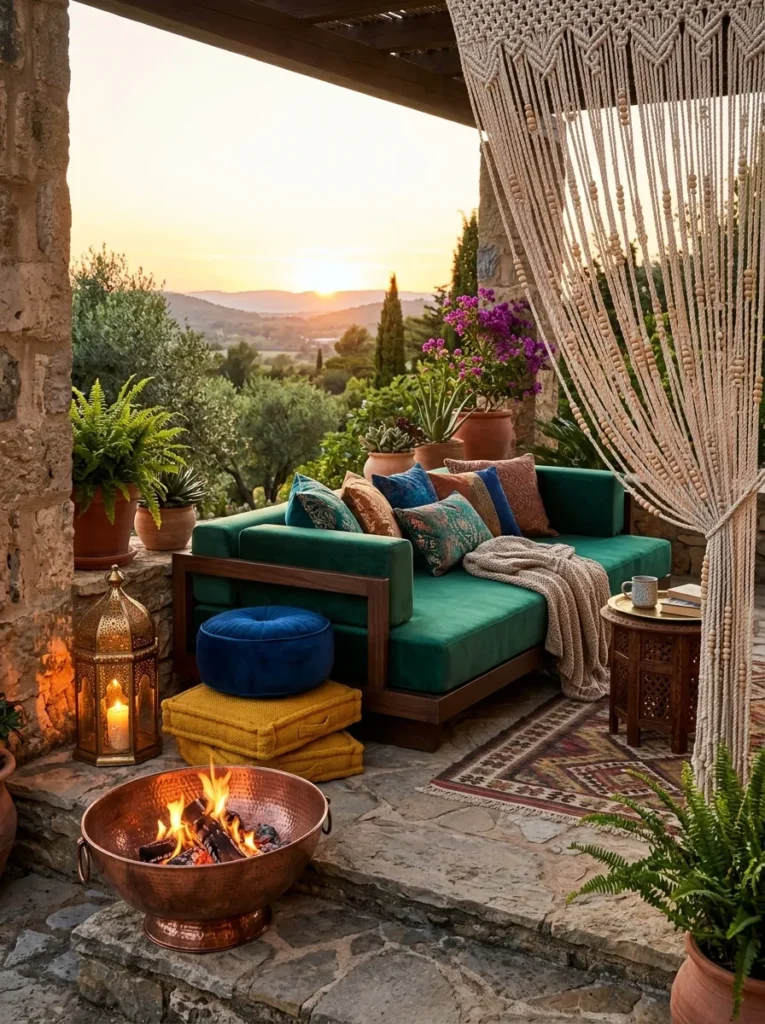
- Seating: Tufted outdoor daybed in solution-dyed velvet-look emerald fabric, surrounded by round leather-look Moroccan poufs in sapphire and mustard.
- Rug: Sapphire-and-gold trellis-pattern rug in polypropylene, woven to resist fading in direct sun.
- Plants: Olive tree in a large glazed urn as the anchor, with trailing rosemary and potted lavender along the daybed’s edge.
- Lighting: Punched brass Moroccan lanterns with amber candles, hung from a wrought-iron stand at three different heights.
- Textiles: Emerald and sapphire embroidered cushions, plus a mustard fringe throw in solution-dyed acrylic.
- Hanging element: A beaded macrame curtain in cream and gold, hung between two posts to frame the daybed.
- Standout detail: A hammered copper fire bowl set on a raised stone platform in front of the daybed.
Why this works: Jewel tones read as rich rather than overwhelming outdoors because sunlight naturally softens saturated color, so a combination that might feel heavy indoors feels balanced on a patio.
Saturated color behaves differently under open sky than it does inside four walls. Indoors, deep emerald and sapphire can feel dramatic or even a little closed-in, but daylight and reflected light from surrounding greenery soften those same tones outdoors. That’s part of why jewel-tone boho corners photograph so well at golden hour — the light does half the styling work for you. Pairing the daybed’s emerald velvet-look fabric with a gold-and-sapphire rug keeps the palette cohesive rather than busy, and the olive tree’s silvery-green leaves act as a visual bridge between the cooler and warmer tones in the space.
This corner works because it treats the daybed as a destination, not just extra seating. The beaded curtain gives it a sense of enclosure without actually blocking airflow, which matters on hot Texas evenings when a fully covered structure would trap heat instead of letting it move through. The copper fire bowl adds warmth and a soft flicker of movement after dark, turning a simple lounging spot into somewhere people linger for hours. Olive trees also handle Austin’s alkaline soil and dry spells better than most Mediterranean plants people try first, which makes this look easier to maintain than it appears.
5. Sunset Canvas Retreat
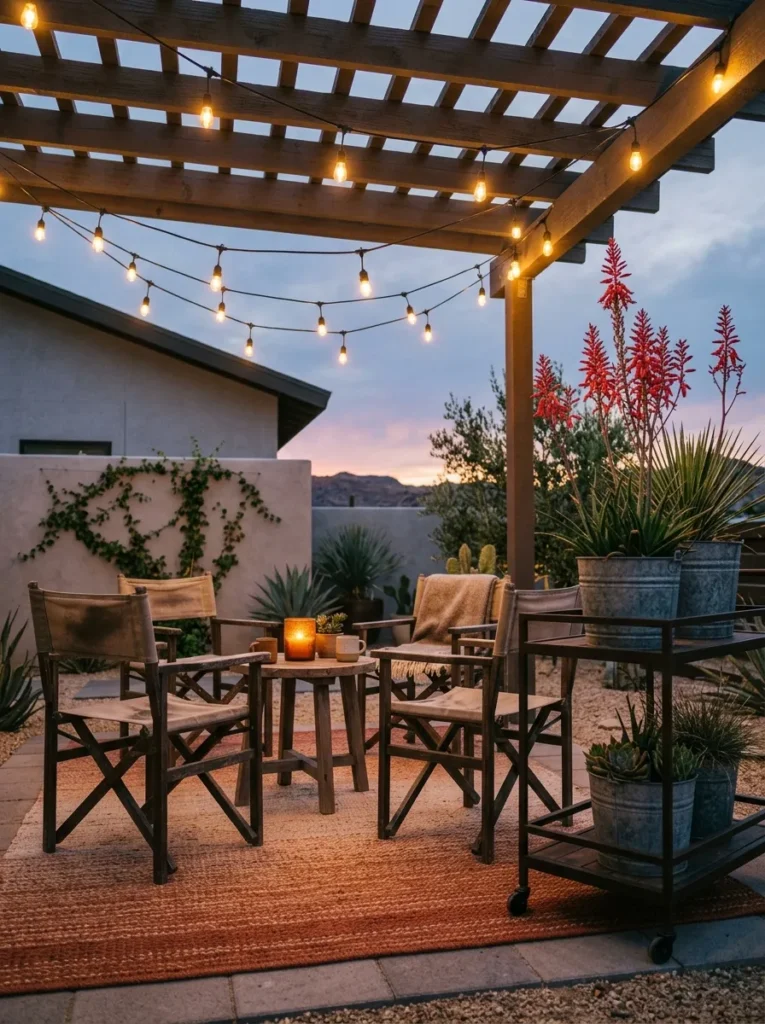
- Seating: Folding director-style chairs in weathered canvas with cedar frames, arranged around a low round side table.
- Rug: Burnt-orange and mustard ombre rug in solution-dyed acrylic, designed to resist sun-fade over multiple seasons.
- Plants: Red yucca as the anchor plant for its coral bloom spikes, with potted marigold and trailing nasturtium in galvanized buckets.
- Lighting: Amber globe string lights strung zigzag overhead, plus a single rattan-shade floor lamp wired for outdoor use.
- Textiles: Mustard-and-rust striped cushions on the canvas chairs, with a burnt-orange picnic blanket for ground seating.
- Hanging element: A woven rattan sun-shape wall hanging mounted above the side table.
- Standout detail: Galvanized steel buckets repurposed as planters, each one drilled with drainage holes and set on wheeled trolleys for easy rearranging.
Why this works: Warm ombre color stories mimic the natural gradient of a Texas sunset, so the patio feels most alive at the exact time of day most people are actually using it.
I redesigned a client’s patio around this exact palette after she mentioned she only ever used the space after 6 p.m. Instead of fighting that, we leaned into it — mustard, rust, and burnt orange that practically glow under early evening light instead of looking washed out the way cooler tones can. The galvanized buckets were her idea, repurposed from an old feed store find, and they turned out to be the most complimented piece on the whole patio. Sometimes the best boho styling choice isn’t a designer piece at all, it’s something repurposed with the right color and placement.
Canvas director chairs bring a relaxed, collapsible quality that suits smaller patios or renters who need furniture they can store away easily. Red yucca handles full Texas sun without complaint and reblooms through most of the warm season, giving the space consistent color without constant upkeep. The wheeled planter trolleys mean the whole layout can shift for a gathering or shrink back down for a quiet evening, which most fixed boho setups don’t allow. By the time the string lights click on, the ombre rug and amber glow make the whole corner feel like it’s catching the last of the sunset on purpose.
You’ll Also Love: 15 Covered Patio Design Ideas for Stylish Outdoor Living
6. Bleached Wood Coastal Boho
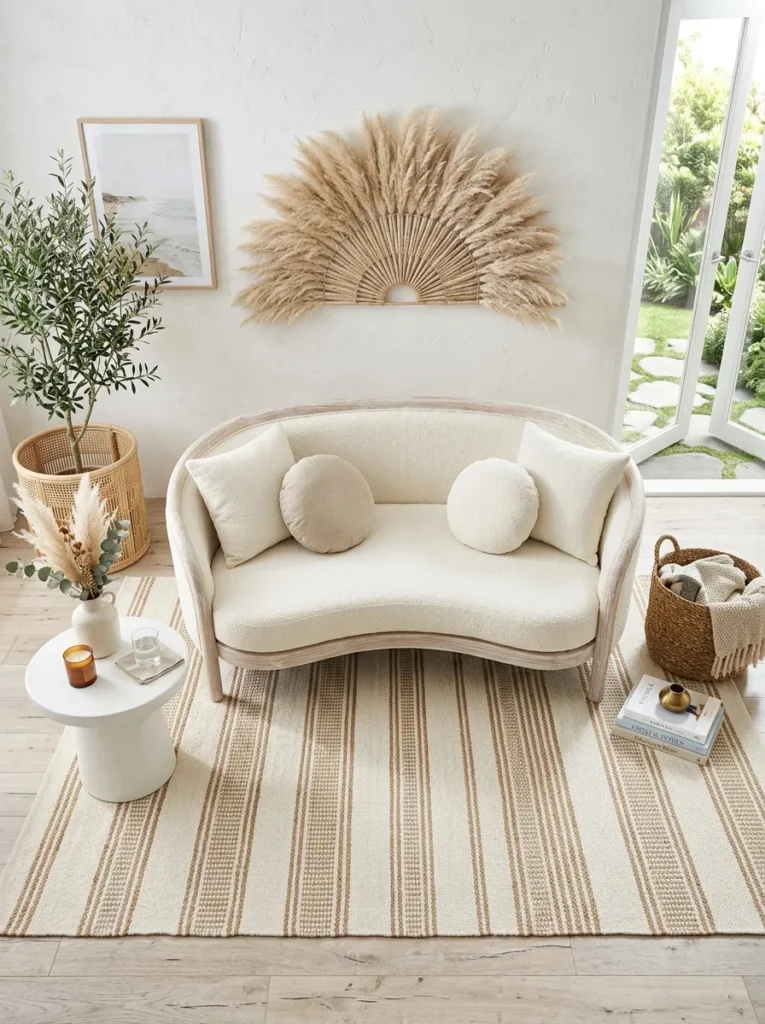
- Seating: Whitewashed teak loveseat with a curved silhouette, paired with a matching bleached-wood coffee table.
- Rug: Ivory-and-natural stripe rug in solution-dyed polypropylene, chosen to resist mildew in humid weather.
- Plants: Potted pampas grass as the anchor, with trailing rosemary and a small olive topiary flanking the loveseat.
- Lighting: Woven rattan-look pendant lantern with a warm LED bulb, hung from a single black metal bracket.
- Textiles: Ivory bouclé-look outdoor cushions and a natural linen-look throw, both solution-dyed for sun resistance.
- Hanging element: A large dried pampas grass wall fan mounted on a whitewashed wood panel behind the loveseat.
- Standout detail: The loveseat’s curved, organic silhouette instead of a boxy frame, giving the whole corner a softer, more current shape.
Why this works: Curved furniture silhouettes read as more current than boxy boho frames, which is why this corner feels closer to a 2026 design magazine spread than a decade-old mood board.
Boxy, straight-armed wicker sofas dominated boho patios for years, but the style has moved toward softer, rounded shapes the same way indoor furniture has. A curved loveseat catches light differently than a flat-backed one, casting a rounded shadow instead of a hard edge, and it photographs better from almost any angle because there’s no harsh line breaking up the frame. Pairing that shape with bleached wood and ivory textiles keeps the whole look feeling current rather than nostalgic. Pampas grass adds movement and texture without needing constant care, since dried arrangements never wilt or need watering.
Bleached wood tends to survive Austin humidity better than people expect, as long as it’s sealed teak rather than an untreated softwood. My husband’s crews always recommend a marine-grade sealant reapplied once a year on any bleached outdoor wood piece, since raw sealant breaks down faster under direct UV than most homeowners assume. Skipping that step is the single most common reason a whitewashed piece grays out or splits within two summers. Done right, though, a bleached teak loveseat like this one can outlast almost every other seating material on this list, curved shape and all.
7. Blush Bougainvillea Pergola
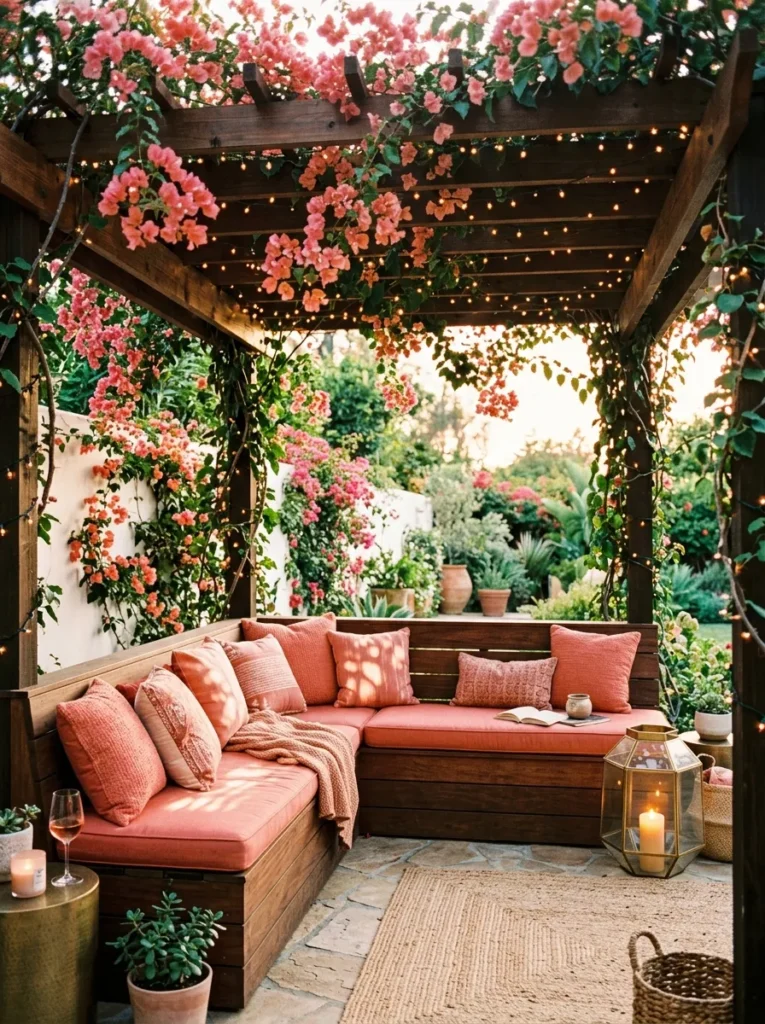
- Seating: Built-in cedar bench seating along two sides of the pergola, topped with coral and cream weather-rated cushions.
- Rug: Coral-and-cream medallion rug in solution-dyed polypropylene, rated for full sun exposure.
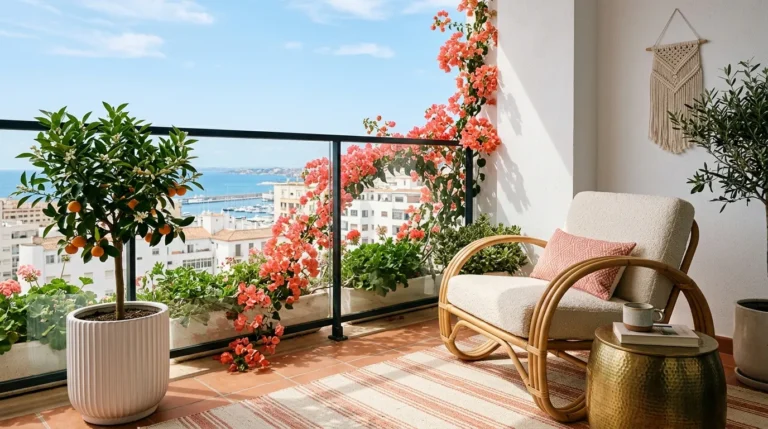
- Plants: Bougainvillea trained up the pergola posts as the anchor, with potted plumbago and trailing lantana along the bench base.
- Lighting: Warm white fairy lights woven through the bougainvillea vines, plus a single brass floor lantern near the bench.
- Textiles: Coral block-print cushions and a cream waffle-weave throw, both in solution-dyed acrylic.
- Hanging element: A cream macrame plant hanger holding a trailing rosary vine, suspended from the pergola crossbeam.
- Standout detail: A cantilevered steel pergola arm that extends past the bench without a supporting post underneath it, leaving the seating area open on one side.
Why this works: Letting a flowering vine do the shading instead of a solid roof keeps the pergola bright and colorful through spring and summer instead of casting one flat block of shade.
That cantilevered arm looks like a small architectural risk, but it’s a detail my husband’s crews build often on patio covers where homeowners don’t want a post blocking the view. The trick is running a heavier steel beam back into the main structure so the load transfers inward instead of needing a post at the open end. It costs more in steel than a standard four-post pergola, but it’s what lets the bench seating stay open and unobstructed on the side facing the yard. Bougainvillea takes two full seasons to really cover a structure like this, so patience matters more than instant impact here.
Coral and cream is a warmer, softer departure from the typical boho neutral palette, and bougainvillea supplies nearly all of that color without a single painted surface. Plumbago’s pale blue blooms cut the coral just enough to keep the space from feeling too sweet, while the fairy lights woven through the vines mean the pergola glows from within after dark rather than needing a separate light fixture overhead. Built-in bench seating also means no furniture to store or replace, which matters most in a climate with long, hot summers and sudden storms.
8. Sage & Clay Sunken Lounge
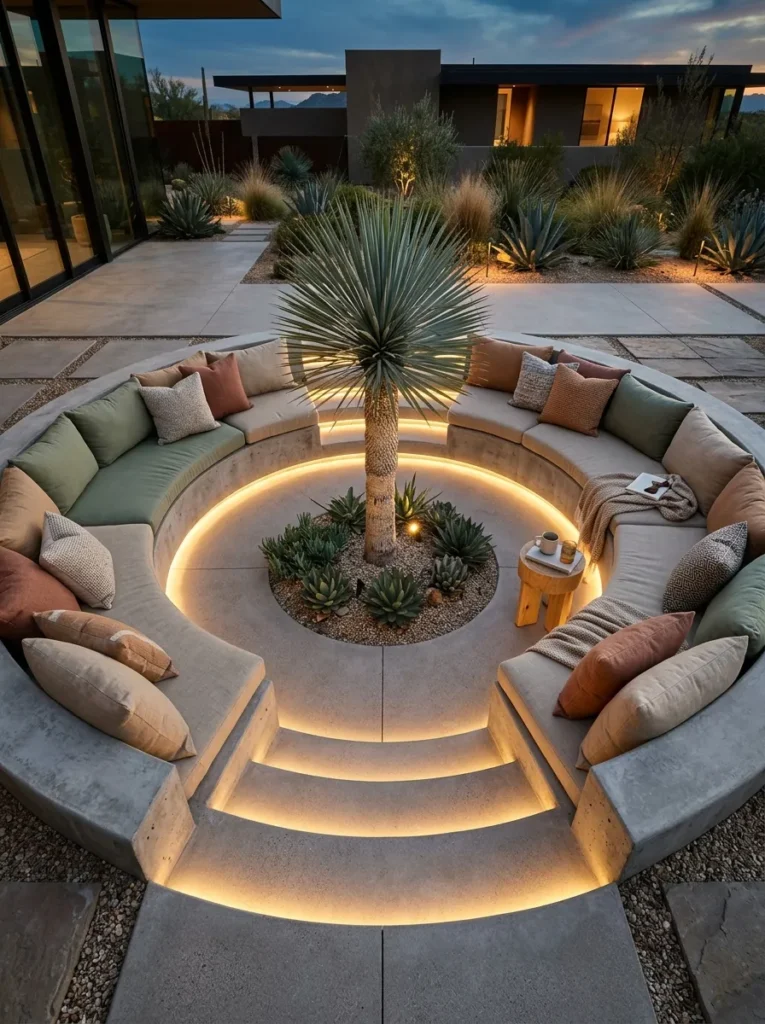
- Seating: Stepped, built-in concrete bench seating finished in a clay-toned micro-topping, layered with sage and cream cushions.
- Rug: Cream-and-sage striped flatweave rug in polypropylene, laid across the sunken lounge floor.
- Plants: Yucca rostrata as the anchor for its sculptural form, with potted santolina and creeping thyme tucked into the step edges.
- Lighting: Recessed low-voltage LED strip lighting built into the underside of each step, plus a single sculptural floor lantern.
- Textiles: Sage linen-look cushions and a clay-colored bolster, both solution-dyed for outdoor use.
- Hanging element: A woven cream rope wall hanging mounted on the retaining wall above the top step.
- Standout detail: A sunken conversation-pit layout, set roughly 16 inches below the main patio grade, built with proper drainage beneath the poured concrete.
Why this works: Dropping the seating area below grade creates a natural sense of enclosure without walls or fencing, which makes a sunken lounge feel private even on an open, unfenced backyard.
A sunken seating area only works long-term if drainage is handled before the concrete goes in, and it’s one of the most common corners homeowners try to cut. My husband always specifies a gravel base and a drain line running to daylight before any pour happens below grade, because without it, a sunken lounge becomes a shallow pool after the first heavy Texas storm. The recessed step lighting also needs to be rated for wet-location use, not standard indoor low-voltage fixtures. Done correctly, this kind of lounge stays dry and usable through every season, not just the ones without rain.
Yucca rostrata’s slow-growing, sculptural silhouette gives this lounge a quiet, architectural anchor that doesn’t compete with the sage and clay palette surrounding it. The stepped seating naturally pulls people in closer than a standard sofa arrangement would, which makes it one of the better layouts for actual conversation rather than everyone facing the same direction. Creeping thyme tucked into the step edges releases a faint scent underfoot when brushed against, adding a sensory layer most patio layouts skip entirely. In my experience, sunken lounges like this become the spot people gravitate to first at any gathering.
9. Lavender Bistro Nook
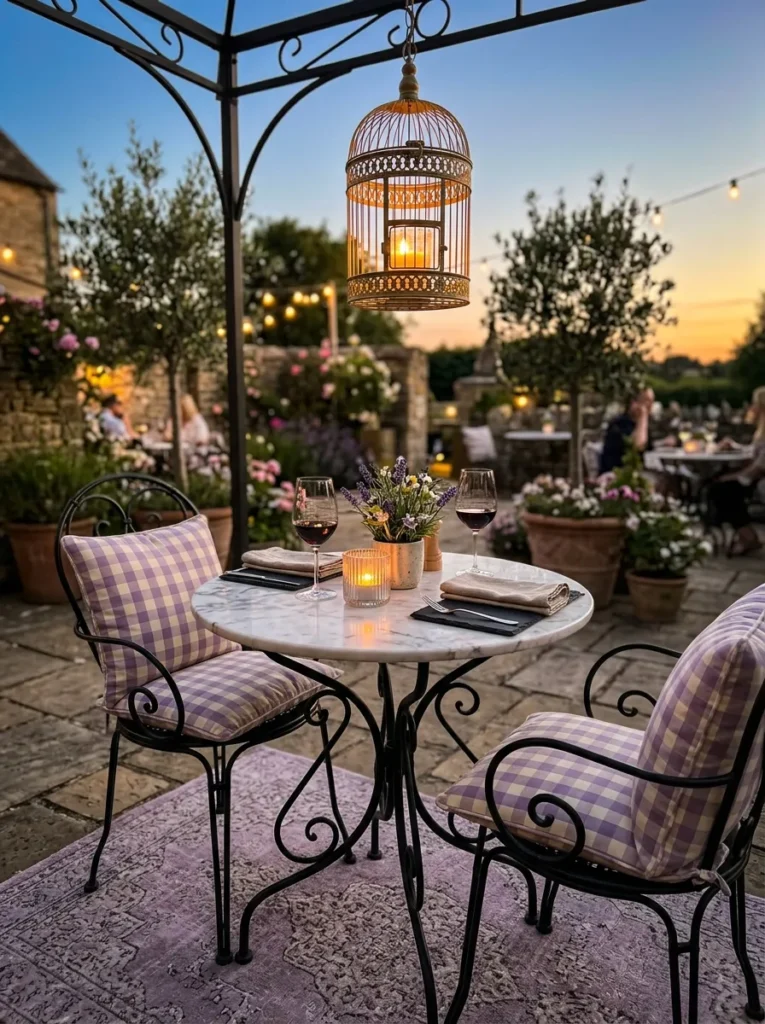
- Seating: Wrought-iron bistro chairs finished in matte black, paired with a small round marble-look outdoor table.
- Rug: Dusty lavender and cream scalloped-pattern rug in solution-dyed acrylic, resistant to fading.
- Plants: Potted salvia as the anchor for its purple spikes, with trailing lavender and silver dichondra along the table edge.
- Lighting: A vintage-style brass birdcage lantern hung above the table, plus a strand of warm white micro-lights along the fence line.
- Textiles: Lavender gingham cushion pads on the bistro chairs and a cream linen-look table runner, both outdoor-rated.
- Hanging element: A small woven rattan-look wind chime hung beside the birdcage lantern.
- Standout detail: The marble-look table surface, made from a weatherproof composite resin rather than real stone, so it resists both cracking and staining.
Why this works: A small-footprint bistro layout proves boho styling doesn’t require a full sectional or a large patio, which makes this idea one of the most realistic for apartment patios and narrow side yards.
Real marble tabletops crack faster outdoors than most people expect, since temperature swings between hot Texas afternoons and cool nights cause the stone to expand and contract unevenly. A composite resin surface mimics the same veined look at a fraction of the risk, and it never needs sealing the way natural stone does. That’s an easy substitution that keeps the elevated, elegant feel of a marble table without the maintenance headache. Pairing it with matte black wrought iron chairs keeps the whole nook feeling grounded rather than delicate, even though every material reads as soft and romantic at a glance.
This nook proves a boho patio corner can work in barely six feet of space, which matters for anyone renting an apartment or working with a narrow side yard rather than a full backyard. Salvia and lavender both attract pollinators through most of the warm season, so the space stays visually active even between waterings. The birdcage lantern adds a collected, well-traveled feel without requiring an actual antique find, since reproduction versions hold up just as well outdoors. Micro-lights along the fence line give the whole nook a soft glow at dusk without needing an outlet nearby.
10. Curved Concrete Fire Lounge
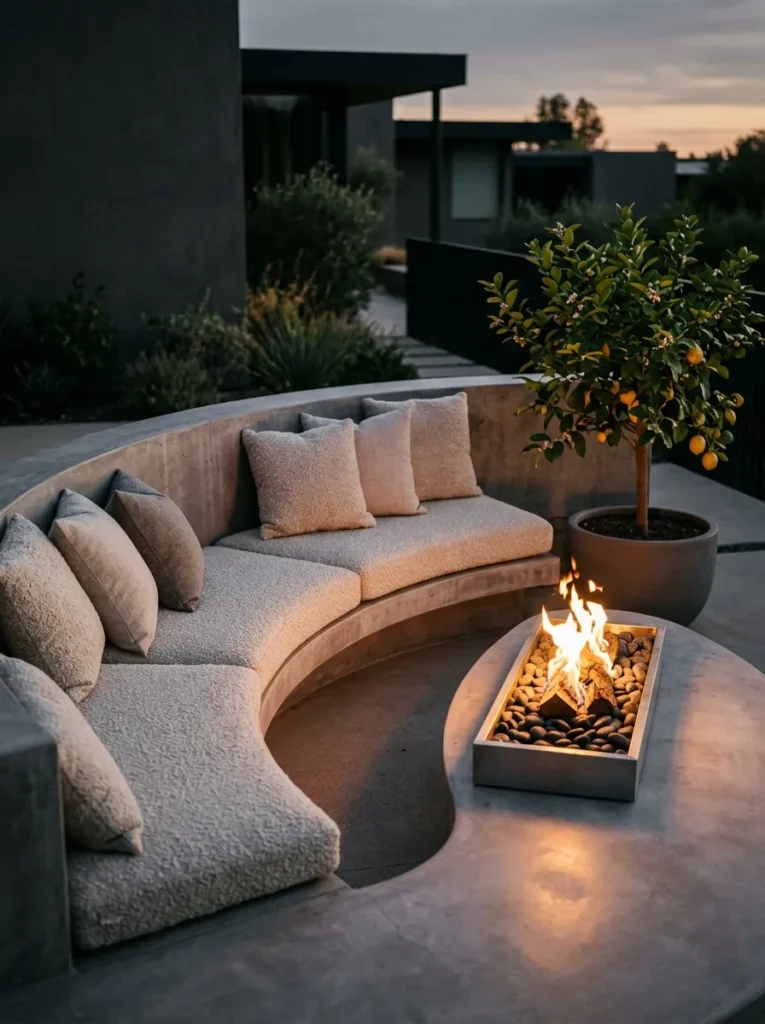
- Seating: Curved, kidney-shaped poured-concrete daybed with a warm greige micro-topping finish, layered with oatmeal bouclé-look cushions.
- Rug: Warm greige and ivory abstract-pattern rug in solution-dyed polypropylene, laid across the concrete patio floor.
- Plants: Dwarf Meyer lemon tree as the anchor in a brushed-steel planter, with potted rosemary and trailing silver dichondra along the daybed’s curved edge.
- Lighting: Brushed brass low-profile lanterns recessed into the concrete ledge, plus a single arched floor lamp with a linen-look shade.
- Textiles: Oatmeal bouclé cushions and a woven rattan-fiber lumbar pillow, both solution-dyed for outdoor durability.
- Hanging element: A minimalist rattan pendant, its clean woven dome shape hung from a single black steel arm bolted to the exterior wall.
- Standout detail: A brushed-steel fire trough inset directly into the concrete daybed’s curve, so the flame sits at seat height instead of on a separate fire pit table.
Why this works: A curved seating silhouette softens poured concrete’s naturally hard edges, which is why organic modern shapes read as warm rather than cold or clinical outdoors.
Poured concrete has a reputation for feeling stark, but a curved form changes that entirely. Rounded edges catch afternoon light in a way flat, boxy concrete never does, casting soft gradient shadows instead of one hard line. Pairing that shape with a warm greige tone and bouclé-look cushions keeps the whole lounge feeling closer to a quiet, tactile living room than a slab of hardscaping. The dwarf Meyer lemon adds fragrance and citrus color through most of the year, and its compact size means it never overwhelms a curved, low-profile layout the way a full-sized tree would.
The inset fire trough is the detail most people ask about first, and it works because the steel liner sits below the concrete surface rather than resting on top of it. That keeps the flame contained and the daybed’s curve unbroken, with no separate fire pit crowding the space. It’s a build that takes real planning before the concrete pour, since the gas line and steel liner both need to be set in place first. Once finished, though, it turns a simple lounging spot into a genuine gathering point on cooler evenings, without a single extra piece of furniture.
11. Terrazzo & Dusty Blue Retreat
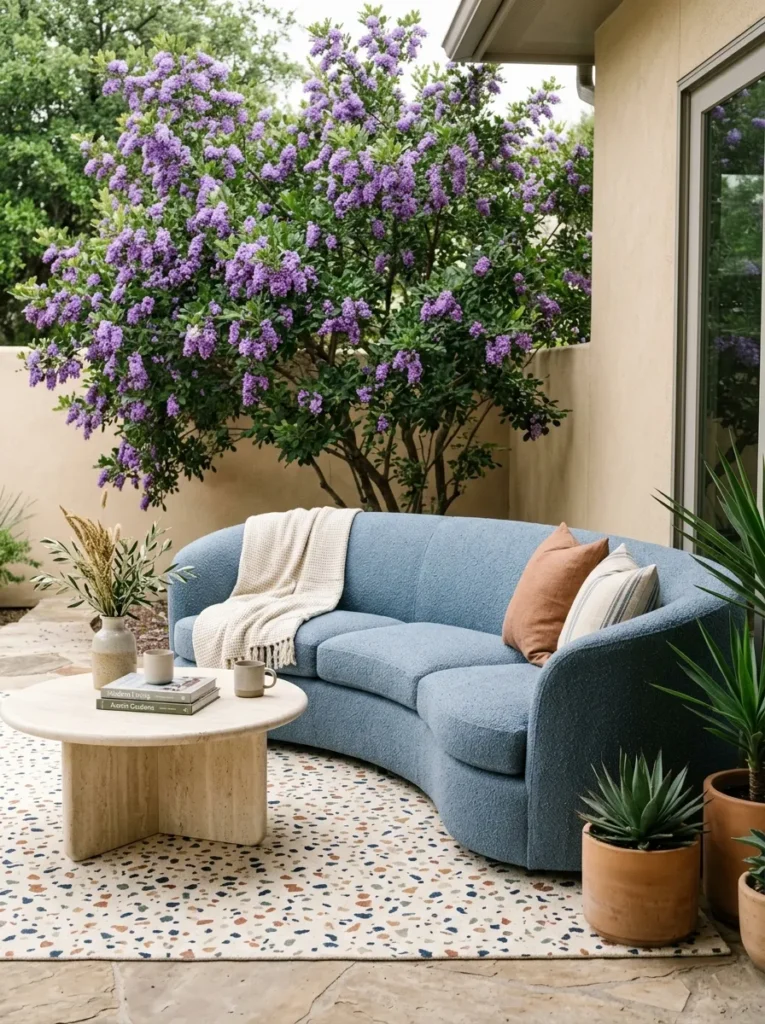
- Seating: Curved bouclé-look loveseat in dusty blue, paired with a low travertine-look side table with rounded edges.
- Rug: Terrazzo-pattern outdoor rug in cream, dusty blue, and flecks of rust, made from solution-dyed polypropylene.
- Plants: Texas mountain laurel as the anchor for its fragrant purple spring blooms, with potted rosemary and trailing string-of-bananas nearby.
- Lighting: A sculptural brass arc floor lamp with a linen drum shade, plus warm LED puck lights tucked beneath the side table.
- Textiles: Dusty blue bouclé cushions and a cream ribbed-knit throw, both treated for sun and moisture resistance.
- Hanging element: A woven jute-look wall hanging in cream and rust tones, mounted above the loveseat on a whitewashed panel.
- Standout detail: The terrazzo rug’s speckled pattern, chosen to echo real terrazzo flooring without the cost or weight of actual stone tile.
Why this works: A terrazzo pattern brings texture and visual movement to a patio floor without introducing another solid color, which keeps a small, calm palette from reading as flat.
Terrazzo has moved from bathroom floors into outdoor styling because its speckled texture does something a solid-color rug can’t. Under bright daylight, the flecks catch light unevenly, creating a subtle shimmer that keeps the eye moving across the space instead of settling on one flat surface. That makes it a useful trick for smaller patios, where a single bold rug can sometimes make the area feel more cramped than it is. Dusty blue and rust flecks against a cream base tie back into the mountain laurel’s purple blooms each spring, while staying quiet and neutral the rest of the year when the tree isn’t flowering.
Texas mountain laurel is one of the more overlooked native anchor trees for a patio like this, since it tolerates poor soil, drought, and full sun without much fuss once established. Its blooms carry a grape-soda scent that catches people off guard the first time they notice it, which makes this corner memorable in a way a purely visual plant choice wouldn’t be. The curved bouclé loveseat softens the whole layout further, and the brass arc lamp adds height without needing a separate lighting structure. Together, it reads as considered and current rather than assembled from whatever was available.
12. Cantilevered Teak Ochre Bench
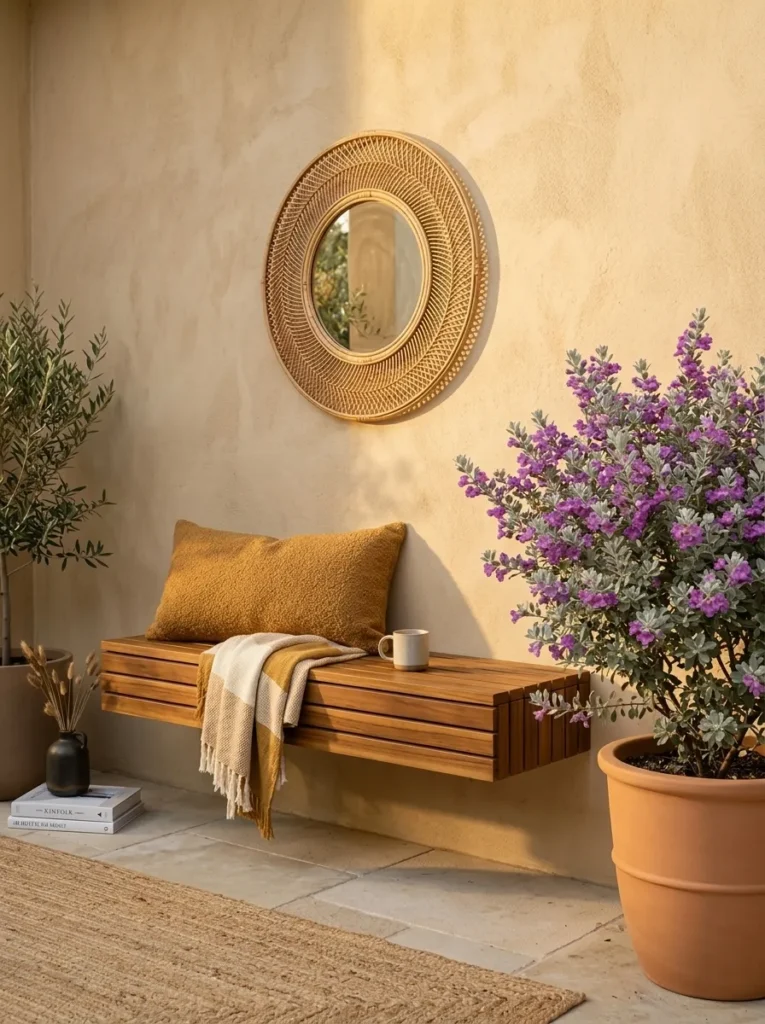
- Seating: A single floating teak bench with an ochre bouclé cushion, mounted flush against a sandstone-toned stucco wall.
- Rug: Sandstone and ochre abstract rug in solution-dyed acrylic, laid beneath the bench.
- Plants: Texas sage (cenizo) as the anchor for its silvery-purple foliage, with potted yarrow and trailing rosemary along the wall base.
- Lighting: A single wall-mounted brass sconce with an amber-toned bulb, plus a low ochre pendant hung beside the bench.
- Textiles: Ochre bouclé cushion and a rust-flecked woven throw, both solution-dyed for outdoor use.
- Hanging element: A small woven rattan disc mirror hung above the bench, angled to catch the afternoon light.
- Standout detail: The bench appears to float against the wall with no visible legs or brackets, supported instead by a hidden steel plate bolted directly into the wall’s structural framing.
Why this works: Removing visible legs from a bench eliminates the one detail that usually dates outdoor furniture, which is part of why floating seating reads as distinctly more current than anything with traditional legs.
That floating look isn’t just aesthetic, it’s a structural decision my husband’s crews plan for early. A steel mounting plate has to be bolted into the wall’s actual framing, not just the stucco finish, or the bench will eventually sag or pull loose under real weight. Getting it right means coordinating the bench’s placement before the stucco goes on, so the blocking is in exactly the right spot behind the wall. Skipping that step is how homeowners end up with a beautiful bench that can’t actually be sat on for long. Done properly, it holds weight just as well as any four-legged bench, minus the visual clutter.
Texas sage earns its keep here by blooming in flushes after summer rain, which means this corner gets bursts of purple color tied to the season instead of one static look year-round. Ochre and sandstone keep the palette warm without leaning into the more common terracotta or rust tones seen elsewhere on a typical boho patio, giving this corner its own identity. The rattan disc mirror catches late-day light and bounces it back across the bench, extending the golden hour glow a little longer than the sun alone would allow. It’s a small trick, but one that makes the whole corner photograph well well past sunset.
13. Citrus Sling Chair Corner
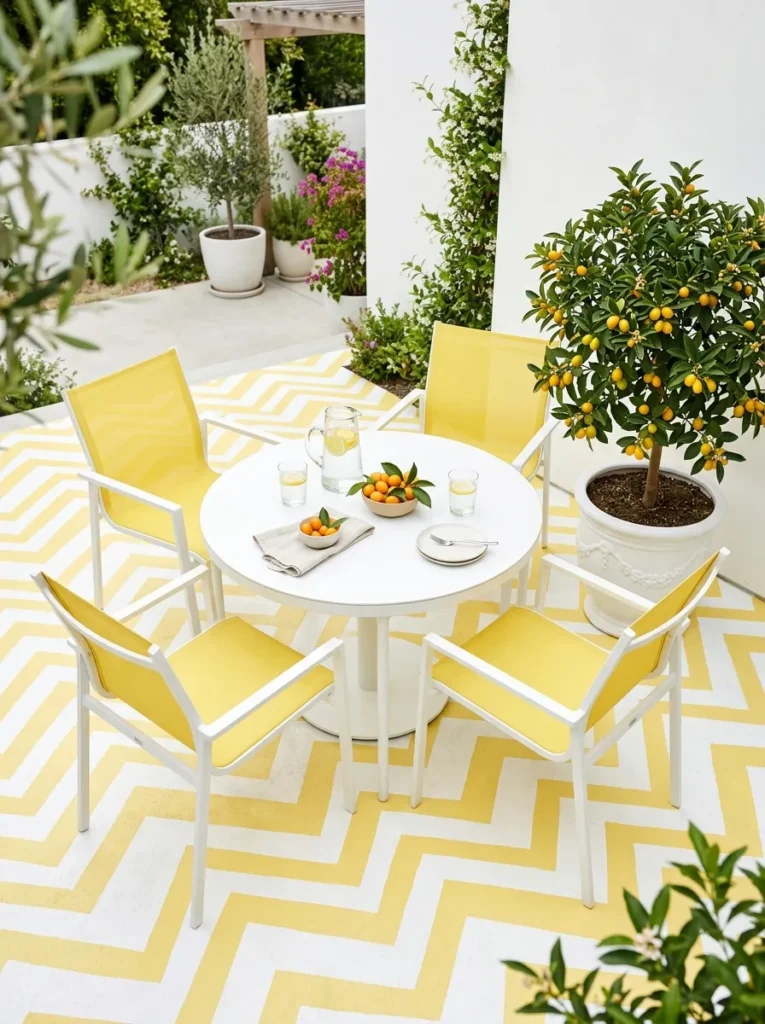
- Seating: Powder-coated white steel-frame sling chairs with woven lemon-yellow mesh seating, arranged around a low round white table.
- Rug: White-and-yellow chevron rug in solution-dyed polypropylene, chosen for its bright, sun-reflective palette.
- Plants: Kumquat tree as the anchor in a white ceramic planter, with potted marigold and trailing foxtail fern along the chair line.
- Lighting: Simple white paper-lantern-style outdoor pendants with warm LED bulbs, hung at staggered heights.
- Textiles: Lemon-yellow bolster cushions and a white waffle-weave throw, both solution-dyed for sun resistance.
- Hanging element: A woven white rattan-look sun mirror mounted on the fence behind the seating.
- Standout detail: A hand-painted chevron pattern stenciled directly onto the concrete patio floor in white and pale yellow exterior floor paint.
Why this works: Painting a pattern straight onto existing concrete gives a patio an entirely new visual anchor without the cost or weight of a full rug or tile replacement.
Painted floors are one of the most overlooked upgrades on a patio, mostly because people assume concrete can’t be changed without full demolition. A proper exterior floor paint, applied over a cleaned and etched surface, holds up through Texas heat and rain for several years before needing a touch-up. The chevron pattern here does the visual heavy lifting, so the sling chairs and kumquat tree can stay simple without the space feeling sparse. It’s a genuinely budget-friendly move compared to an outdoor rug of the same size, and it never blows around in the wind the way a lightweight rug sometimes does.
Sling chairs bring a lighter, more current silhouette than a bulky wicker sofa, and the open mesh seat lets air move through on hot afternoons instead of trapping heat the way a solid cushion would. Kumquat trees stay compact and fruit reliably in Central Texas containers, giving this corner a small, edible bonus most anchor plants don’t offer. Marigold’s bright orange blooms and faint citrus scent tie back into the kumquat without repeating the same yellow twice. By midday, the painted floor and white furniture bounce so much light around that the whole corner feels noticeably brighter than the rest of the yard.
14. Turquoise Rope Chaise Row
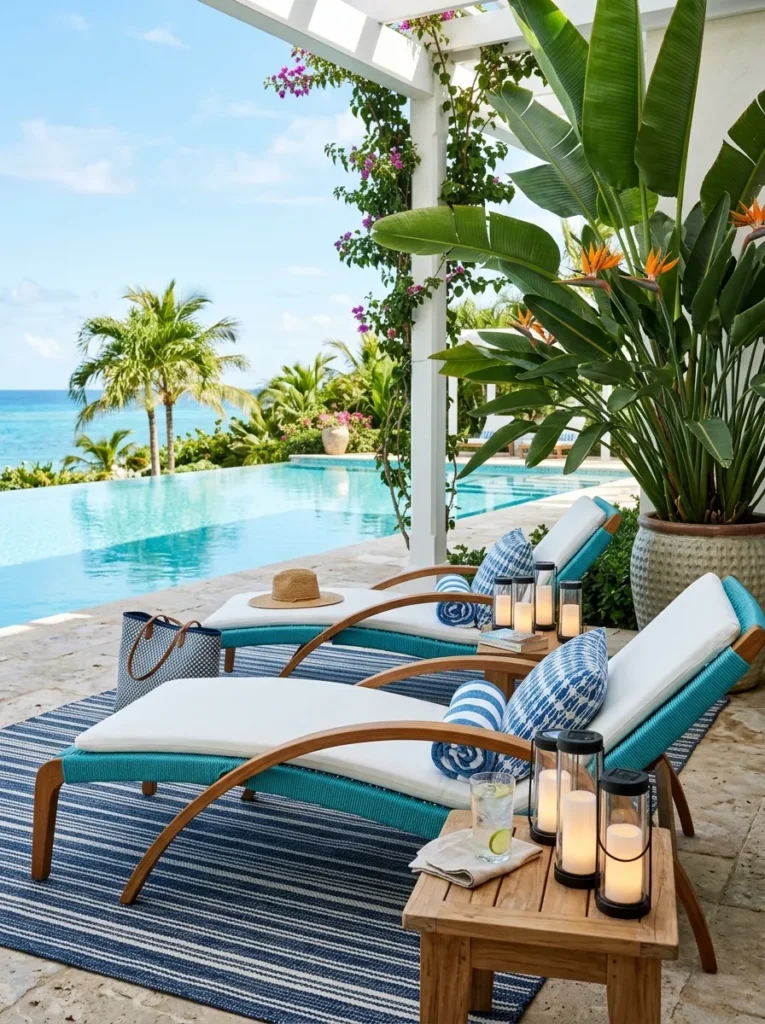
- Seating: Two woven rope chaise lounges with turquoise polyester cord and bent-teak frames, set side by side with a shared low table between them.
- Rug: White-and-turquoise stripe rug in solution-dyed acrylic, laid beneath the chaise row.
- Plants: Bird of paradise as the anchor for its tropical leaf shape, with potted papyrus and clumping dwarf bamboo along the back edge.
- Lighting: Simple white cylindrical solar lanterns lined along the table’s edge, plus one brass arc lamp behind the chaises.
- Textiles: Turquoise-and-white striped bolster pillows and a white terry-look towel draped over each chaise.
- Hanging element: A woven white macrame fringe panel hung behind the chaise row on a freestanding frame.
- Standout detail: The chaise frames finished in a bent, curved teak silhouette rather than the typical straight-slat lounge frame most patio brands sell.
Why this works: A tropical-leaf anchor plant paired with a cool blue-and-white palette reads as a genuine warm-weather retreat, which is why this corner tends to photograph as the most “vacation-like” spot on the whole patio.
Bird of paradise gets treated like a strictly indoor plant by a lot of first-time gardeners, but it actually handles Central Texas summers well once established, as long as it gets afternoon shade during the hottest stretch of the season. Clumping dwarf bamboo behind it fills in height and privacy without the runners that make regular bamboo a headache to control later. Papyrus adds a wispy, fountain-like texture that moves in even a light breeze, which brings a small amount of motion to an otherwise still corner. Together, the three plants create real tropical depth without relying on a single oversized specimen to do all the work.
The bent-teak chaise frames are a small but noticeable departure from the boxy, straight-slat lounges sold at most big-box stores, and the curve alone makes this row look considerably more current. Turquoise cord webbing holds up better in direct sun than woven fabric slings, since it’s designed for marine and pool use rather than standard patio furniture. Pairing two chaises side by side, rather than angled apart, makes the row feel intentional and gives it the easy, resort-style layout most people picture when they imagine a genuinely relaxing outdoor space.
15. Peach Canopy Swing Daybed — A Boho Patio Decor Idea for a Restful Focal Point
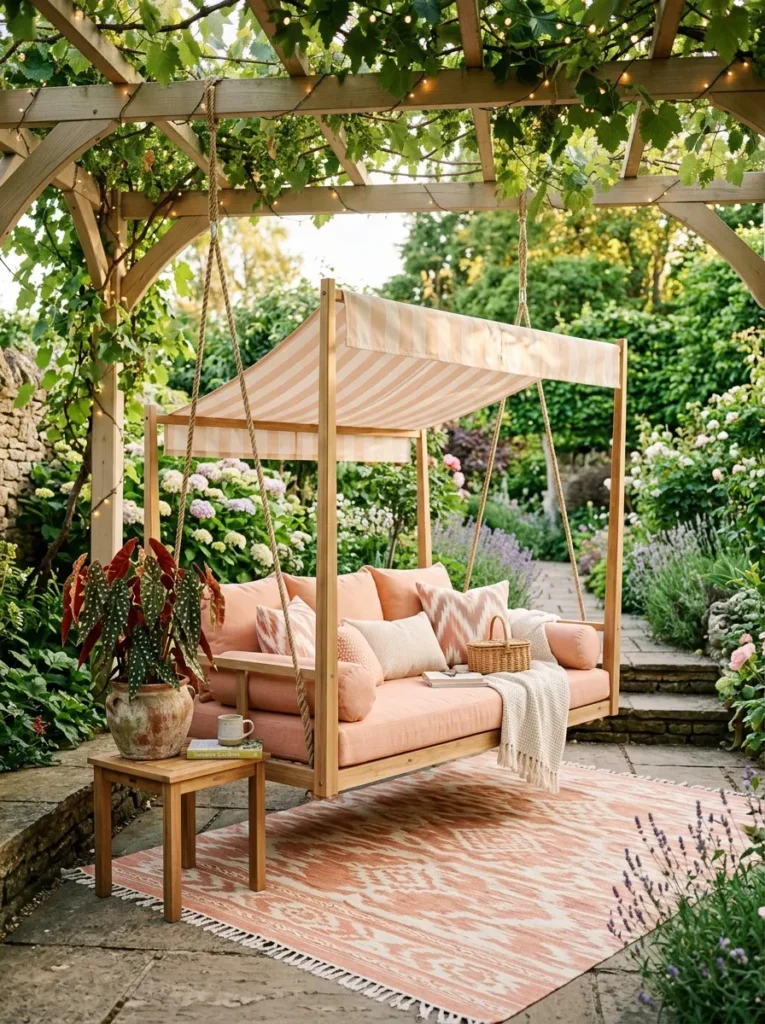
- Seating: A wide, cushioned canopy swing daybed suspended from a freestanding powder-coated steel frame, with a retractable fabric canopy overhead.
- Rug: Peach-and-cream ikat-pattern rug in solution-dyed polypropylene, laid beneath the swing.
- Plants: Angel wing begonia as the anchor for its speckled leaves, with potted society garlic and trailing peach lantana nearby.
- Lighting: Warm white fairy lights wrapped along the swing frame, plus a small brass reading lamp clipped to the canopy edge.
- Textiles: Peach-and-cream striped cushions and a cream chunky-knit throw, both solution-dyed for outdoor use.
- Hanging element: A small woven cream tassel garland strung along the top edge of the canopy frame.
- Standout detail: A hand-crank retractable canopy that folds flat against the frame in seconds, rather than a fixed fabric roof.
Why this works: A retractable canopy lets a swing daybed shift from full shade to open sun within a minute, which solves the single biggest complaint people have about fixed-roof patio swings.
My husband’s team gets asked about canopy swings more than almost any other patio structure, mostly because the fixed-roof versions sold in stores tend to sag or tear within a couple of seasons. A hand-crank retractable canopy, built with a marine-grade fabric and a properly weighted roller bar, avoids that problem entirely and lets the fabric fold away before a storm instead of catching wind like a sail. It’s a heavier, sturdier build than most off-the-shelf swing frames, which matters since the frame also has to support the full weight of the cushioned daybed itself along with anyone lounging on it.
Angel wing begonia’s speckled leaves add pattern and interest even before anything blooms, and it tolerates the dappled shade this swing naturally creates better than most flowering plants would. Society garlic’s soft purple blooms and faint onion-garlic scent double as a natural pest deterrent near a seating area, a small practical bonus most decorative plants don’t offer. The peach and cream palette keeps the whole setup feeling soft and restful rather than bold, which suits a swing meant for reading or resting rather than entertaining a crowd. It’s consistently the spot people fall asleep in first.
Styling Principles: Building a Boho Patio That Survives the Weather
The single biggest mistake in outdoor boho styling is treating patio decor like indoor decor moved outside. Natural fiber and true vintage pieces need to be the exception on a patio, not the rule. A few principles worth keeping in mind as you build your own space:
- Choose synthetic and solution-dyed fibers over natural ones wherever a rug, cushion, or hanging element will sit in direct weather. Materials like solution-dyed acrylic and polypropylene are built to resist UV fading and mildew in a way jute, cotton, and untreated rattan simply aren’t.
- Anchor each seating area with one true focal plant, not several competing ones. A single strong anchor — a citrus tree, an agave, a sculptural yucca — gives a corner structure, while smaller plants fill in around it.
- Match plant hardiness to how much attention you’re willing to give it. Cold-sensitive trailing plants can look stunning, but they need a plan for freeze nights if you’re not ready to replace them each spring.
- Any hanging seating or fixture needs real structural backing, not just a screw eye in drywall or a thin rafter. Ask whoever installs your pergola or patio cover about blocking before the structure is finished, not after.
- Repeat a color story across at least three elements — rug, cushions, and one plant bloom or pot — so the space reads as planned rather than assembled piece by piece.
FAQs
1. What are the best weatherproof materials for boho patio decor? Solution-dyed acrylic, polypropylene, and treated resin wicker are the most reliable choices, since all three resist UV fading and moisture without losing the woven, textured look natural fibers provide.
2. Can I use real jute or rattan on a covered patio? A fully covered, dry patio with no direct rain exposure can sometimes handle natural fiber pieces, but even shaded outdoor humidity will shorten their lifespan compared to a synthetic alternative.
3. What are budget-friendly boho patio decor ideas? Painting a pattern directly onto existing concrete, repurposing galvanized buckets as planters, and layering string lights with a single anchor plant are some of the least expensive ways to get a fully styled look.
4. What plants handle full sun and wind best on an exposed patio? Agave, yucca, Texas sage, and red yucca all tolerate intense sun and wind with minimal watering, making them dependable anchor choices for exposed patios across most of Texas.
5. How do I protect outdoor textiles from sun and rain damage? Store cushions in a deck box or bring them inside during heavy rain, and choose solution-dyed fabric from the start, since it resists fading at the fiber level rather than relying on a surface coating that wears off.
6. What are good boho patio decor ideas for a small space? A single bistro table with two chairs, a compact hammock chair, or one well-styled corner with a rug, plant, and string lights can deliver the full look without needing a large footprint.
Conclusion
A truly beautiful patio isn’t about chasing a trend, it’s about choosing materials and plants that can actually handle real weather while still carrying that warm, collected boho feeling. Whether you go with a sunken lounge, a canopy swing, or a single well-styled bistro corner, the goal is the same: a space that looks intentional and feels like yours.
These boho patio decor ideas are meant to be a starting point, not a strict formula, so pick the two or three that fit your own backyard first. I’ve seen how much life a well-placed anchor plant and the right lighting can bring to even the smallest patio. Save this post, try one idea this weekend, and pass it along to anyone else dreaming up their own outdoor retreat.